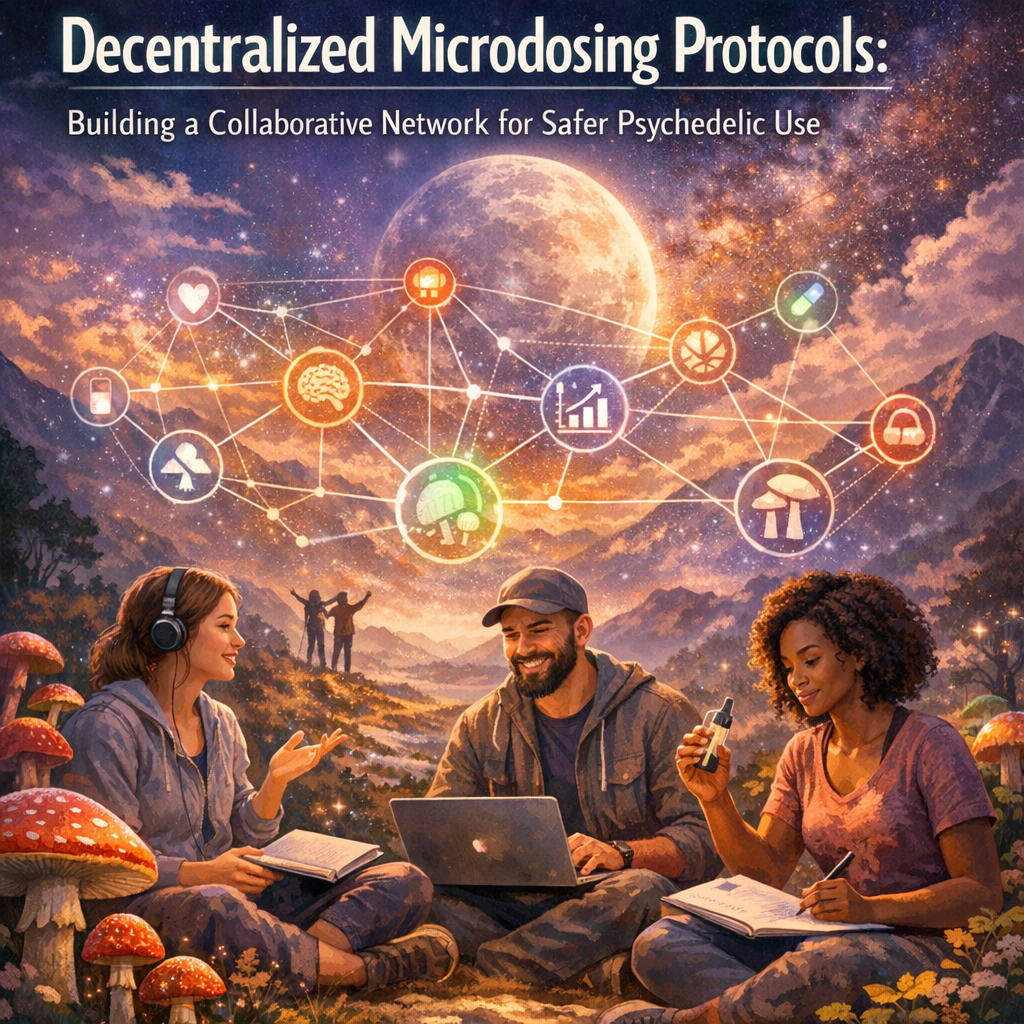
Decentralized Microdosing Protocols: Building a Collaborative Network for Safer Psychedelic Use
In recent years, **microdosing psychedelics**, particularly **psilocybin**, has gained significant popularity as a means of enhancing **mental wellness, creativity**, and **emotional balance**. The practice involves taking sub-perceptual doses of psychedelic substances to leverage their benefits without experiencing the full-blown psychedelic effects. As this practice becomes more mainstream, there is a growing need for **decentralized microdosing protocols** to ensure safer and more collaborative experiences for individuals exploring this unconventional path to mental and physical wellness.
The idea of decentralized microdosing emphasizes a **shared responsibility model** of safety and efficacy in psychedelic use, which resonates with many individuals seeking alternative health treatments. The notion is rooted in community-building, collective knowledge-sharing, and peer-supported mechanisms. These networks aim to fill the gaps in existing knowledge about psychedelics, enabling users to make informed decisions. **Decentralized protocols** prioritize safety by offering guidelines, ensuring product quality, and providing a platform for individuals to share personal experiences and findings.
Moreover, decentralized networks can democratize access to information previously confined to academic or clinical settings, empowering everyday users with validated data and practical advice. These protocols encourage transparency and empowerment, which are crucial when navigating the somewhat uncharted territory of psychedelics. Furthermore, decentralized approaches can expedite the development of best practices, as anecdotal experiences fuel ongoing research, creating a symbiotic relationship between pioneering users and the academic community.
While some may view this emergent structure with skepticism due to concerns about unregulated information flow or potential misuse, proponents argue that decentralized protocols can be a guiding beacon for responsible psychedelic use. By building a collaborative network, we can create a resilient system that supports users, contributes to scientific research, and ultimately transforms societal perceptions of psychedelic use.
**Scientific literature** on microdosing and its benefits is gradually expanding, paving the way for more formalized protocols and guidelines. Several studies have explored the therapeutic potential of psychedelics. A notable paper published in the journal *Psychopharmacology* examined the effects of microdosing on mental health and cognitive function. The study highlighted improvements in mood, focus, and creativity amongst participants who engaged in microdosing with psychedelics.
Another important contribution to this field comes from the **Beckley Foundation** and **Imperial College London**, whose researchers have investigated the effects of low-dose psychedelics. Their findings provide compelling evidence for the potential benefits of regular microdosing in enhancing psychological well-being and offer a scientific basis for the structured protocols that decentralized networks advocate (Beckley Foundation Findings).
Moreover, a study published in the *Journal of Psychopharmacology* explored the physiological impacts of microdosing and found minimal adverse effects when practiced responsibly, thereby supporting the notion that informed, community-driven practices could mitigate risks associated with psychedelic use.
These studies underscore the necessity of collaborative efforts to harness the benefits of microdosing while ensuring user safety. By engaging with scientific research and integrating empirical insights into community guidelines, decentralized networks can nurture a culture of informed psychedelic use. The reciprocal relationship between microdosing communities and academia is fundamental in evolving a comprehensive framework that balances innovation with caution.
Conclusion
**Decentralized microdosing protocols** offer a promising frontier for safe and equitable psychedelic use. By fostering a community-driven approach that integrates scientific research and user experiences, we can transcend traditional boundaries of mental wellness and set the stage for broader societal acceptance of psychedelics. As more individuals become involved in this collaborative network, the shared knowledge and commitment to safety will continue to redefine our understanding of psychedelics and their potential benefits. With continued efforts, decentralized protocols can play a pivotal role in revolutionizing mental health care and enhancing the quality of life for countless individuals.
Incorporating reliable sources and transparent communication will ensure that decentralized microdosing practices remain safe and effective. As we venture further into this innovative realm, collaborations between communities, researchers, and health professionals will be essential in unlocking the full potential of psychedelics.
**Concise Summary:**
Decentralized microdosing protocols offer a community-driven model to ensure safe and collaborative psychedelic use, emphasizing shared responsibilities, knowledge sharing, and peer support. As scientific literature on the benefits and safety of microdosing expands, these protocols can democratize access to information and help mitigate risks through collective insights. Studies by the Beckley Foundation, Imperial College London, and others highlight the mental health and cognitive benefits of microdosing. A community-focused approach integrates empirical research to promote responsible use, opening new frontiers in mental wellness and societal acceptance of psychedelics.

Dominic E. is a passionate filmmaker navigating the exciting intersection of art and science. By day, he delves into the complexities of the human body as a full-time medical writer, meticulously translating intricate medical concepts into accessible and engaging narratives. By night, he explores the boundless realm of cinematic storytelling, crafting narratives that evoke emotion and challenge perspectives. Film Student and Full-time Medical Writer for ContentVendor.com