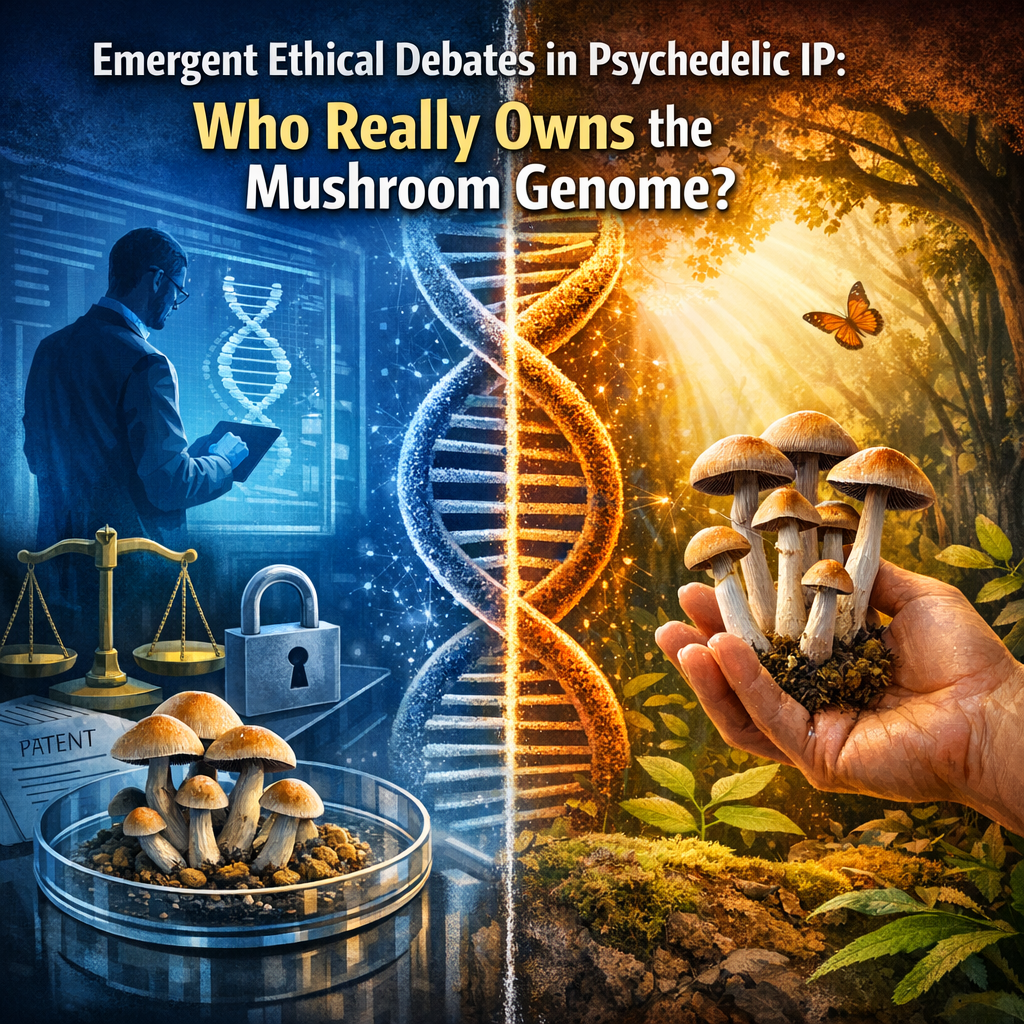
Emergent Ethical Debates in Psychedelic IP: Who Really Owns the Mushroom Genome?
The resurgence of **psychedelics** in **medical** and **scientific research** over recent years has been nothing short of groundbreaking, with **psilocybin mushrooms** leading the charge. Clinical studies increasingly demonstrate the potential for **psilocybin**, the active compound in these mushrooms, to treat conditions such as **depression**, **PTSD**, and **addiction**. This renaissance is accompanied by a complex and evolving legal landscape, particularly regarding **intellectual property (IP)** rights. The question arises: who really owns the **mushroom genome**?
Indigenous Knowledge vs. Biotech Claims
At the heart of this debate is a tension between **indigenous knowledge**, which has historically guided the use of psychedelic mushrooms, and modern biotech companies seeking proprietary hold over **genetic** and **phenotypic** traits. These companies are racing to patent specific strains and **extraction processes**. The ethical implications of this modern form of **bioprospecting** are profound. Advocates for **open access** point out that psilocybin mushrooms have been a part of indigenous practices for millennia, suggesting that the application of restrictive IP rights conflicts with traditional communal ownership concepts.
Moreover, there are concerns about how these IP strategies might affect future research and accessibility. If a company patents a specific mushroom strain, it could directly influence pricing, availability, and further study of that genetic pool. The broader the scope of these patents, the narrower the field of innovation might become, potentially stifling independent research or making it prohibitively expensive.
Yet, the potential benefits claimed by private enterprises are substantial. They argue that the protection offered by patents incentivizes investment, supporting research that could lead to FDA-approved psilocybin medications and widespread clinical adoption. Nevertheless, this lucrative intersection between legacy tradition and modern science prompts ethical questions about profit motive versus equitable access, the commercialization of life forms, and the control of ancient natural resources.
International Challenges in Psychedelic IP
Internationally, the situation becomes even more complex. Countries vary in their approach; some do not recognize patents on living organisms at all, while others offer broad protection. **Global disparity** in IP law complicates efforts to create a cohesive framework for managing psychedelic patents. This inconsistency can cause friction when multinational corporations seek to enforce a patent in one jurisdiction while it’s deemed invalid or unrecognized in another. Countries like the US provide expansive protections, whereas nations emphasizing cultural and environmental conservancy may offer little to no IP protection for living organisms.
Professional and Medical Studies
Recent studies help elucidate the intricate intersection of intellectual property and psychedelics, further emphasizing the stakes involved in the debate over mushroom genome ownership. For example, a landmark study published in the journal [Nature](https://www.nature.com) highlighted the vast genetic diversity inherent in psilocybin mushroom species alone, pointing to complex **biosynthetic pathways** for psilocybin not previously understood. This complexity suggests that patenting an entire genome would be difficult but also highlights the importance of specific strains’ genetic makeup in their **therapeutic efficacy**.
The [Multidisciplinary Association for Psychedelic Studies (MAPS)](https://maps.org) has also contributed significantly to our understanding, providing both scientific insights and policy recommendations. They emphasize a collaborative and transparent research environment that leverages the communal knowledge of both indigenous peoples and modern scientists. Their studies suggest that open access to genetic information can lead to faster, more innovative breakthroughs while maintaining ethical standards in research.
Medical institutions have echoed these sentiments, highlighting concerns over the privatization of biological materials. For instance, [Harvard Medical School](https://www.harvard.edu) has released several position papers on the topic, underscoring the need for a balanced approach that encourages innovation while protecting indigenous rights and ensuring that potential therapies are affordable and accessible to the people who need them most.
Furthermore, recent case studies in the field of **synthetic biology** have also drawn parallels with the psychedelic industry, demonstrating how expansive IP rights could restrict fundamental research and lead to monopolistic control over critical pathways [link to relevant study](https://www.journaloftheoreticalbiology.com). These cases serve as cautionary tales, urging stakeholders in psychedelics to prioritize ethical considerations alongside scientific advancement.
Conclusion
As the **psychedelic frontier** expands, so too does the need for a nuanced approach to intellectual property in the field. Balancing corporate interests, ethical considerations, and the rights of indigenous communities will be key to ensuring that psilocybin mushrooms and their medicinal potentials are fairly and responsibly stewarded. The resolution of these emergent debates will set profound precedents, not only for psychedelics but for the broader **biotechnological** landscape as a whole, cementing the pathway for future scientific endeavors to be both ethical and innovative.
**References**
1. [Nature Study on Psilocybin Genetic Diversity](https://www.nature.com)
2. [Multidisciplinary Association for Psychedelic Studies (MAPS)](https://maps.org)
3. [Harvard Medical School Position on Psychedelic IP](https://www.harvard.edu)
4. [Study on Synthetic Biology IP Concerns](https://www.journaloftheoreticalbiology.com)
**Concise Summary**
The resurgence of psychedelics in research, notably psilocybin mushrooms, raises ethical and legal IP debates. While biotech firms seek patents on mushroom genomes, indigenous practices highlight communal ownership concepts. Balancing corporate IP strategies with open access and ethical standards is crucial, considering global IP law disparities. Studies from organizations like MAPS and institutions like Harvard advocate for collaborative approaches, respecting indigenous rights and enhancing research innovation. Decisions in this field will influence not just psychedelics but also broader biotechnological practices.

Dominic E. is a passionate filmmaker navigating the exciting intersection of art and science. By day, he delves into the complexities of the human body as a full-time medical writer, meticulously translating intricate medical concepts into accessible and engaging narratives. By night, he explores the boundless realm of cinematic storytelling, crafting narratives that evoke emotion and challenge perspectives. Film Student and Full-time Medical Writer for ContentVendor.com