Neurofeedback-Enhanced Psilocybin Therapy: Revolutionizing Brain Health Through Real-Time Neural Tracking
Introduction
In the continually evolving field of **mental health treatment**, innovative therapies are emerging that promise improved outcomes for patients dissatisfied with traditional methods. Among these is **neurofeedback-enhanced psilocybin therapy**, a cutting-edge combination blending ancient wisdom with modern technology.
**Psilocybin**, the psychoactive compound in certain mushrooms, has millennia of use in cultural rituals and healing practices. Its resurgence in medical use today is due to increasing evidence supporting its potential to treat disorders like **depression**, **anxiety**, and **PTSD**. Typically, psilocybin therapy involves controlled compound administration in a safe, therapeutic setting, guiding patients on a journey aimed at emotional and psychological healing.
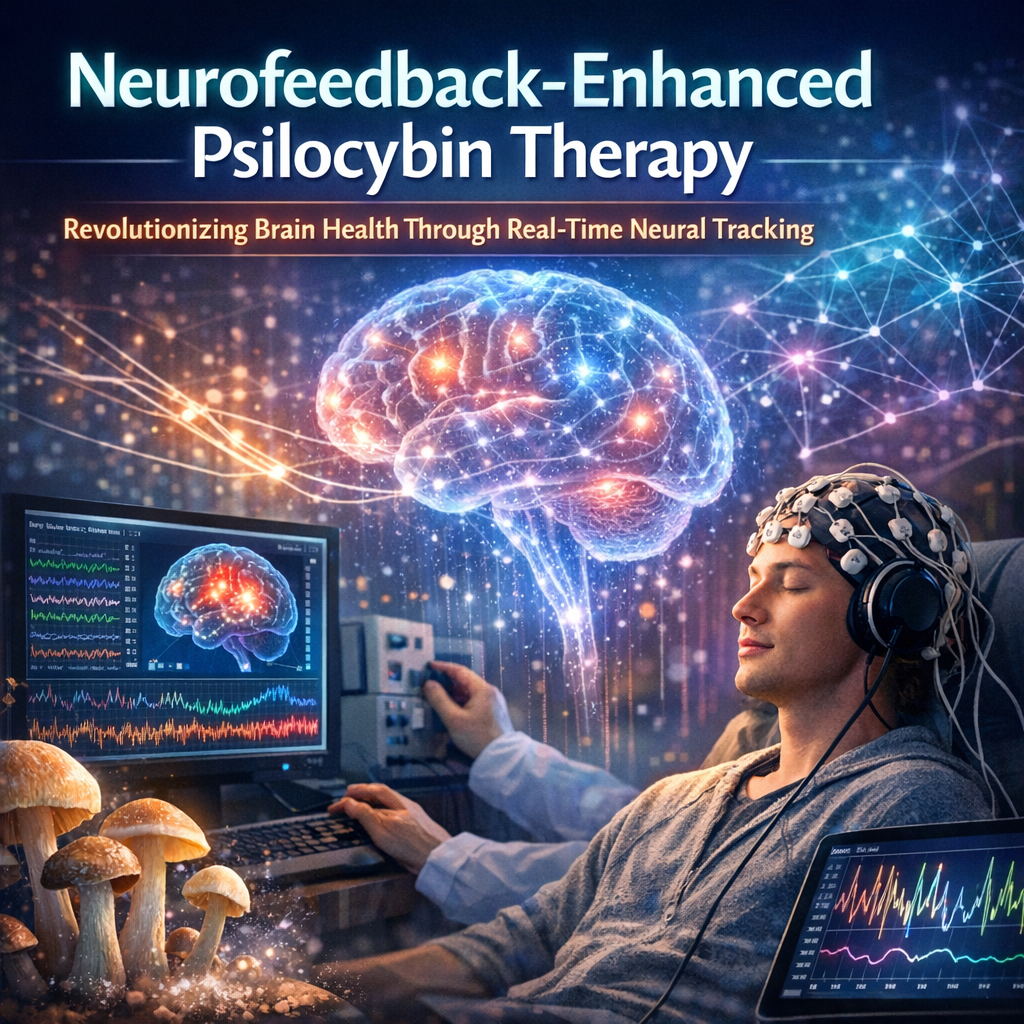
Neurofeedback is a form of biofeedback where individuals learn to control their **brainwave patterns** through real-time monitoring. By observing brain activity on a screen, patients can regulate their mental states, leading to improved cognitive function and emotional regulation. Combined with psilocybin, neurofeedback offers a novel method for enhancing the therapeutic process, providing immediate feedback on how patients’ brains react to the psychedelic experience.
The integration of these therapies presents an opportunity to address mental illness with precision and personalized care. **Neurofeedback** can serve as a compass during the psilocybin journey, optimizing the experience for maximum healing. This combination aims not just at symptom management, but at creating lasting, transformative brain health changes.
This article delves into the groundbreaking synergy of neurofeedback and psilocybin therapy, exploring how real-time neural tracking enhances treatment efficacy and offers new hope for those battling mental health challenges.
Features
Research on **psilocybin therapy** and **neurofeedback** is gaining momentum, reflecting a shift in mental health treatment conceptions. A Johns Hopkins University study found psilocybin therapy significantly reduced depressive symptoms in most participants, with effects lasting up to a month post-treatment ([Johns Hopkins study](https://www.hopkinsmedicine.org/news/articles/psilocybin-assisted-therapy-for-depression)). The study also highlighted the compound’s role in fostering novel thinking patterns and emotional breakthroughs.
Complementary **neurofeedback** research, detailed in the Journal of Neurotherapy, demonstrates its efficacy in helping patients regulate brainwave patterns linked to stress and anxiety ([Journal of Neurotherapy study](https://www.tandfonline.com/doi/full/10.1080/10874208.2018.1530785)). By applying neurofeedback during psilocybin sessions, therapists offer patients a tool to observe and influence their brain’s real-time responses.
A pivotal study in *Frontiers in Neuroscience* explored integrating neurofeedback with psychedelic therapy, suggesting this approach could amplify the introspective and therapeutic qualities of psychedelics ([Frontiers in Neuroscience study](https://www.frontiersin.org/articles/10.3389/fnins.2020.00562/full)). Real-time neurofeedback offers a unique opportunity to identify and modulate the neural correlates of emotional and cognitive states triggered by psilocybin.
An ongoing trial at **Imperial College London** is investigating how this combination might refine understanding of psilocybin’s neurophysiological effects and guide therapies with unprecedented precision ([Imperial College London trial](https://www.imperial.ac.uk/psychedelic-research-centre)). As data accumulates, these studies could form the basis for protocols incorporating neurofeedback with psilocybin, potentially democratizing access to these healing tools.
Conclusion
Neurofeedback-enhanced psilocybin therapy stands at the forefront of a new era in mental health treatment, blending ancient practices with contemporary technology for unparalleled therapeutic potential. As research progresses and methodologies refine, this approach may transform mental healthcare, empowering individuals to achieve enduring brain health changes. Further study and application may soon make these therapies widely accessible and effective for all who need them.
Summary
**Neurofeedback-enhanced psilocybin therapy** combines ancient and modern techniques to revolutionize mental health treatment. Psilocybin, a psychoactive compound in mushrooms, helps treat disorders like depression, anxiety, and PTSD, while neurofeedback allows patients to control brainwave patterns. This integration offers precision in addressing mental illness and optimizing therapeutic experiences beyond managing symptoms, aiming for transformative brain health changes. Research from institutions like Johns Hopkins and Imperial College London supports this method, promising widespread access to these innovative treatments as protocols develop and understanding deepens.

Dominic E. is a passionate filmmaker navigating the exciting intersection of art and science. By day, he delves into the complexities of the human body as a full-time medical writer, meticulously translating intricate medical concepts into accessible and engaging narratives. By night, he explores the boundless realm of cinematic storytelling, crafting narratives that evoke emotion and challenge perspectives. Film Student and Full-time Medical Writer for ContentVendor.com