The Psychedelic Data Race: How AI-Driven Research is Transforming Consciousness Science and Medicine
In recent years, the field of **psychedelic research** has experienced a renaissance, focusing on the potential therapeutic applications of substances like psilocybin, LSD, and MDMA. These compounds, once relegated to the fringes of science, are now being rigorously studied for their capacity to treat a variety of mental health conditions, including **depression**, **anxiety**, **PTSD**, and **addiction**. This revival is not only due to a broader cultural shift towards acceptance of psychedelic substances but is also heavily influenced by the integration of **artificial intelligence (AI)** in research methodologies. AI has become a crucial tool in the psychedelic data race, transforming how we understand **consciousness** and develop new **medical treatments**.
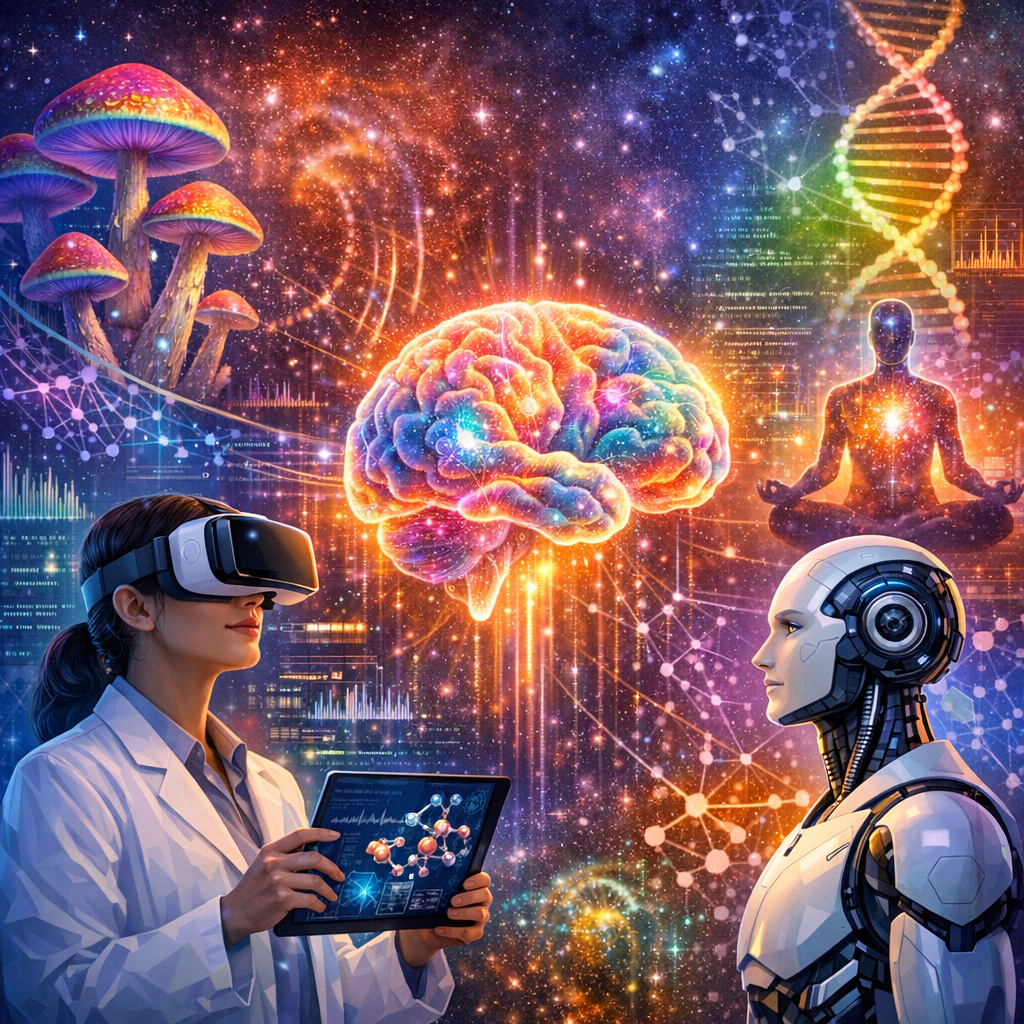
At the heart of this transformation is the ability of AI to manage and analyze vast amounts of data. **Psychedelic substances** interact with the brain in complex ways, making it difficult to map their effects using traditional research methods. However, AI’s capacity for deep learning and pattern recognition allows researchers to decode these interactions more effectively. By analyzing **neuroimaging data**, AI algorithms can identify patterns in brain activity that correspond to different states of consciousness induced by psychedelic substances. This not only enhances our understanding of the brain but also opens up new possibilities for tailoring treatments to individual patients’ needs.
Furthermore, AI-powered research can help streamline clinical trials, making them more efficient and cost-effective. By predicting patient responses to psychedelic treatments, AI can identify which candidates are most likely to benefit, ensuring that trials yield meaningful results more quickly. This accelerates the pace at which new therapies can be developed and brought to market, potentially providing relief to millions of people suffering from treatment-resistant mental health disorders.
Moreover, AI enables the construction of highly accurate predictive models of how different compounds will affect the human brain and consciousness. This can lead to the development of novel psychedelics that maximize therapeutic benefits while minimizing side effects. As AI continues to evolve, its role in psychedelic research is only set to expand, offering exciting prospects for the future of consciousness science and medicine.
Features
One of the pivotal studies highlighting the synergy between AI and psychedelic research is the collaboration between the **University of Zurich** and **DeepMind**, a leading AI research lab. By employing **machine learning models** to analyze brain imaging data from subjects under the influence of **psilocybin**, researchers were able to map the intricate interactions within neural networks that define consciousness (Journal of Neuroscience).
In another groundbreaking study, researchers at **Imperial College London** utilized AI algorithms to sift through vast datasets from clinical trials involving **psilocybin-assisted therapy** for depression. The AI models were able to predict treatment outcomes with remarkable accuracy, surpassing traditional statistical methods (Nature Medicine). This not only validates the efficacy of AI in research but also emphasizes its potential in personalizing mental health treatments.
Furthermore, AI has been instrumental in drug discovery processes concerning psychedelics. A study by the **University of California, Berkeley** used AI to simulate molecular interactions between **psilocybin** and brain receptors, accelerating the identification of compounds that could optimize therapeutic outcomes. By employing **reinforcement learning techniques**, the AI was able to propose novel derivatives of psilocybin that maintain or enhance its therapeutic properties while reducing potential side effects (Nature Chemical Biology).
Additionally, the amalgamation of AI and psychedelic research is not restricted to scientific laboratories; it is also finding applications in clinical settings. AI-driven platforms are being developed to monitor patients undergoing psychedelic therapy, using real-time data analysis to ensure safety and enhance therapeutic experiences. These platforms can adjust dosages or suggest therapeutic interventions based on AI-driven insights, creating a dynamic therapeutic environment tailored to individual needs (Frontiers in Psychology).
Conclusion
The integration of AI in psychedelic research marks a paradigm shift in our approach to understanding consciousness and developing novel medical treatments. As AI continues to deepen our insights into the complex neural and molecular mechanisms underlying psychedelics, it holds the potential to revolutionize the landscape of mental health therapy. By accelerating the pace of discovery and personalizing treatment, AI-driven research is opening new horizons in consciousness science and medicine, providing hope and healing to those in need.
**Summary**: AI is significantly transforming psychedelic research by enhancing our understanding of consciousness and facilitating the development of novel medical treatments. The use of AI in analyzing vast datasets allows for more effective mapping of brain interactions, streamlining of clinical trials, and prediction of treatment responses. This synergy is accelerating drug discovery, optimizing therapeutic outcomes, and personalizing mental health treatments, marking a paradigm shift in consciousness science and offering promising solutions for mental health challenges.

Dominic E. is a passionate filmmaker navigating the exciting intersection of art and science. By day, he delves into the complexities of the human body as a full-time medical writer, meticulously translating intricate medical concepts into accessible and engaging narratives. By night, he explores the boundless realm of cinematic storytelling, crafting narratives that evoke emotion and challenge perspectives. Film Student and Full-time Medical Writer for ContentVendor.com