How Microdosing Could Become the Next Personalized Medicine Breakthrough: An AI-Driven Exploration
In recent years, **microdosing**—consuming sub-perceptual doses of **psychedelic substances**—has garnered significant attention both in the media and among medical professionals. Particularly, **psilocybin**, the primary psychoactive compound found in **magic mushrooms**, has been under the spotlight as research delves into its potential **therapeutic benefits**. A microdosing regimen typically involves taking small doses of psilocybin, well below the threshold that would produce hallucinations. It’s hypothesized to improve mood, focus, and creativity without significant mind-altering effects. This discreet form of consumption has become a point of intrigue as individuals seek alternative treatments for conditions like depression, anxiety, and PTSD.
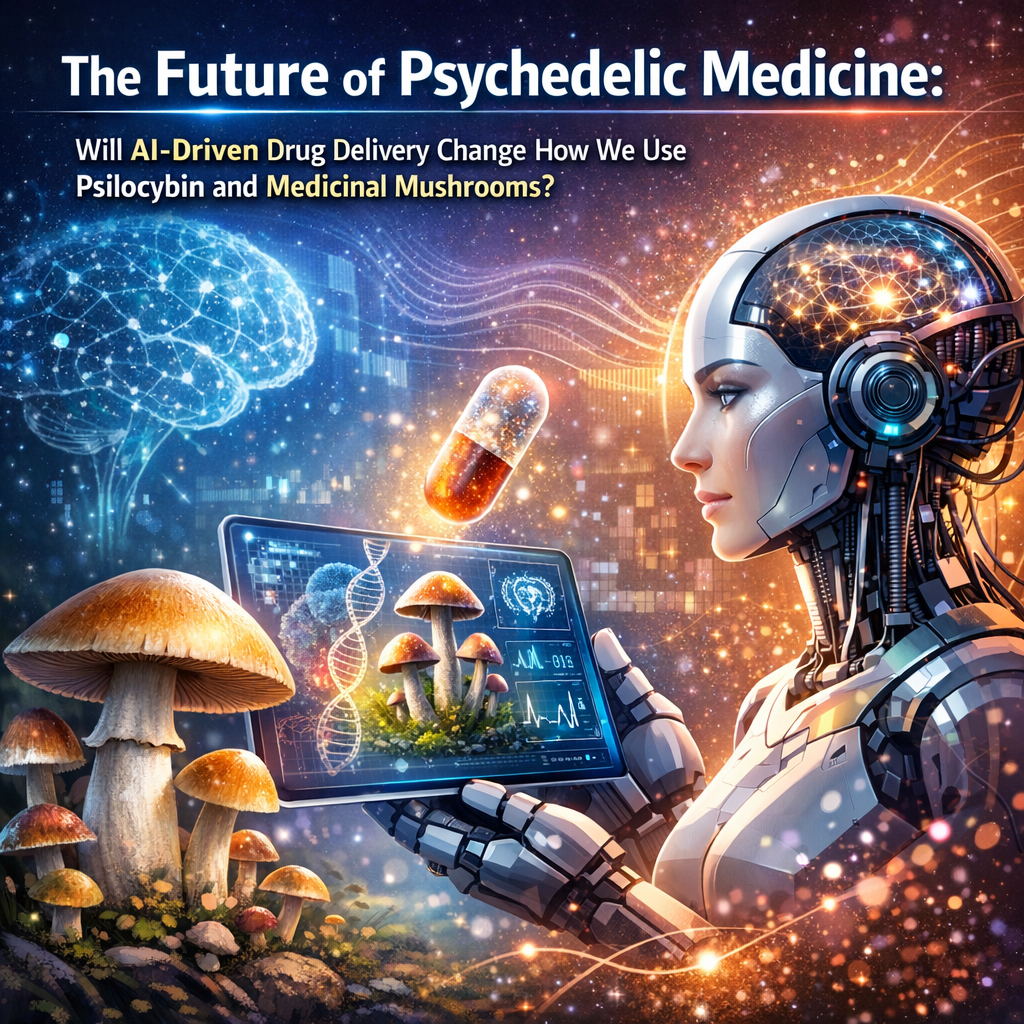
The concept of **personalized medicine** is rapidly evolving alongside technological advancements in **artificial intelligence (AI)** and **machine learning**. These technologies have the potential to analyze vast datasets, providing insights into how microdosing psilocybin could be tailored to individual needs more effectively. The quest for personalization aims to enhance effectiveness while minimizing unwanted side effects, which is a major consideration in the broader medical community.
Recent studies have shown that psilocybin interacts with the serotonin receptors in the brain, leading to changes in neuron connectivity that could alleviate symptoms of depression and anxiety. An AI-driven approach can enhance our understanding of these interactions on a molecular level, identifying patterns and predicting outcomes based on genetic, lifestyle, and environmental factors unique to each patient. This level of precision in treatment connects directly to the goals of personalized medicine, shifting from a one-size-fits-all model to something uniquely constructed for the individual.
AI’s role in this shift is pivotal—it’s being used for everything from drug discovery to analyzing patient response data. With such technological capabilities, the integration of AI in microdosing could signify a considerable shift in how we approach mental health treatments. By tailoring microdosing regimens based on personal data, healthcare providers could not only maximize therapeutic benefits but also ensure safety, thereby transforming microdosing into a mainstream medical practice.
Recent Professional and Medical Studies
While the field of psychedelic research is still in its infancy, there have been promising studies that highlight the benefits of psilocybin and its potential role in personalized medicine. A noteworthy study conducted at **Johns Hopkins University** found that psilocybin can produce substantial and sustained decreases in depression and anxiety in patients with a life-threatening cancer diagnosis. Although this study involved full doses of psilocybin, it opened doors to exploring similar potential benefits through microdosing. [Source](https://pubmed.ncbi.nlm.nih.gov/27909165/)
In another groundbreaking publication, researchers from **Imperial College London** used brain imaging techniques to observe widespread changes in brain activity patterns post-psilocybin use. These patterns could be pivotal in understanding how microdosing could also result in beneficial mental health outcomes without the classic psychedelic experience. The findings suggest that AI tools could be employed to predict these changes and microdose accordingly, aiming for optimal mental health benefits. [Source](https://www.ncbi.nlm.nih.gov/pmc/articles/PMC5367558/)
**AI-driven platforms** are already making waves in various facets of healthcare by analyzing patient data to predict treatment responses. For psilocybin and microdosing, platforms could potentially evaluate an individual’s genetic predisposition to mental health disorders or predict their response to psilocybin therapy by assessing historical data and patterns. For example, the AI platform “Deep Genomics” has made significant strides in predicting the consequences of genetic mutations, a framework that could be adapted to tailor psilocybin microdose treatments to individual genetic profiles.
These scientific and technological advancements create the foundation for future studies that integrate AI and microdosing. The goal is not only to confirm the anecdotal reports of improved mental clarity and reduced anxiety but also to standardize microdosing protocols based on individual physiological responses.
Conclusion
As our understanding of psilocybin’s potential benefits continues to expand, combining it with AI-driven methodologies presents a promising frontier in the realm of personalized medicine. By leveraging technology, the potential transformation of microdosing from an underground practice to a legitimate, mainstream therapeutic strategy could revolutionize personalized mental health care. With continued research and ethical consideration, microdosing could hold the key to unlocking a new era of targeted, effective treatments for mental health disorders.
**Concise Summary:**
Microdosing with psilocybin, particularly its potential therapeutic benefits, is a focal point of current medical research. This approach, combined with AI, promises advancements in personalized medicine. AI technologies can analyze data to create individualized microdosing regimens, shifting treatment from a broad to a targeted approach. Studies highlight psilocybin’s potential in alleviating mental health conditions by changing neuron connections in the brain. Platforms like “Deep Genomics” could be adapted to tailor treatments to genetic profiles. These advancements could transition microdosing into a recognized, mainstream practice for mental health care, revolutionizing personalized treatment strategies.

Dominic E. is a passionate filmmaker navigating the exciting intersection of art and science. By day, he delves into the complexities of the human body as a full-time medical writer, meticulously translating intricate medical concepts into accessible and engaging narratives. By night, he explores the boundless realm of cinematic storytelling, crafting narratives that evoke emotion and challenge perspectives. Film Student and Full-time Medical Writer for ContentVendor.com