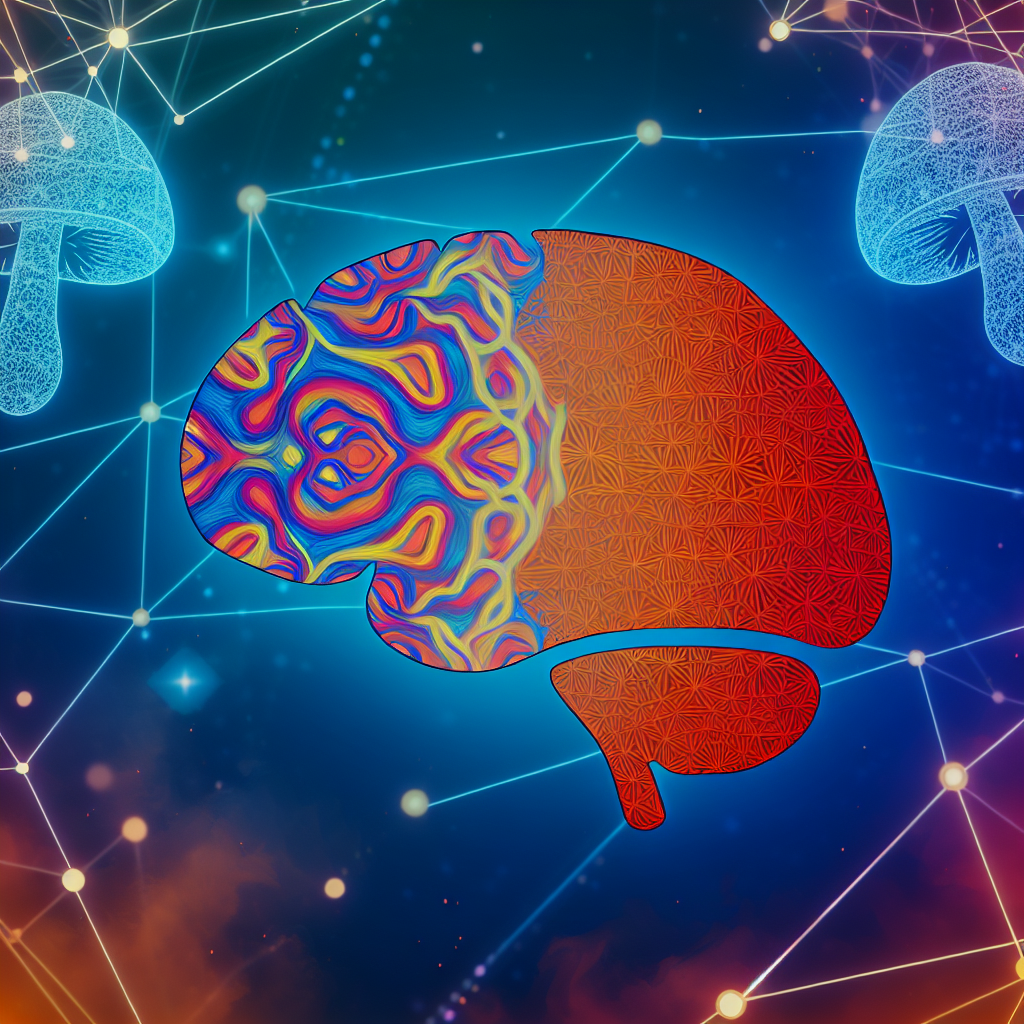
Psilocybin’s Potential in Revolutionizing PTSD Treatment: A Brain Network Perspective
Introduction
**Post-Traumatic Stress Disorder (PTSD)** is a debilitating mental health condition affecting millions worldwide. Traditional treatments like **cognitive behavioral therapy** and **pharmacotherapy** provide relief for some patients but fail others, necessitating alternative solutions. **Psilocybin**, the psychoactive compound in certain mushrooms, is emerging as a promising alternative.
Psilocybin has attracted significant interest from neuroscientists and mental health professionals for its potential to alleviate symptoms in **treatment-resistant conditions** such as PTSD. Unlike traditional antidepressants, psilocybin is believed to work by altering **brain activity** and **connectivity**, offering new insights into its therapeutic effects.
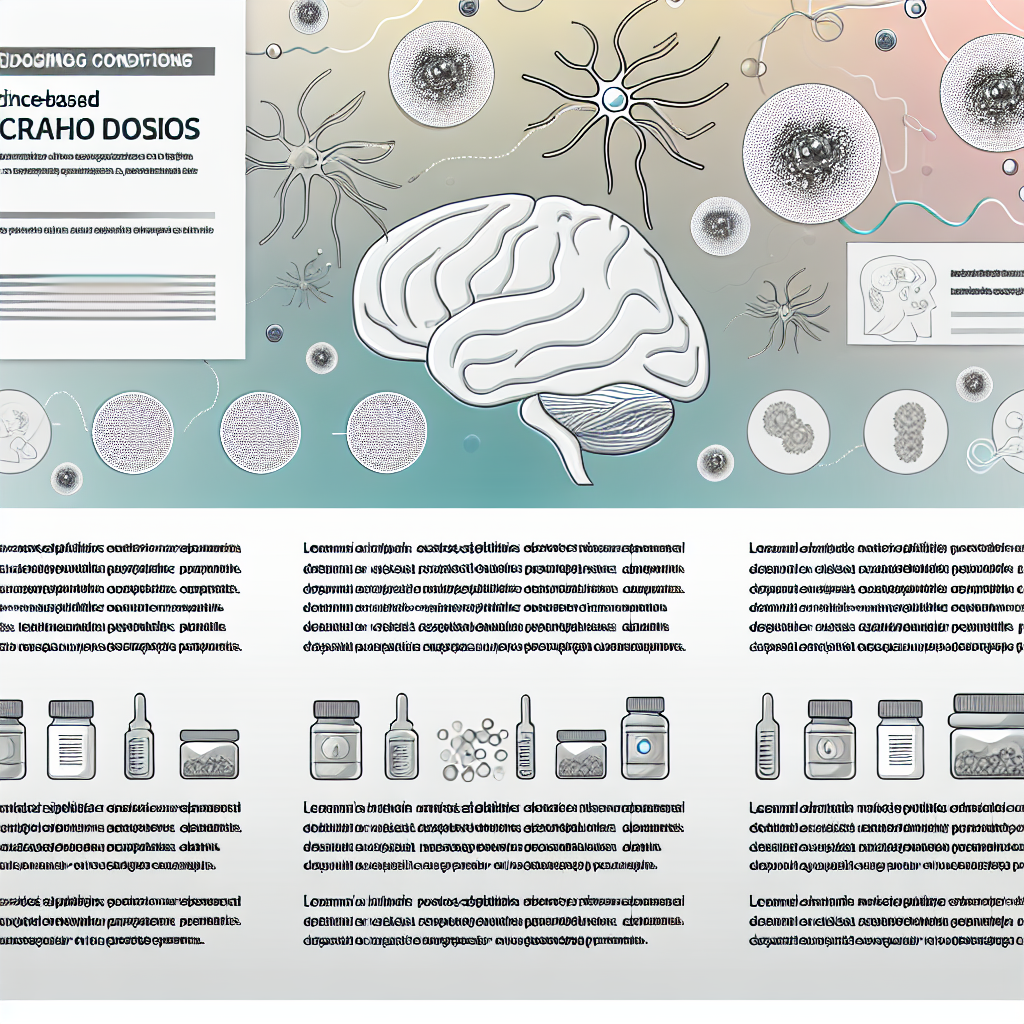
Over the past decade, substantial clinical and theoretical research has explored psilocybin’s impact on brain networks. One key concept is psilocybin’s ability to disrupt the **default mode network (DMN)**, which tends to be hyperactive in PTSD patients, while promoting connectivity between different brain regions. This altered connectivity may enhance emotional processing and perception, allowing patients to confront and recontextualize traumatic memories in a therapeutic setting.
Psilocybin influences **serotonin receptors**, particularly the **5-HT2A receptor**, which is central to its effects. Activation of this receptor alters brain activity patterns, increasing **plasticity** and potentially reshaping neural structures related to **fear** and **memory**. These characteristics are relevant for PTSD as they may help develop new cognitive perspectives and coping mechanisms.
Understanding the science behind psilocybin’s potential can enhance discourse around its integration into treatment regimens. With growing advocacy and regulatory interest, there is a compelling rationale for continued exploration to optimize its safety and efficacy in clinical settings.
Features
One of the most significant studies examining psilocybin’s impact on PTSD symptoms was conducted by researchers from **[Johns Hopkins University](https://www.hopkinsmedicine.org/news/articles)**. This study demonstrates that psilocybin-assisted therapy can significantly reduce PTSD symptoms by altering brain network connectivity. Psilocybin modulates the brain’s **default mode network (DMN)**, which is associated with rumination and self-referential thought processes, often elevated in PTSD patients.
Another pivotal research effort by the **[Multidisciplinary Association for Psychedelic Studies (MAPS)](https://maps.org/research)** evaluated the safety and efficacy of psilocybin combined with psychotherapy for PTSD treatment. Results from these trials reveal significant symptom reduction, suggesting that psilocybin may facilitate therapeutic processes by increasing **emotional empathy** and reducing **fear response**.
Psilocybin’s impact extends beyond just disrupting maladaptive network activity. Research indicates that psilocybin can promote **synaptic plasticity**, crucial for learning and memory, correlating with clinical findings where patients reported breakthroughs in processing traumatic events long withheld at bay [ResearchGate Study](https://www.researchgate.net/publication).
The therapeutic efficacy of psilocybin may also involve the **amygdala**, a critical hub for processing fear and emotional responses. Psilocybin appears to reduce amygdala response to threatening stimuli, subsequently allowing individuals with PTSD to process rather than avoid trauma-related memories as discussed in **[Scientific American](https://www.scientificamerican.com/article)**.
Collectively, these findings underscore psilocybin’s revolutionary potential in mental healthcare, offering a novel mechanism to address PTSD symptoms at a neurological level. With promising research outcomes and increased understanding of psilocybin’s effects on brain networks, this compound challenges the status quo of PTSD treatment.
Conclusion
**Psilocybin** stands at the intersection of neuroscience and psychiatry as a promising candidate for treating PTSD. Its capability to rewire brain networks and enhance **emotional processing** opens new therapeutic avenues. As research progresses, psilocybin’s role in revolutionizing mental health treatment becomes increasingly undeniable, offering hope for individuals unable to find relief through traditional means. Continued exploration of psilocybin in clinical practice holds the promise of profoundly transforming PTSD care dynamics.
References
1. [Johns Hopkins Study on Psilocybin and PTSD](https://www.hopkinsmedicine.org/news/articles)
2. [MAPS Research on Psilocybin Therapy](https://maps.org/research)
3. [Research on Synaptic Plasticity and Psilocybin](https://www.researchgate.net/publication)
4. [Scientific American Article on Psilocybin and Amygdala Response](https://www.scientificamerican.com/article)
Concise Summary
**Psilocybin**, found in certain mushrooms, is a potential breakthrough in treating **PTSD**, offering hope for those unresponsive to traditional therapies. By disrupting the **default mode network (DMN)** and modulating brain connectivity, psilocybin enhances emotional processing and memory recontextualization. It activates **serotonin receptors**, particularly **5-HT2A**, fostering brain plasticity, and alters structures involved in fear and memory. Studies from **[Johns Hopkins](https://www.hopkinsmedicine.org/news/articles)** and **[MAPS](https://maps.org/research)** support psilocybin’s therapeutic effects, suggesting it could redefine mental health treatment, particularly PTSD, by addressing symptoms at their neurological root.

Dominic E. is a passionate filmmaker navigating the exciting intersection of art and science. By day, he delves into the complexities of the human body as a full-time medical writer, meticulously translating intricate medical concepts into accessible and engaging narratives. By night, he explores the boundless realm of cinematic storytelling, crafting narratives that evoke emotion and challenge perspectives. Film Student and Full-time Medical Writer for ContentVendor.com