Why Psychedelics May Become the Operating System of Mental Healthcare — Not Just Another Medicine
Topic Introduction:
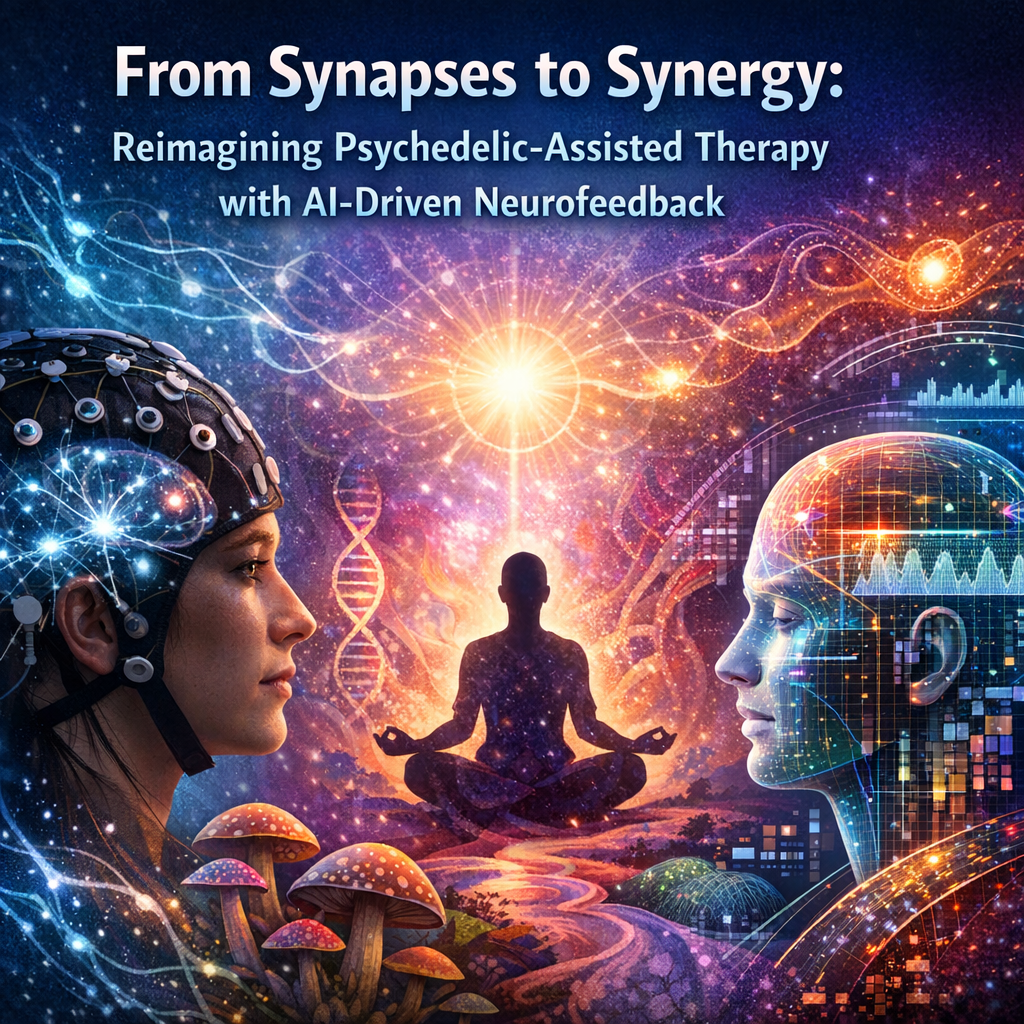
In recent years, a quiet revolution has been brewing in the field of **mental healthcare**, centered around an unexpected protagonist—**psychedelics**. These substances, once relegated to the fringes of scientific research and buried under decades of stigma, are rapidly gaining recognition for their potent therapeutic potential. **Psychedelics** like **psilocybin**, **LSD**, and **MDMA** are not just being revisited as alternative treatments; they are being reconsidered as foundational to the future of mental healthcare. Why the sudden shift? The reasons are multifaceted, encompassing both groundbreaking scientific research and an evolving understanding of mental illness.
With increasing cases of **depression**, **anxiety**, **PTSD**, and other mental health issues, traditional pharmacological treatments have often fallen short. Antidepressants and anti-anxiety drugs, while helpful to many, typically require long-term use and come with a myriad of side effects. Enter **psychedelics**—substances that offer a fundamentally different approach. Rather than masking symptoms, these compounds may work by reshaping the brain’s neural pathways, fostering profound and long-lasting psychological changes with just a few sessions.
Moreover, **psychedelics** appear to enhance emotional processing and facilitate states of consciousness that allow individuals to confront and integrate traumatizing experiences. This makes them particularly compelling options for therapy-resistant conditions. **Psychedelics** may well be on the cusp of transforming not just how we treat mental health conditions, but also how we conceptualize well-being overall. Researchers are starting to view them as integral components of mental healthcare’s operating system—fundamental structures around which future treatments will revolve.
Features:
Groundbreaking studies are fueling this transformation by providing robust evidence of **psychedelics’ potential** in therapy. Research conducted at esteemed institutions like Johns Hopkins University and Imperial College London has detailed the promising effects of **psilocybin** in treating **depression** and **anxiety**. For instance, a study published in the reputable journal [*Nature*](https://www.nature.com/articles/s41591-018-0107-0), conducted by the Center for Psychedelic and Consciousness Research at Johns Hopkins, revealed that **psilocybin** produced large, sustained decreases in **depression** and **anxiety** scores in cancer patients.
Furthermore, the [Multidisciplinary Association for Psychedelic Studies (MAPS)](https://maps.org) conducted a Phase 3 clinical trial indicating that **MDMA-assisted therapy** significantly reduced **post-traumatic stress disorder symptoms**. These findings suggest **psychedelics** do more than offer temporary relief; they may promote genuine healing by addressing root psychological issues and fostering lasting change.
What makes these substances particularly unique is the manner in which they seem to ‘rewire’ the brain. Studies using **functional magnetic resonance imaging (fMRI)** have shown that **psychedelics** decrease activity in the brain’s **default mode network (DMN)**. This network is heavily linked to self-referential thoughts, worry, and rumination, which are often overactive in **depression** and **anxiety**. By ‘quieting’ the **DMN**, **psychedelics** can offer relief from these persistent, negative thought cycles.
Additionally, **psychedelics** elicit what many participants describe as mystical or transformative experiences, which can lead to alterations in personality, increased openness, and improved mood. Such drastic changes in outlook and understanding may underpin the enduring therapeutic effects seen in clinical settings, rendering them more than mere biochemical interventions.
In summary, the comprehensive therapeutic benefits unveiled by current research suggest **psychedelics** are poised to transcend their role as mere medications, emerging as essential components of a new, holistic paradigm of **mental healthcare**.
Conclusion:
As the body of research grows and **psychedelics** become more understood, their potential to transform the mental healthcare landscape becomes undeniable. By offering profound, enduring psychological changes with minimal exposure, **psychedelics** may assume a central role in treating mental health disorders. With more studies and clinical trials on the horizon, the hope is that these substances will soon become widely integrated into therapeutic practices, offering millions the chance to heal and thrive. As we stand on the precipice of a revolution in mental healthcare, **psychedelics** may truly be key to the operating system of future treatment strategies.
Concise Summary:
The burgeoning interest in **psychedelics** is revolutionizing mental healthcare, suggesting they may be foundational to future treatments. Unlike traditional medications, **psychedelics** like **psilocybin** and **MDMA** are showing promise in rewiring neural pathways and enabling profound psychological change. Studies from institutions like Johns Hopkins and MAPS demonstrate sustained benefits for **depression**, **anxiety**, and **PTSD**, potentially transforming treatment-resistant conditions. As research progresses, **psychedelics** could redefine mental wellness, representing not mere medications but core components of a new therapeutic paradigm aimed at holistic healing.

Dominic E. is a passionate filmmaker navigating the exciting intersection of art and science. By day, he delves into the complexities of the human body as a full-time medical writer, meticulously translating intricate medical concepts into accessible and engaging narratives. By night, he explores the boundless realm of cinematic storytelling, crafting narratives that evoke emotion and challenge perspectives. Film Student and Full-time Medical Writer for ContentVendor.com