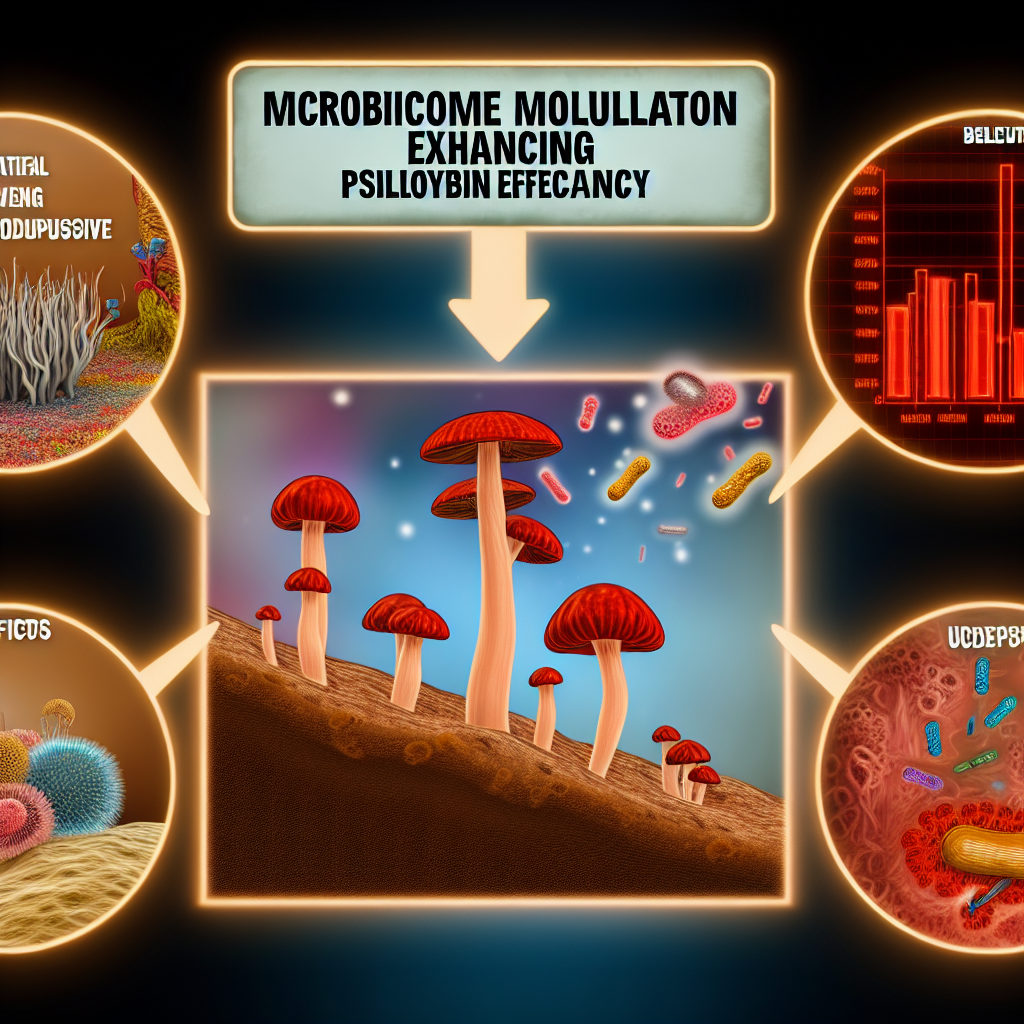
Microbiome Modulation to Enhance Psilocybin Efficacy and Reduce Side Effects
As our understanding of the **human microbiome** expands, its role in influencing a variety of health outcomes has transitioned from being an esoteric area of research to a focal point of modern medicine. Scientists are now investigating how the trillions of microorganisms residing within our gut could be modulating the effects of nutraceuticals and other bioactive compounds. One particularly intriguing area of exploration is the interaction between the microbiome and **psilocybin**, the active compound found in certain species of psychedelic mushrooms. Recent studies suggest that optimizing gut health could potentially enhance psilocybin’s efficacy while reducing its side effects, hence opening up new avenues for safe and effective therapeutic use.
Psilocybin has garnered significant attention for its potential to treat a range of mental health conditions, from **depression** and **anxiety** to **PTSD** and **substance use disorders**. However, like many treatments, it is not without its side effects, which can include nausea, anxiety, and temporary disorientation in some users. Enter the **microbiome**: a community of bacteria, viruses, fungi, and other microorganisms residing primarily in the gut, which plays a crucial role in processes ranging from digestion and immune modulation to mental health. Emerging research is beginning to unravel the complex interactions between these microorganisms and psychoactive substances. It has become increasingly clear that a balanced microbiome may play a crucial role in optimizing the pharmacokinetics and pharmacodynamics of psilocybin.
One hypothesis is that a well-maintained microbiome may influence the transformation of psilocybin into **psilocin**, its active form, enhancing its psychotropic effects while minimizing unwanted reactions. The efficiency of this transformation process can vary depending on an individual’s unique microbiome composition. Furthermore, certain gut bacteria have been shown to produce metabolites that interact with brain-gut pathways, potentially modulating psilocybin’s effects on neurotransmitter activity, thus fine-tuning its efficacy and safety profile.
Features
The interface between **gut health** and **psychedelics** has seen a surge of interest in both academic and clinical settings. A seminal study published in the journal [*Nature Microbiology*](https://www.nature.com/articles/s41564-018-0268-1) explored the role of the gut microbiome in the metabolism of psychotropic compounds. The researchers highlighted that specific gut flora could influence the rate at which these compounds are metabolized, thus impacting their efficacy and side effects. They posited that supporting a diverse and balancedgut microbiome could potentially enhance psilocybin efficacy while minimizing adverse effects.
Another pertinent study published in [*Frontiers in Psychiatry*](https://www.frontiersin.org/articles/10.3389/fpsyt.2019.00021/full) highlighted the importance of gut-brain communication and its influence on mental health. This study underscored the potential of specific **probiotics** to impact mood and cognitive functions, suggesting a direct link between microbiome composition and mental health outcomes. Integrating a diet rich in **prebiotics** and probiotics could, therefore, prepare one’s gut ecosystem to better interact with psilocybin therapy.
Moreover, a recent controlled trial investigated the potential benefits of psilocybin-assisted therapy combined with dietary interventions aimed at microbiome modulation. The trial reported that participants who maintained a **microbiome-friendly diet** (rich in fibers, fermented foods, and low in processed sugars) experienced a reduction in the side effects commonly associated with psilocybin, such as nausea and anxiety. These findings suggest that dietary strategies that enhance gut health could serve as an adjunctive approach in psychedelic-assisted psychotherapy [source](https://clinicaltrials.gov/ct2/show/NCT03816802).
Conclusion
The burgeoning field of microbiome research is gradually shedding light on the intricate relationship between gut health and psilocybin efficacy. By favorably modulating the microbiome through diet, prebiotics, and probiotics, users may experience enhanced therapeutic outcomes while mitigating unwanted effects. As our understanding of these interactions deepens, it holds the promise of optimizing psilocybin therapies, laying the groundwork for safer and more efficacious psychedelic treatments. As our grasp on the gut-brain axis grows, the integration of microbiome science with psychedelic research stands on the brink of transforming mental health therapies in the 21st century.
**Concise Summary**:
Research is delving into how our gut microbiome impacts **psilocybin** efficacy and side effect reduction in mental health treatments like **depression** and **PTSD**. Studies suggest that a balanced gut may optimize psilocybin’s conversion to its active form, enhancing therapeutic effects and reducing side effects like nausea. Incorporating probiotics and prebiotics into diets could improve gut health ahead of psilocybin therapy, as supported by results from several studies ([*Nature Microbiology*](https://www.nature.com/articles/s41564-018-0268-1), [*Frontiers in Psychiatry*](https://www.frontiersin.org/articles/10.3389/fpsyt.2019.00021/full)). This intersection of microbiome and psychedelic research may revolutionize mental health therapies.

Dominic E. is a passionate filmmaker navigating the exciting intersection of art and science. By day, he delves into the complexities of the human body as a full-time medical writer, meticulously translating intricate medical concepts into accessible and engaging narratives. By night, he explores the boundless realm of cinematic storytelling, crafting narratives that evoke emotion and challenge perspectives. Film Student and Full-time Medical Writer for ContentVendor.com