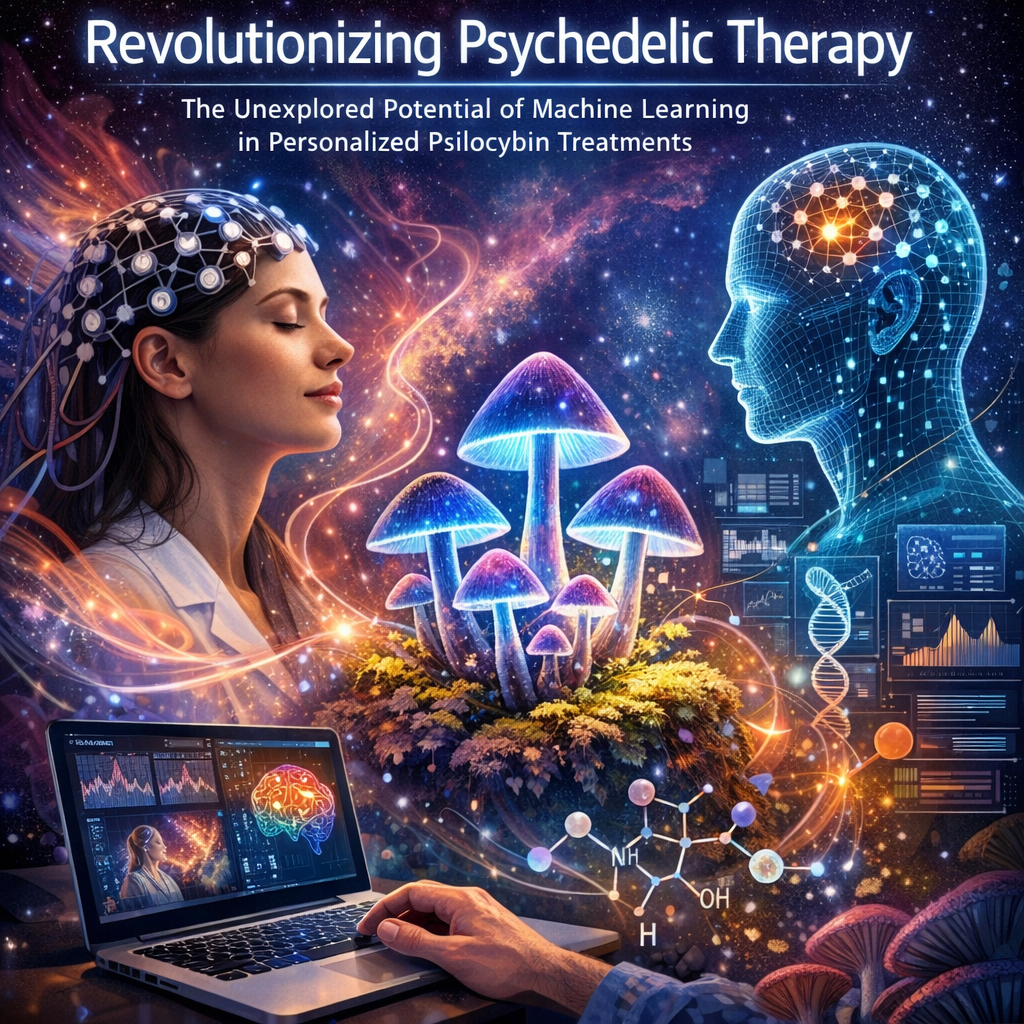
Revolutionizing Psychedelic Therapy: The Unexplored Potential of Machine Learning in Personalized Psilocybin Treatments
Introduction
In recent years, the **therapeutic use** of **psychedelics** like **psilocybin** has gained significant interest within the **medical community**. As **mental health challenges** continue to rise globally, conventional treatments often fall short of offering solutions that provide long-term benefits without severe side effects. Psilocybin, the **psychoactive compound** found in certain mushrooms, has emerged as a promising alternative for treating conditions such as **depression**, **anxiety**, and **PTSD**. **Psychedelic therapy** is not a new concept, but recent scientific advancements have permitted it to gain acceptance and credibility within **mainstream medicine**.
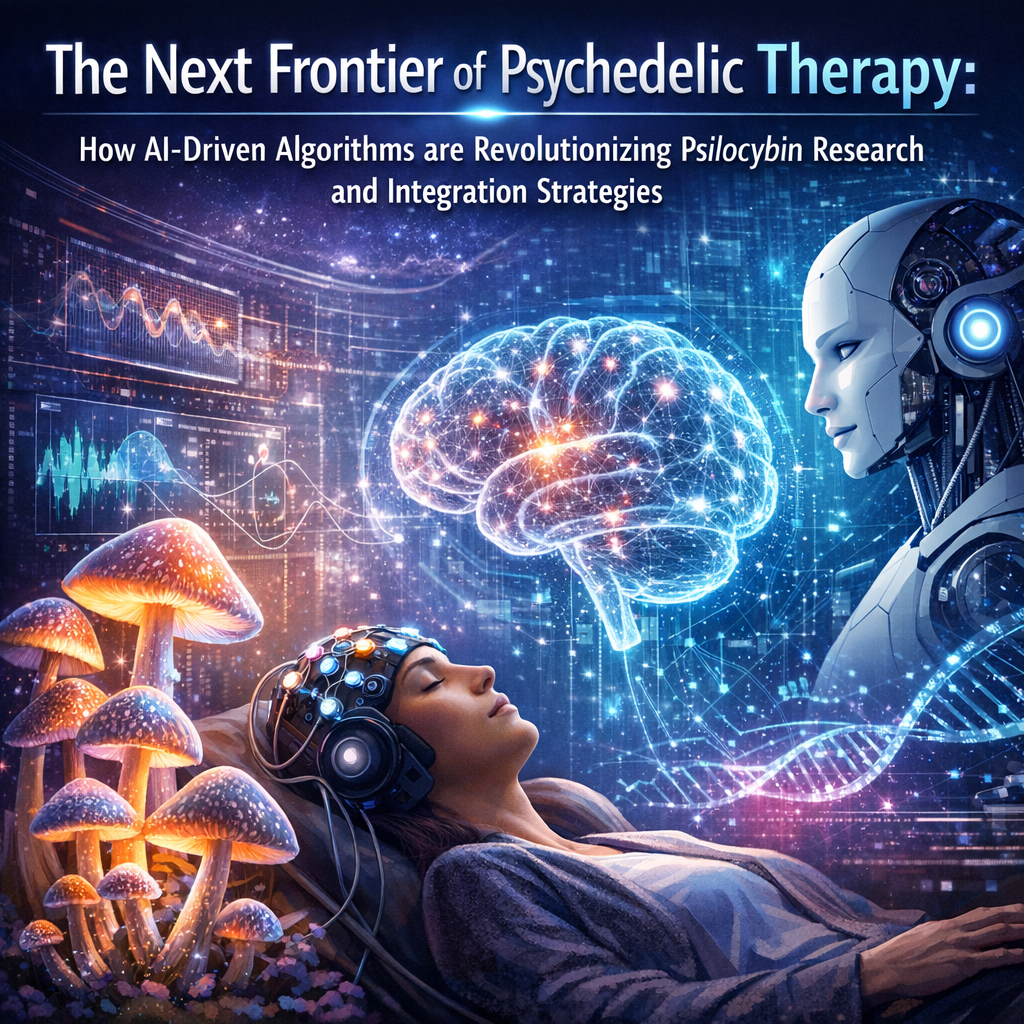
Furthermore, as we stand on the brink of a **technological revolution**, the integration of **machine learning** in **healthcare** opens new avenues for refining and personalizing psychedelic therapy. **Machine learning**, a subset of **artificial intelligence**, involves teaching computers to learn from data and make decisions or predictions. This capacity for high-level data analysis makes machine learning an ideal tool for interpreting the **complex datasets** commonly associated with personalized psychedelic treatments.
Imagine a future where **machine learning algorithms** can evaluate individual patient profiles—including **medical history**, **genetic markers**, and **psychological assessments**—and determine the optimal **psilocybin dose** for treatment efficacy with minimal side effects. Such tailored therapies could significantly impact the success rate of treatments for **mental health disorders**. Moreover, it could lead to accelerated **clinical trials** by identifying optimal participant profiles, thus enhancing the robustness of research findings.
This blend of psychedelic therapy with cutting-edge technology presents a novel landscape for mental health treatment. Harnessing machine learning in the context of psilocybin therapy is an untapped potential waiting to revolutionize how we approach mental health care, moving away from the “one-size-fits-all” model to a highly personalized, data-driven approach.
Features
Several pioneering studies demonstrate that the combination of **machine learning** with **psilocybin therapy** holds tremendous promise. A notable study conducted by researchers at the **Imperial College London** investigated the effects of psilocybin on patients with treatment-resistant depression. The study revealed significant improvements in depressive symptoms and highlighted the potential of psilocybin as a game-changing therapeutic substance. You can read more about it in the Nature article on Psilocybin Therapy.
Building on this success, researchers are exploring how machine learning can enhance these outcomes. For example, a study published in the journal *Nature* discusses the role of machine learning in analyzing **brain scans** to predict patients’ responses to psychedelic treatments. It involves training algorithms with pre-treatment **MRI** data to predict post-treatment outcomes, thereby potentially customizing therapy to individual neural responses. The full study is accessible via Nature Article on Machine Learning in Neural Prediction.
Moreover, companies like **MindMed** and **Atai Life Sciences** are at the forefront of incorporating machine learning into their psilocybin research and development processes. These companies use **AI-driven platforms** to analyze extensive clinical data and identify patterns that traditional methods might overlook. By focusing on individual variability in response to psilocybin, they aim to develop treatment regimens tailored to each patient’s unique **neurobiology**. More details can be found on the Atai Life Sciences website.
**Machine learning** also facilitates accelerated **drug discovery** and the optimization of **clinical trial designs**. Algorithms can analyze vast troves of clinical data to identify not only the individuals most likely to benefit from psychedelic therapy but also potential **biomarkers** indicative of positive therapeutic outcomes. This data-driven approach minimizes trial-and-error methods, reduces risks, and enhances the precision of psilocybin-based interventions.
Conclusion
The fusion of **machine learning** and **psilocybin therapy** represents an exciting frontier in **mental health treatment**. As **research** and **technology development** accelerate, the dream of personalized psychedelic care becomes increasingly attainable. By unlocking a new generation of data-driven, individualized therapies, we stand to revolutionize how mental health conditions are treated, offering hope to countless individuals worldwide who struggle with **depression**, **anxiety**, and related disorders. The path forward involves continued **interdisciplinary collaboration**, innovative research, and a commitment to exploring this uncharted territory with both curiosity and caution.
**References**
– Nature Article on Psilocybin Therapy
– Nature Article on Machine Learning in Neural Prediction
– Atai Life Sciences on Machine Learning
Concise Summary
The integration of **machine learning** in **psilocybin therapy** offers groundbreaking potential in **mental health treatment**. By evaluating patient profiles through algorithms, healthcare could move towards personalized therapies that optimize psilocybin doses, enhancing treatment efficacy while reducing side effects. Research from entities like **Imperial College London** and companies like **Atai Life Sciences** spotlight machine learning’s role in tailoring psychedelic therapy, boosting clinical trials, and advancing precision medicine. This convergence of technology and psychedelics marks a promising shift away from generalized treatments towards highly individualized mental healthcare solutions.

Dominic E. is a passionate filmmaker navigating the exciting intersection of art and science. By day, he delves into the complexities of the human body as a full-time medical writer, meticulously translating intricate medical concepts into accessible and engaging narratives. By night, he explores the boundless realm of cinematic storytelling, crafting narratives that evoke emotion and challenge perspectives. Film Student and Full-time Medical Writer for ContentVendor.com