Psilocybin for Chronic Pain Management: Mechanisms and Clinical Evidence
Chronic pain affects millions of people worldwide, impairing quality of life and productivity. Traditional **pain management** solutions, like **opioids**, often lead to addiction and dependency, prompting the search for safer alternatives. Recently, **psilocybin**, the active compound in **psychedelic mushrooms**, has emerged as a potential candidate for managing **chronic pain**. This once-taboo substance is now gaining validation through scientific research, indicating its ability to offer relief without the drawbacks of conventional pain medications.
Psilocybin is known for its hallucinogenic effects, transforming perception, thought, and emotion. Discovered by Swiss chemist Albert Hofmann in 1958, it gained notoriety during the 1960s counterculture movement. However, the focus has now returned to its therapeutic potential beyond recreational use. Research seeks to understand how psilocybin interacts with the brain, particularly for **chronic pain treatment**.
One key mechanism by which psilocybin may alleviate chronic pain is its action on **serotonin receptors** in the brain. It primarily binds to the **5-HT2A receptor**, influencing neural pathways associated with **mood regulation** and **pain perception**. This could explain why psilocybin often results in altered states of consciousness, alleviating psychological symptoms intertwined with chronic pain conditions. Rather than just masking symptoms, psilocybin may lead to a restructuring of the brain’s response to pain.
Early studies suggest that psilocybin may promote **neuroplasticity**, helping the brain adapt by forming new neural connections. This could mean that psilocybin facilitates changes in pain perception, offering long-term benefits for those suffering from chronic conditions. While the promise is substantial, it is crucial to approach these findings with scientific scrutiny, evaluating clinical trials and results to support or refute the titular hypothesis.
Clinical Evidence and Studies
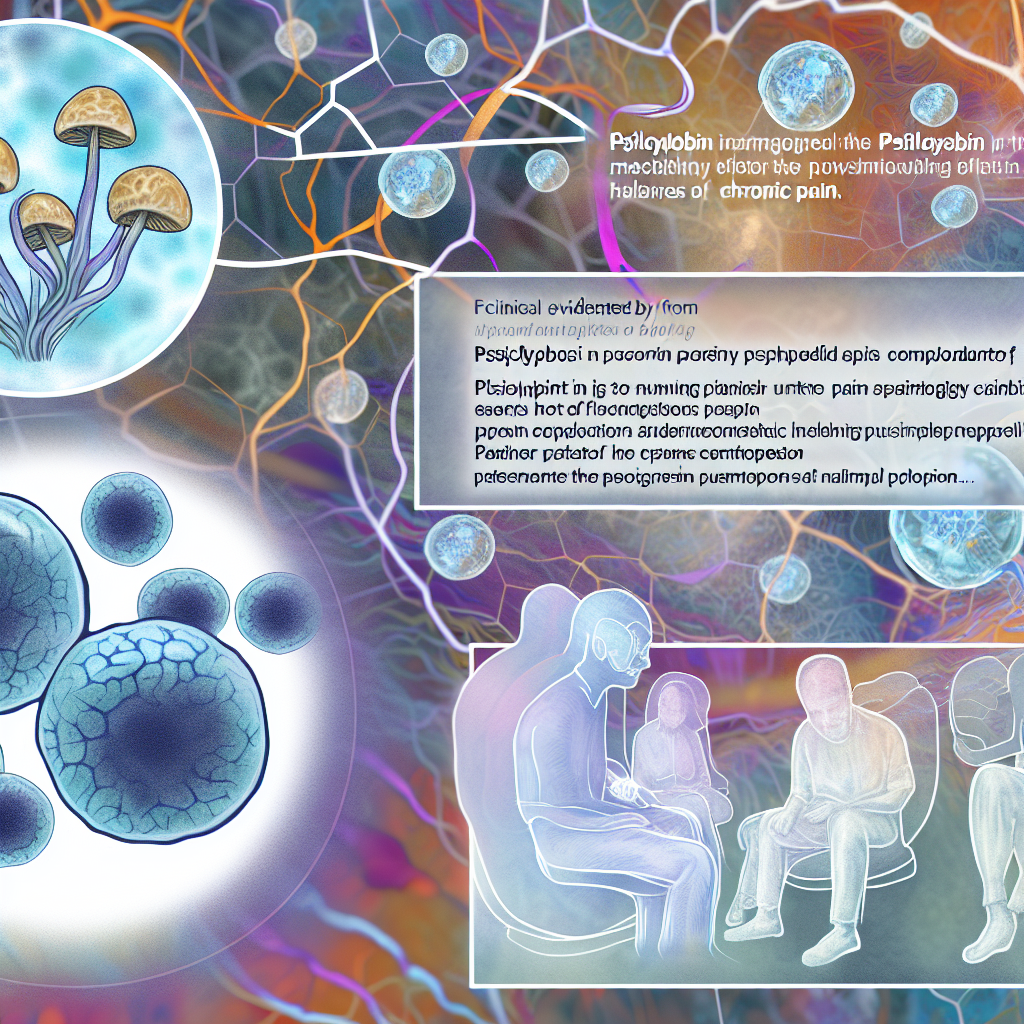
Recent studies are beginning to cement psilocybin’s status as a breakthrough for managing chronic pain. A notable study conducted by **Johns Hopkins University** explored the impact of psilocybin on patients with chronic pain conditions ([source](https://www.hopkinsmedicine.org)). The double-blind, placebo-controlled trial highlighted a significant reduction in pain perception following psilocybin administration compared to the placebo. Over half of the participants reported long-term relief, suggesting psilocybin’s efficacy may extend beyond immediate analgesic effects.
Additionally, **King’s College London** is examining the neurophysiological changes induced by psilocybin treatments ([source](https://www.kcl.ac.uk)). Their research aims to identify how psilocybin alters brain connectivity in patients with chronic pain. Preliminary results point towards a decrease in the **default mode network** activity—known to lessen chronic pain characteristics—while increasing connectivity in neural pathways critical to pain processing.
Moreover, a survey among patients in Canada who opted for **psilocybin-assisted therapy** revealed subjective improvements in conditions like **fibromyalgia** and **cluster headaches** ([source](https://www.therapsil.ca)). Many participants reported reduced pain intensity and improvements in mood and mental well-being, critical factors in holistic pain management.
While these studies are encouraging, it should be noted that research is still in its infancy. Much of the evidence relies on small sample sizes or subjective reports. Nonetheless, these studies present a crucial step in unveiling the complex interplay between psilocybin and chronic pain management, paving the path for more extensive research and potential clinical application.
Conclusion
The exploration of psilocybin as a tool for chronic pain management holds considerable potential. By examining its mechanisms and the emerging clinical evidence, researchers and clinicians are beginning to understand the powerful role psychedelics might play in medical treatments. As science continues to uncover the intricacies of psilocybin’s interaction with the brain, future studies are imperative to validate its efficacy and safety. While not a panacea, psilocybin could offer a new avenue for relief from chronic pain without the adverse effects of traditional pharmaceutical interventions.
**Concise Summary**
Psilocybin, known for its hallucinogenic properties, is being researched as an alternative for chronic pain management. Acting primarily on serotonin receptors, psilocybin may alter pain perception and promote neuroplasticity. Clinical studies, like those by Johns Hopkins University and King’s College London, suggest psilocybin’s efficacy in reducing pain perception and improving neurophysiological markers linked to pain. Although promising, research is still early, often based on small sample sizes. Continued exploration could validate psilocybin as a viable option for chronic pain relief, offering long-term benefits without the typical risks associated with traditional pain medications.

Dominic E. is a passionate filmmaker navigating the exciting intersection of art and science. By day, he delves into the complexities of the human body as a full-time medical writer, meticulously translating intricate medical concepts into accessible and engaging narratives. By night, he explores the boundless realm of cinematic storytelling, crafting narratives that evoke emotion and challenge perspectives. Film Student and Full-time Medical Writer for ContentVendor.com