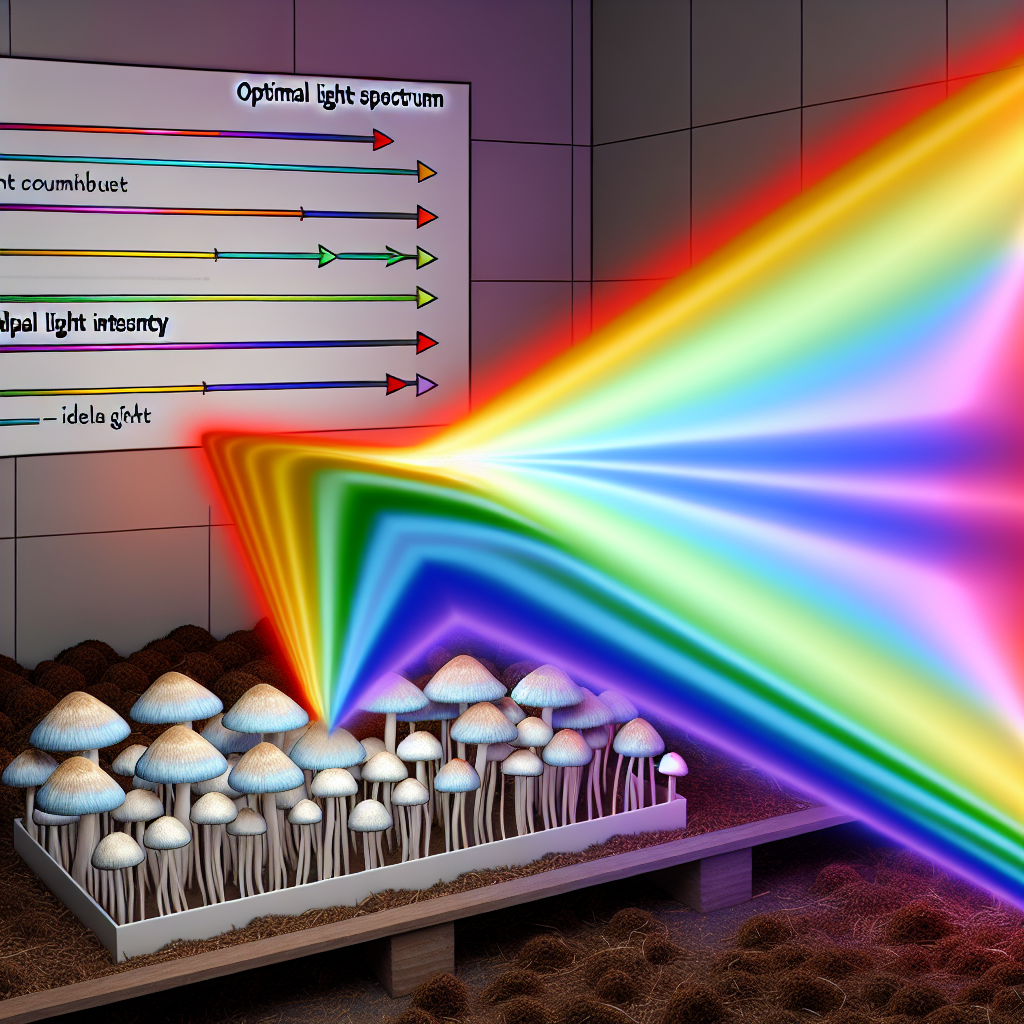
Psilocybin Cultivation Lighting Requirements: Spectrum and Intensity Guide
Introduction
As interest in **psilocybin mushrooms** continues to grow, especially for **clinical research** and **therapeutic use**, understanding key elements of cultivation is essential. One of the most crucial yet often misunderstood factors is **lighting**.
Previously, many believed mushrooms grow best in the dark. However, modern science shows that **light exposure is critical during the fruiting stage**. Light triggers important phases like **pinning**, where **mycelium** develops into mushroom bodies. This environmental cue, even though fungi don’t perform photosynthesis, affects mushroom **morphology**, **yield**, and **alkaloid potency**.
Advancements in **mycology** and widespread cultivation options have empowered hobbyists and professionals alike. Understanding the **lighting spectrum and intensity** helps cultivate mushrooms like Psilocybe cubensis more effectively.
As **psychedelic therapy** moves closer to mainstream medicine for conditions like **PTSD**, **depression**, and **anxiety**, optimized cultivation plays a major role in standardizing safe, potent, and effective doses for therapeutic use. This guide explores the science of **lighting for psilocybin mushrooms**, including spectrum selection, intensity thresholds, cycle timing, and more.
Lighting Spectrum, Intensity, and Scientific Insight
Unlike plants, fungi don’t photosynthesize; however, **light plays a vital signaling role in fungal development**.
For **psilocybin mushroom cultivation**, light becomes crucial during and after the **pinning stage**. Prior to this, **mycelium** develops well in dark, humid conditions. Once colonization is complete, introducing appropriate light initiates **morphogenesis**, the process that shapes the mushroom form.
Research strongly supports that **mushrooms respond to the blue and white light spectrum**. Specifically, wavelengths in the **450-495 nm** range (blue light) are most effective. A notable study by Sakamoto et al. (2004) showed that blue light significantly sped up fruiting body development in Lentinula edodes (shiitake). Though not a psilocybin species, these findings apply to **Basidiomycetes** like Psilocybe cubensis as well.
**LED lighting** is now the gold standard due to its customizable output, low heat, and energy efficiency. Broad-spectrum **white–blue LED systems**, adjusted to **800–1500 lux**, offer optimal conditions. This has been validated by Fungal Biology Reviews (2021), which noted that controlled lighting stimulates consistent fruiting without stressing the fungi.
Going above **2000 lux can cause photoinhibition**, meaning too much light actually harms development. Experts recommend a **12/12 light-dark cycle** (12 hours of light, 12 hours darkness), echoing natural forest floor conditions where indirect light prompts mushrooms into fruiting.
Further insights from a 2022 study in the Journal of Psychedelic Studies found that optimized blue-white LED exposure resulted in **higher quantities of psilocybin and psilocin** in homegrown Psilocybe cubensis. This demonstrates that **light optimization impacts not just yield, but also chemical potency**—a major breakthrough for therapeutic consistency.
Clinics integrating **psilocybin-assisted treatment** stress the importance of dosage reliability. Small lighting tweaks can standardize concentrations of active compounds, improving repeatability and safety for patients in regulated therapeutic contexts.
So, what’s the ideal setup?
– Light Spectrum: **450–495 nm** (blue-rich white LED)
– Intensity: **800–1500 lux**
– Cycle: **12 hours light / 12 hours dark**
– Light Source: **Cool-temperature LED panels**
By sticking to these parameters, growers can boost the medicinal and morphological quality of their harvest.
Conclusion
As psilocybin moves from historic ritual into regulated medicine, its cultivation demands precision. **Lighting spectrum and intensity**, once ignored, now play an essential role in achieving optimum mushroom growth and alkaloid content.
Growers—whether working at home, in therapeutic clinics, or research labs—can **improve yield, quality, and consistency** by adopting scientifically backed light practices. This contributes to the overall safety and reliability of **psilocybin-based therapies**, ultimately benefiting patients and advancing psychedelic medicine.
By honoring the light preferences of fungi, cultivators enhance every aspect of their mushrooms, from physical form to pharmacological effect.
References
– Sakamoto, Y., Nakade, K., & Sato, S. (2004). [Blue Light Exposure Accelerates the Fruiting in Lentinula edodes](https://doi.org/10.1016/j.mycres.2004.03.013). Mycological Research.
– [Fungal Biology Reviews (2021)](https://doi.org/10.1016/j.fbr.2021.100003). Light-induced Morphogenesis and Photoreceptors in Fungi.
– [Journal of Psychedelic Studies (2022)](https://akjournals.com/view/journals/2054/6/2/article-p67.xml). Light Spectrum Optimization Enhances Alkaloid Content in Homegrown Psilocybe cubensis.
– [U.S. Department of Agriculture – Fungi Light Requirements Guide](https://www.ars.usda.gov/)
Concise Summary
Effective psilocybin cultivation depends heavily on controlled lighting. Blue-rich white LED lighting at 800–1500 lux with a 12-on/12-off light cycle stimulates morphogenesis and boosts therapeutic compounds like psilocybin and psilocin. Exceeding 2000 lux may harm growth. Unlike plants, fungi use light not for energy, but as an essential environmental signal for fruiting. Optimized lighting directly improves mushroom size, structure, and potency—critical factors in clinical and home cultivation. With psilocybin’s medical potential rising, precision in cultivation—including proper lighting—ensures safe, powerful, and consistent therapeutic results.

Dominic E. is a passionate filmmaker navigating the exciting intersection of art and science. By day, he delves into the complexities of the human body as a full-time medical writer, meticulously translating intricate medical concepts into accessible and engaging narratives. By night, he explores the boundless realm of cinematic storytelling, crafting narratives that evoke emotion and challenge perspectives. Film Student and Full-time Medical Writer for ContentVendor.com