Future-Proofing Psychedelic Medicine: The Role of AI in Integrating Brain Science and Legal Frameworks
Introduction:
In recent years, the landscape of **psychedelic medicine** has been evolving rapidly. Compelling research continues to shed light on the potential therapeutic benefits of substances like **psilocybin**, found in magic mushrooms. Traditionally seen as fringe, the potential of psychedelic compounds is gaining mainstream acceptance, offering breakthroughs in treating mental health disorders such as **depression**, **PTSD**, and **anxiety**. However, as promising as these advancements are, they face two significant challenges: scientific integration and regulatory navigation. This is where the fusion of **artificial intelligence (AI)** and psychedelic medicine emerges as a beacon of hope, aiming to streamline and legitimize treatments for the future.
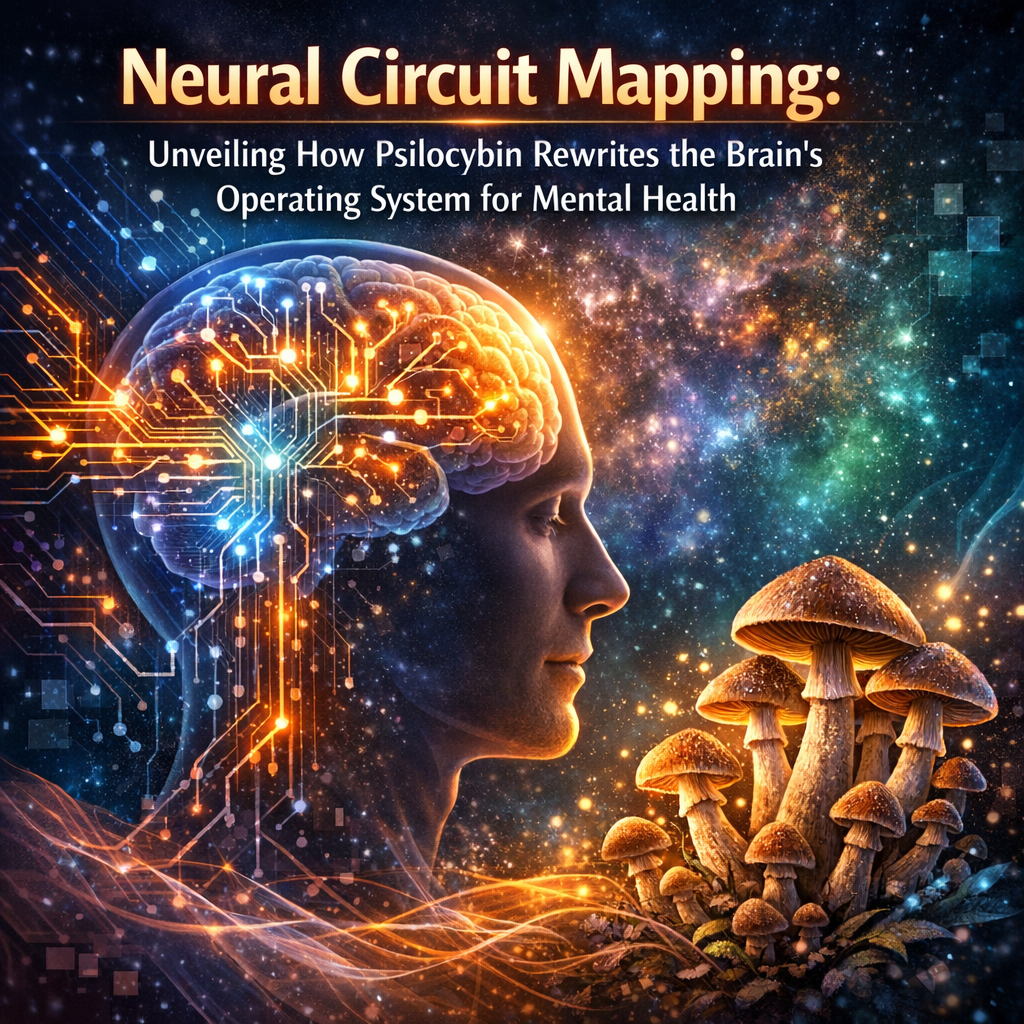
**Artificial intelligence** provides the technological leverage needed to analyze vast datasets inherent in brain science. **AI** can parse complex neural patterns and predictably map how **psychedelics** interact with the brain, providing clarity that was previously unattainable. Methods like **machine learning** and **deep learning** facilitate an unprecedented understanding of **neuroplasticity**—the brain’s ability to reorganize itself by forming new neural connections. **Psychedelics** are believed to promote neuroplasticity, suggesting why they could effectively treat conditions that are otherwise resistant to conventional therapies. **AI** acts as a formidable ally by decoding these intricate interactions, leading to optimized treatment protocols tailored to individual needs.
Concurrently, the legal frameworks surrounding **psychedelic substances** remain convoluted. While some jurisdictions are beginning to decriminalize or even legalize psychedelic therapy, there is still a long road ahead. **AI** can aid in this domain by providing evidence-based insights that inform policy-makers, pushing for regulations grounded in scientific fact rather than stigma or cultural bias. In this way, **AI** contributes not only to the scientific enrichment of psychedelic medicine but also to its legal validation, helping stakeholders formulate nuanced, forward-thinking policies.
Together, **AI** and psychedelic medicine are set to revolutionize mental health treatment, offering holistic solutions that transcend traditional medication. By decoding the mysteries of the mind and aiding in legal comprehension, **AI** fortifies the path toward a future where psychedelic medicine is not just an alternative but a cornerstone of psychiatric care.
Features:
The integration of **AI** into psychedelic medicine is not just theoretical; it is already underway. Several professional and medical studies underscore the potential of **AI** to revolutionize this domain. For instance, a study published in [*Nature Machine Intelligence*](https://www.nature.com/articles/s42256-019-0029-1) highlighted how **machine learning algorithms** could predict individualized responses to psychedelic treatments based on **neuroimaging data**. This advancement marks a significant leap forward, making it conceivable to customize psychedelic treatments for varying mental health conditions with a high degree of accuracy.
Furthermore, research conducted at [Imperial College London](https://www.imperial.ac.uk/psychedelic-research-centre/) showcased **AI’s** role in understanding the ‘**entropic brain**’ theory associated with psychedelics. By analyzing **fMRI scans**, **AI** algorithms identified increased brain network connectivity during psychedelic experiences, suggesting a potential mechanism for enhancing cognitive flexibility and emotional processing. This finding also hints at why psychedelics may be effective in treating conditions that involve rigid thought patterns, such as depression and OCD.
On the legal front, **AI’s** potential in policy-making is just beginning to be tapped. Organizations like [MAPS](https://maps.org/) (Multidisciplinary Association for Psychedelic Studies) are employing **AI** to evaluate existing clinical data and project socio-economic impacts of psychedelic legalization. With comprehensive data analyses, **AI models** provide invaluable insights into the benefits and risks, financially and socially, of taking psychedelic treatments mainstream. This evidence is critical as governments re-evaluate antiquated drug laws, shedding light on the multifaceted advantages of regulated psychedelic use.
The convergence of **AI** and psychedelic medicine not only promises individualized care and scientific lucidity but also offers a compelling argument for modernizing legal systems. By aligning scientific discoveries with practical legislative initiatives, we stand on the cusp of a new epoch in mental health treatment, characterized by precision, empathy, and regulatory harmony.
Conclusion:
The union of **AI** and psychedelic medicine holds transformative promise for the future of mental health care. By decrypting brain complexities and informing regulatory landscapes, **AI** paves the way for innovative, comprehensive treatments that can fundamentally alter our approach to psychological well-being. As these fields continue to intertwine, they could jointly cultivate a robust framework that enshrines psychedelic medicine as a valuable pillar in the landscape of medical science.
Concise Summary:
The integration of **AI** and psychedelic medicine is poised to revolutionize mental health treatment. **AI** helps decode complex brain interactions, enhancing our understanding and predicting individualized responses to treatments, while also aiding in the development of nuanced, evidence-based legal frameworks for psychedelics. Studies indicate **AI**’s potential in customizing therapies and evaluating socio-economic impacts of legalization. This convergence not only promises tailored, effective psychiatric care but also fosters regulatory advancements, setting the stage for psychedelic medicine to become a cornerstone of future psychiatric care.

Dominic E. is a passionate filmmaker navigating the exciting intersection of art and science. By day, he delves into the complexities of the human body as a full-time medical writer, meticulously translating intricate medical concepts into accessible and engaging narratives. By night, he explores the boundless realm of cinematic storytelling, crafting narratives that evoke emotion and challenge perspectives. Film Student and Full-time Medical Writer for ContentVendor.com