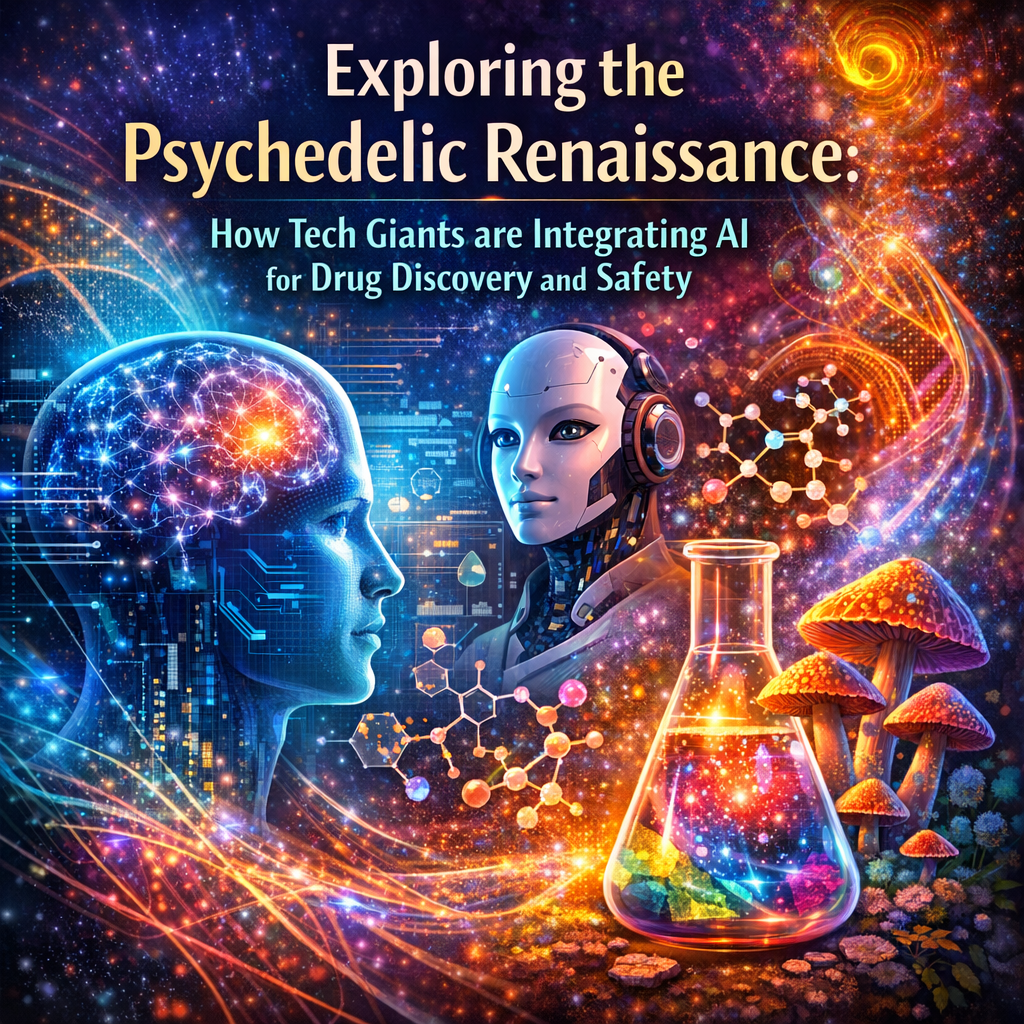
Exploring the Psychedelic Renaissance: How Tech Giants are Integrating AI for Drug Discovery and Safety
In recent years, there has been a resurgence of interest in the therapeutic potential of **psychedelic substances**, often referred to as the “Psychedelic Renaissance.” This renewed curiosity has opened pathways for groundbreaking research aimed at understanding these compounds’ complex effects on the human brain. Among the psychedelics capturing the limelight is **psilocybin**, a naturally occurring compound found in “magic mushrooms” that shows promising results for treating mental health conditions such as depression, PTSD, and anxiety.
As research progresses, major players in the tech industry have recognized the potential to leverage **artificial intelligence (AI)** in drug discovery and enhancing safety protocols. By integrating AI with psychedelic research, these technological behemoths are poised to accelerate **scientific breakthroughs** and pave the way for safer, more effective psychedelic therapies.
AI technology offers unparalleled efficiencies in processing massive datasets, which are essential in understanding and predicting the complex interactions of psychedelic compounds with various brain receptors. Tech giants like **Google**, **IBM**, and **Novartis** are investing heavily in AI-driven platforms designed to streamline the drug discovery process, reduce time and costs, and improve safety monitoring. AI’s potential to model and predict how these compounds affect human neurobiology provides a promising approach to identifying tailored treatment regimens for individual patients.
Moreover, AI can improve safety measures by predicting adverse effects and interactions with other medications, minimizing potential harm to users. Through **machine learning algorithms**, AI systems can analyze clinical trial data, patient history, and genetic information to anticipate and mitigate risks associated with psychedelic treatments. This level of personalization in therapy represents a shift towards more precise and effective mental health care solutions.
Features
The integration of AI in psychedelic drug discovery and safety is underpinned by several pioneering studies and collaborative research initiatives. One notable example is the work conducted by scientists at **Johns Hopkins University**, who have been at the forefront of clinical research on psilocybin. They have demonstrated its efficacy in alleviating symptoms of depression and anxiety in patients suffering from cancer. This study represents a watershed moment, inspiring tech companies to consider how AI could streamline similar clinical trials and develop enhanced predictive models for patient outcomes.
Complementing this is the collaborative project between **IBM** and pharmaceutical leader **Novartis**, which explores the capabilities of AI in drug discovery. Through this partnership, AI assists in the analysis of complex biological data, identifying potential new drug candidates and optimizing established compounds for therapeutic use. Their efforts emphasize AI’s role in deconstructing chemical structures and biological pathways to expedite psychedelic drug development.
Additionally, a study published in the journal *Nature Machine Intelligence* showcases the successful deployment of AI to predict neuroreceptor targets of psychedelic drugs, streamlining the identification of candidates with promising therapeutic profiles. This research highlights the transformative potential of AI in elucidating the unknowns of psychedelic pharmacology.
Furthermore, AI advancements extend beyond drug discovery into enhancing safety protocols. In a study conducted by the **University of Toronto’s Psychedelic Research Program**, AI identified biomarkers for psychotropic effects, allowing for early detection of adverse reactions to psilocybin treatments. The use of AI to enhance patient safety is a significant step forward in ensuring the responsible deployment of psychedelic therapies.
Conclusion
In leveraging AI’s capabilities, tech giants are advancing our understanding and utilization of psychedelic compounds like psilocybin. Through sophisticated data analyses and predictive modeling, AI accelerates drug discovery and enhances patient safety by predicting and mitigating risks. As the partnership between AI and psychedelic research flourishes, it holds the promise of more personalized, safe, and effective therapeutic solutions for mental health challenges.
**Concise Summary:** Tech giants like Google, IBM, and Novartis are leveraging artificial intelligence to revolutionize psychedelic drug discovery and safety, focusing on compounds like psilocybin. AI accelerates breakthroughs by processing large datasets, modeling neurobiological effects, and optimizing drug candidates. Collaborative research initiatives, such as those by Johns Hopkins University and IBM-Novartis, highlight AI’s potential to enhance clinical trials and tailor treatments. AI also improves safety protocols by predicting adverse effects and detecting biomarkers for psychotropic reactions, paving the way for personalized, effective psychedelic therapies.

Dominic E. is a passionate filmmaker navigating the exciting intersection of art and science. By day, he delves into the complexities of the human body as a full-time medical writer, meticulously translating intricate medical concepts into accessible and engaging narratives. By night, he explores the boundless realm of cinematic storytelling, crafting narratives that evoke emotion and challenge perspectives. Film Student and Full-time Medical Writer for ContentVendor.com