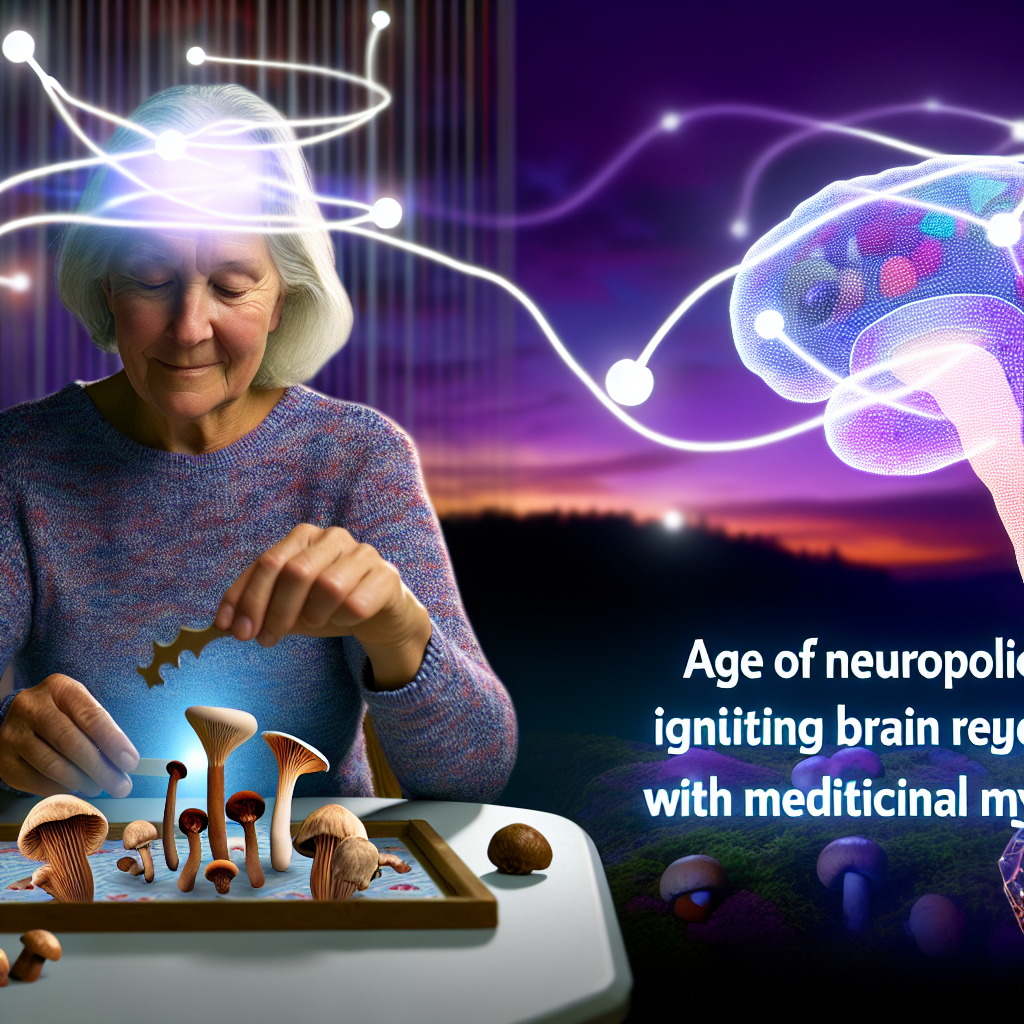
Age of Neuroplasticity: Igniting Brain Rejuvenation Beyond 65 with Medicinal Mycology
In recent years, the understanding of the human brain has evolved dramatically, leading to newfound appreciation for its capacity to change and adapt—a phenomenon known as **neuroplasticity**. Contrary to longstanding beliefs, **neuroplasticity** is not solely the province of young brains; older adults also possess a remarkable ability to reorganize neural pathways. This notion offers a beacon of hope for those seeking to maintain cognitive health and vitality well into their later years. Enter **medicinal mycology**: the exploration and application of medicinally beneficial **mushrooms** that promise an adjunctive approach to brain rejuvenation, especially in individuals over 65.
The natural decline of cognitive function is often perceived as an inevitable aspect of aging. However, recent advancements highlight that specific interventions can bolster brain resilience. **Mushrooms**, long respected in traditional medicine, have captured scientific interest for their **neuroprotective** and cognitive-enhancing properties. Certain species, such as **Lion’s Mane** (*Hericium erinaceus*), **Reishi** (*Ganoderma lucidum*), and **Cordyceps** (*Cordyceps militaris*), are particularly noteworthy. These fungi are rich in bioactive compounds that stimulate nerve growth factor (**NGF**) synthesis, which is crucial for the maintenance, survival, and regeneration of neurons [source](https://www.frontiersin.org/articles/10.3389/fnins.2016.00537/full).
**Lion’s Mane**, in particular, has garnered interest for its potential to stimulate **NGF** and myelination, thereby promoting **neuroplasticity**. Traditional medicine and emerging scientific studies suggest that the fungus can support cognitive function, especially in older demographics. **Reishi** and **Cordyceps**, meanwhile, are recognized for their **adaptogenic** properties, enhancing the body’s resilience to stress and bolstering immune function—factors that indirectly support cognitive health. The integration of these medicinal mushrooms into one’s lifestyle may, therefore, foster an environment conducive to brain health, preserving cognitive function, and possibly even enhancing **neuroplasticity** well beyond retirement age.
As research deepens, it becomes increasingly clear that **medicinal mycology** may play a pivotal role in aging populations seeking to maintain cognitive acuity and navigate the challenges of aging with vitality. Understanding and harnessing the power of these fungi signifies an exciting frontier in the science of aging and brain health, offering a natural, accessible means to potentially defy cognitive decline.
Features of Recent Studies on Medicinal Mushrooms and Neuroplasticity
Recent studies paint a promising picture of how **medicinal mushrooms** may support brain health through their unique bioactive components. A [study published in the Journal of Agricultural and Food Chemistry](https://pubs.acs.org/doi/10.1021/jf300691n) reported that **Lion’s Mane** contains **hericenones** and **erinacines**, compounds thought to stimulate the production of nerve growth factor, which is crucial for the growth and differentiation of neurons. This research implies that regular consumption of **Lion’s Mane** could help maintain cognitive function in people over 65 by enhancing brain plasticity.
Another contribution is from a [study in the International Journal of Medicinal Mushrooms](https://www.begellhouse.com/ru/journals/medicinal-mushrooms.html), which demonstrated that **Reishi mushrooms** may have a moderate effect on reducing **amyloid plaque** accumulation, a hallmark of Alzheimer’s disease. The **polysaccharides** found in **Reishi** have shown potential in protecting neural structures against **oxidative stress** and aging.
Similarly, the **Cordyceps** mushroom, traditionally used for its energy-boosting effects, has also been examined for its **neuroprotective** capabilities. A [study published in the Journal of Ethnopharmacology](https://www.sciencedirect.com/science/article/pii/S037887411831537X) found that Cordycepin, a compound extracted from **Cordyceps**, may help reduce inflammation and oxidative stress on brain tissues, factors known to impair cognitive functions and which often increase with age.
The synergistic effects of these mushrooms are of particular interest. While each mushroom offers unique benefits, their combined use may enhance overall cognitive support. This holistic approach aligns with integrative medicine philosophies, supporting neural health as well as immune, metabolic, and stress responses, all of which contribute indirectly to cognitive well-being.
Conclusion:
The growing body of research highlighting the **neuroprotective** properties of **medicinal mushrooms** presents an exciting avenue for cognitive health support in older adults. By incorporating such natural interventions, people over 65 can harness the power of **neuroplasticity** to maintain and even enhance their cognitive capacities. Embracing this fusion of ancient wisdom and modern science offers an opportunity for brain rejuvenation and sustained mental acuity as we age.
**Concise Summary:**
Emerging research highlights the potential of **medicinal mushrooms** in supporting brain health and **neuroplasticity** among older adults. Mushrooms like **Lion’s Mane, Reishi,** and **Cordyceps** contain bioactive compounds that promote nerve growth factor synthesis and protect against oxidative stress, supporting cognitive health. Regular integration of these fungi into one’s lifestyle can bolster cognitive function, offering a natural means to defy cognitive decline and maintain mental acuity well beyond the age of 65.
**References**
1. [Frontiers in Neuroscience: Neurotrophic Factors—An Overview](https://www.frontiersin.org/articles/10.3389/fnins.2016.00537/full)
2. [Journal of Agricultural and Food Chemistry – Neurohealth Constituents of Lion’s Mane](https://pubs.acs.org/doi/10.1021/jf300691n)
3. [International Journal of Medicinal Mushrooms – Reishi’s Impact on Brain Health](https://www.begellhouse.com/ru/journals/medicinal-mushrooms.html)
4. [Journal of Ethnopharmacology – Cordycepin’s Neuroprotective Properties](https://www.sciencedirect.com/science/article/pii/S037887411831537X)

Dominic E. is a passionate filmmaker navigating the exciting intersection of art and science. By day, he delves into the complexities of the human body as a full-time medical writer, meticulously translating intricate medical concepts into accessible and engaging narratives. By night, he explores the boundless realm of cinematic storytelling, crafting narratives that evoke emotion and challenge perspectives. Film Student and Full-time Medical Writer for ContentVendor.com