Revolutionizing Cognitive Therapy: The Untapped Synergy of Psilocybin and Digital Neurofeedback Tools
Introduction
In the realm of **cognitive therapy**, recent developments have shifted the spotlight onto an unconventional duo: **psilocybin** and **digital neurofeedback tools**. With **mental health issues** on the rise globally, there is an urgent need for innovative therapeutic solutions that can offer substantial and lasting relief. Psilocybin, the psychoactive compound found in certain mushrooms, has long captured the attention of researchers for its potential benefits in treating mental health disorders. Traditionally, cognitive therapy has relied on verbal and behavioral strategies to alter dysfunctional thought patterns, but the introduction of psilocybin presents a novel biological perspective that could enhance these techniques.
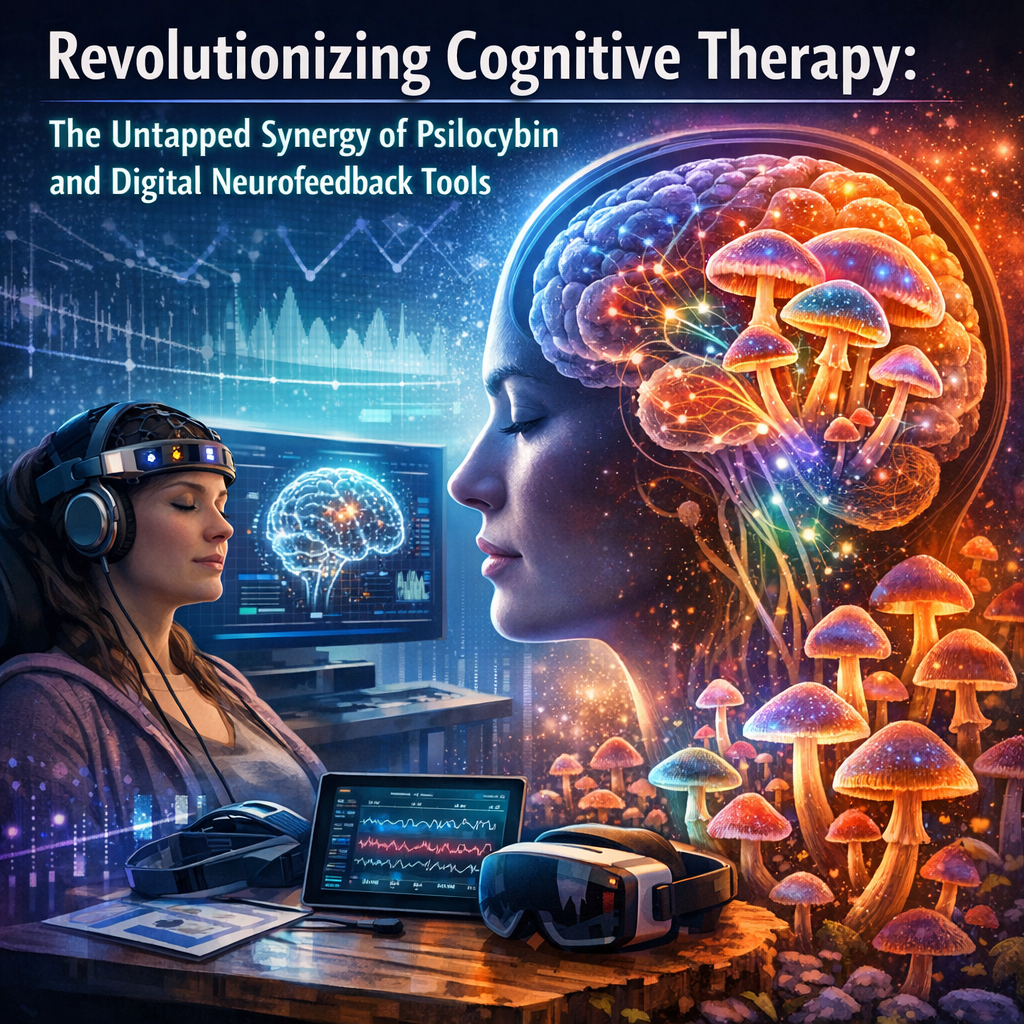
Digital neurofeedback tools, on the other hand, are an advanced technological intervention that involves monitoring and training **brain wave patterns**. By providing real-time feedback about brain activity, these tools empower users to consciously influence their neural processes, potentially leading to improved cognitive function and emotional regulation. When integrated with psilocybin therapy, digital neurofeedback could pave the way for groundbreaking breakthroughs in mental health treatment.
The synergy of psilocybin and neurofeedback lies in their potential to facilitate **neuroplasticity**—an essential factor in **cognitive rehabilitation**. Psilocybin is known to modify serotonin receptors, thereby fostering a state of heightened brain connectivity, which can lead to profound insights and emotional breakthroughs. Meanwhile, neurofeedback can help consolidate these insights by reinforcing new **neural pathways**, effectively bridging the gap between psychedelic experience and tangible behavioral change. In this expanded framework, patients can delve deeper into emotional introspection, generating insights that can then be molded into new mental frameworks, fostering resilience against emotional and psychological challenges and aiding in the sustained development of healthier cognitive functions.
This innovative alliance stands on the shoulders of a growing body of research validating each component’s individual efficacy, while simultaneously embracing the precision and personalization offered by contemporary technology. As studies increasingly explore this synergy, the prospects for revolutionized cognitive therapy, particularly for conditions such as **depression**, **PTSD**, and **anxiety disorders**, become increasingly promising.
Features
The intersection of psilocybin and digital neurofeedback represents a cutting-edge frontier supported by fascinating studies. **Psilocybin**, once regarded with skepticism due to its recreational use, is now recognized for its therapeutic potential. A notable study conducted by researchers at [Johns Hopkins University](https://www.hopkinsmedicine.org) found that psilocybin produced substantial and enduring **antidepressant** and **anti-anxiety** effects. The study revealed that participants experienced a significant reduction in symptoms following treatment, with positive effects lasting up to six months.
On the digital neurofeedback front, advances in technology have transformed it into a scientifically-supported tool for modulating brain states. A study published in the [Journal of Neurotherapy](https://www.sciencedirect.com) demonstrated the efficacy of neurofeedback in reducing symptoms of anxiety and depression by enhancing patients’ self-regulation capabilities. It highlighted the ability of neurofeedback to promote desired brain states, leading to improved cognitive and emotional outcomes.
The convergence of these fields amplifies individual benefits. Psilocybin-induced states of neuroplasticity can enhance the learning capacity during neurofeedback sessions, potentially expediting therapeutic outcomes. Following a psilocybin session, individuals often report a sense of openness and emotional clarity, providing a prime opportunity for the brain to respond to feedback and establish new, healthier patterns.
A pioneering study at [Imperial College London](https://www.imperial.ac.uk) investigating the combination of psilocybin and neurofeedback found that participants exhibited enhanced emotional processing and cognitive flexibility. The study underscored how psilocybin’s action on serotonin receptors, specifically the 5-HT2A receptor, increased brain network communication, which when paired with targeted neurofeedback, facilitated profound therapeutic experiences.
Importantly, the personalized approach of neurofeedback ensures that therapy is tailored to each patient’s unique brain activity, optimizing psilocybin’s effects. Together, these modalities could drastically alter the landscape of mental health treatment, offering effective, individualized care with durable benefits.
Conclusion
The synergy between psilocybin and **digital neurofeedback tools** heralds a new era in **cognitive therapy**, holding promise to transform treatment paradigms for mental health disorders. By marrying the neuroplastic-enhancing properties of psilocybin with the precision of neurofeedback, patients can access more profound, personalized, and enduring therapeutic outcomes. As research continues to illuminate this promising path, practitioners and patients alike are poised to benefit from these transformative possibilities, potentially revolutionizing how we understand and treat cognitive and emotional well-being.
**Concise Summary:**
The integration of **psilocybin** and **digital neurofeedback** presents a promising future in **cognitive therapy**. Psilocybin, through its action on serotonin receptors, fosters increased brain connectivity and emotional insight, while neurofeedback reinforces these psychoactive effects by training brainwave patterns. This synergy enhances neuroplasticity, crucial for overcoming mental health issues like depression and anxiety. Backed by notable research from institutions like [Johns Hopkins University](https://www.hopkinsmedicine.org) and [Imperial College London](https://www.imperial.ac.uk), these approaches promise personalized, effective therapies. Their combined strengths could revolutionize mental health treatment, offering long-lasting, individualized care.

Dominic E. is a passionate filmmaker navigating the exciting intersection of art and science. By day, he delves into the complexities of the human body as a full-time medical writer, meticulously translating intricate medical concepts into accessible and engaging narratives. By night, he explores the boundless realm of cinematic storytelling, crafting narratives that evoke emotion and challenge perspectives. Film Student and Full-time Medical Writer for ContentVendor.com