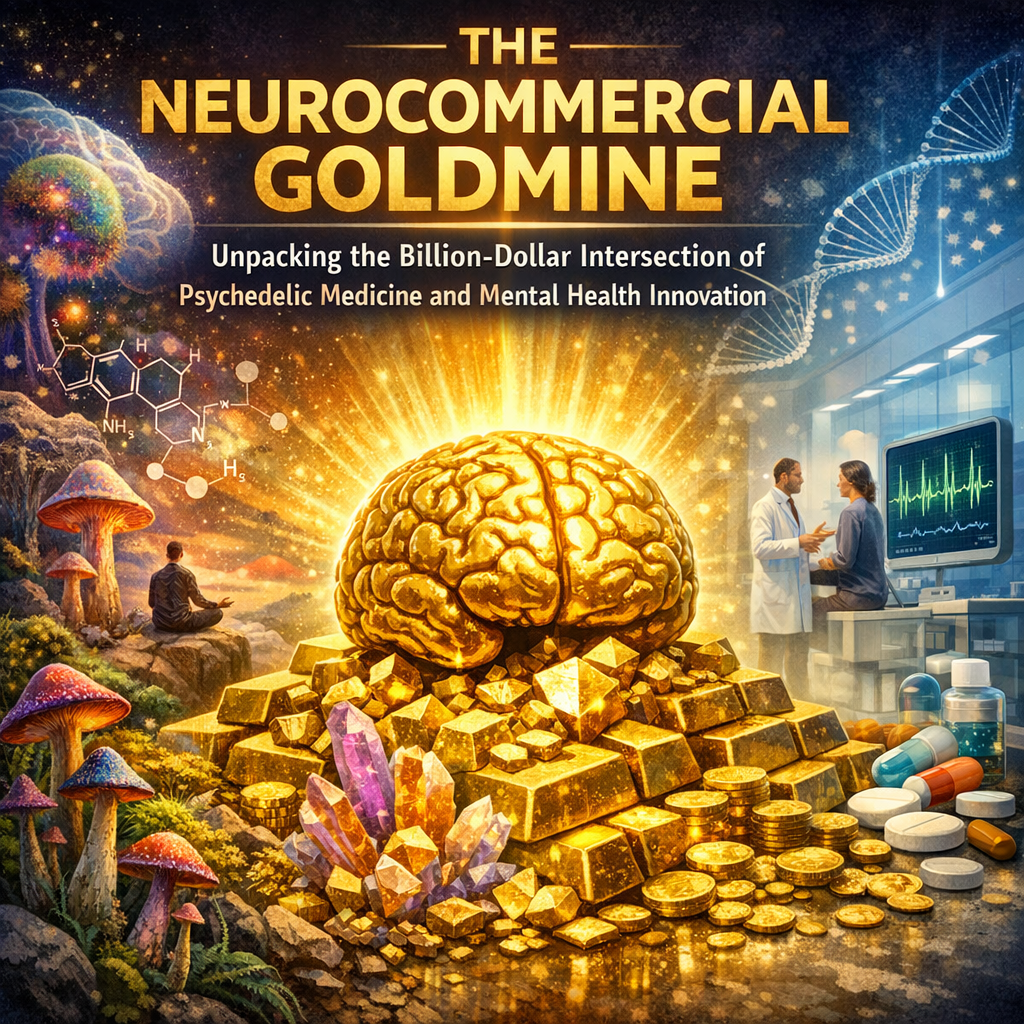
The Neurocommercial Goldmine: Unpacking the Billion-Dollar Intersection of Psychedelic Medicine and Mental Health Innovation
In recent years, the realm of **psychedelic medicine** has surged from the fringes of scientific inquiry into the mainstream. Psychedelic compounds such as **psilocybin** and **MDMA** are now seen as promising avenues for treating mental health disorders such as **depression**, **PTSD**, and **anxiety**. The growing acceptance of psychedelics as legitimate medical tools can be attributed to the confluence of public demand for novel mental health solutions and a slew of professional studies touting their efficacy. This burgeoning industry, often referred to as the “**neurocommercial goldmine**,” is currently valued in the billions and is poised for exponential growth. As society grapples with the limitations of conventional psychiatric treatments, the interdisciplinary fusion of neuroscience, mental health, and business innovation is unlocking new therapeutic horizons.
The historical context of psychedelics dates back millennia, with indigenous cultures employing these substances in spiritual and healing rituals. However, the Western medical framework largely eschewed psychedelics due to the countercultural zeitgeist of the 1960s and restrictive legal doctrines. Now, a paradigm shift is underway, propelled by relentless advocacy and groundbreaking research. Notably, the **FDA** has designated **psilocybin** as a “breakthrough therapy” for treating **depression**, highlighting a significant junction in this narrative. Modern mental health challenges, exacerbated by factors such as the **COVID-19 pandemic**, ineffective treatments, and rising global awareness, underscore the need for innovation and have catalyzed investment in this sector.
Venture capital pouring into psychedelic research and startups is testimony to the goldmine that lies at the intersection of **shroom-based treatments** and mental health innovation. **Investors** are keenly aware of the potential market size, reflecting an unprecedented belief in psychedelic medicine’s ability to revolutionize mental healthcare. Yet, navigating this space requires careful consideration of ethical issues, regulatory frameworks, and the scientific rigor necessary to back claims. Undeniably, the fusion of mental health care innovation and psychedelic medicine is a commercial endeavor but is also fundamentally catered toward enhancing human well-being.
Features: Exciting Developments from Leading Studies
Several pivotal studies have catapulted **psychedelics** into the mental health spotlight. **Johns Hopkins University**, a pioneer in psychedelic research, has been at the forefront of studies highlighting the efficacy of psilocybin in treating depression and anxiety, particularly in life-threatening cancer cases. Their open-label study found significant reductions in depression scores, with effects lasting up to six months post-treatment ([Johns Hopkins Medicine](https://www.hopkinsmedicine.org/news/newsroom/news-releases/johns-hopkins-study-finds-psilocybin-may-help-ease-major-depression), 2020).
Meanwhile, the **Multidisciplinary Association for Psychedelic Studies (MAPS)** has made substantial headway with **MDMA-assisted therapy** for PTSD. A Phase 3 clinical trial revealed that 67% of participants no longer met PTSD diagnostic criteria following treatment, compared to 32% in the placebo group ([MAPS](https://maps.org/news), 2021). This evidence asserts MDMA’s potential as a powerful therapeutic adjunct, challenging the traditional pharmacological approach with more profound and lasting changes.
These compelling scientific findings foreshadow a broader acceptance and integration of psychedelic therapies within conventional medicine. It is of paramount importance to ensure that such promising treatments align with robust clinical guidelines and practice protocols. Consequently, psychedelics offer a dual benefit—unlocking novel treatment pathways while reducing the societal stigma surrounding mental health disorders.
However, unexplored territories remain in understanding the long-term impacts of psychedelic therapy and deciphering its mechanisms of action. Psychedelics seem to facilitate **neuroplasticity**, suggesting they may enable the brain to rewire and form new connections, thus alleviating maladaptive patterns associated with mental disorders.
The safety profile of these compounds, when administered within strict clinical settings, raises hopes for new safer alternatives to traditional medications, which often come with significant side effects or insufficient efficacy. Nonetheless, further randomized controlled trials, empirical validation, and regulatory endorsements are essential to fully validate and endorse psychedelic therapies. All these elements will ultimately determine their scalability and accessibility to the larger population in need.
Conclusion: A Promising Frontier
As the intersection of **psychedelic medicine** and **mental health innovation** continues to evolve, it presents both challenges and opportunities. Successful navigation through scientific, regulatory, and commercial waters will be crucial to transform this nuanced field into a mainstream therapeutic powerhouse. Ultimately, integrating psychedelic therapies into the wider mental healthcare framework could reshape how we understand, experience, and treat psychological illnesses, offering millions a chance at improved mental health and a better quality of life.
**Summary**
The intersection of psychedelic medicine and mental health is an emerging field with immense potential. Psychedelic compounds, like **psilocybin** and **MDMA**, are proving effective in treating disorders like **depression** and **PTSD**, driving significant investment and innovation. Studies from institutions like **Johns Hopkins** and **MAPS** highlight these substances’ therapeutic promise, potentially leading to broader acceptance and integration in conventional medicine. However, ethical concerns, regulatory hurdles, and the need for rigorous scientific validation remain crucial for widespread adoption. If these challenges are met, psychedelics could redefine mental health treatment and offer improved well-being for many.

Dominic E. is a passionate filmmaker navigating the exciting intersection of art and science. By day, he delves into the complexities of the human body as a full-time medical writer, meticulously translating intricate medical concepts into accessible and engaging narratives. By night, he explores the boundless realm of cinematic storytelling, crafting narratives that evoke emotion and challenge perspectives. Film Student and Full-time Medical Writer for ContentVendor.com