Revolutionizing Psychedelic Integration: The Role of AI in Personalized Psilocybin Therapy
Introduction
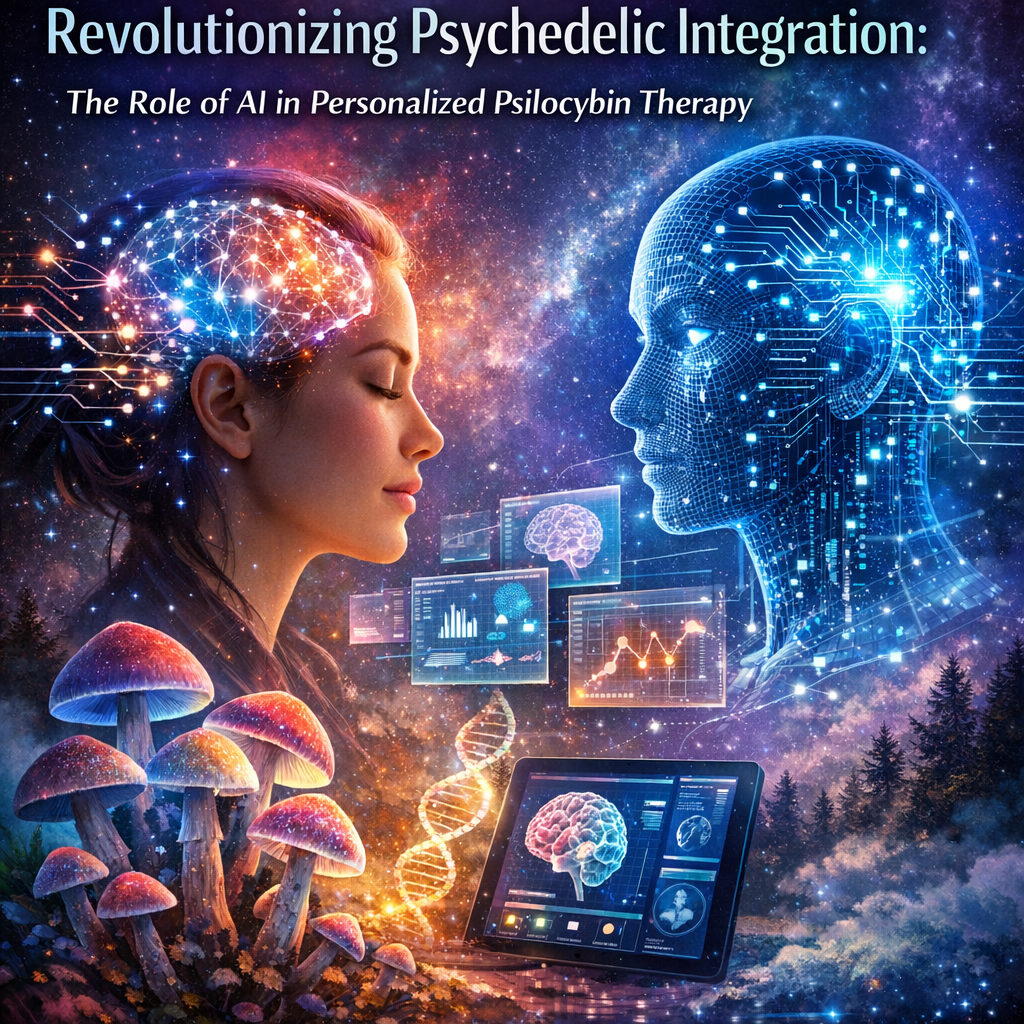
The therapeutic potential of **psilocybin**, a **psychedelic compound** found in certain species of mushrooms, has garnered significant attention in recent years. Once relegated to countercultural experimentation, psilocybin is now at the forefront of cutting-edge medical research, particularly for its potential to address mental health challenges like **depression**, **anxiety**, and **PTSD**. As interest in **psychedelic-assisted therapy** grows, so too does the need for personalized treatment approaches to ensure safety and efficacy. This is where **artificial intelligence (AI)** steps in, offering revolutionary ways to tailor psilocybin therapy to individual needs.
AI’s ability to analyze vast datasets with speed and precision makes it an invaluable tool in the realm of personalized medicine. For psilocybin therapy, this means developing comprehensive patient profiles that consider **genetics**, **psychological history**, **lifestyle**, and even previous psychedelic experiences. By employing **machine learning algorithms**, researchers and clinicians can identify patterns and predict how an individual’s body and mind might respond to psilocybin treatment. This precision not only enhances therapeutic outcomes but also minimizes potential risks.
Moreover, AI-facilitated analytics enable the ongoing monitoring of patients undergoing psilocybin therapy. By tracking physiological and psychological responses in real-time, AI systems can adapt treatment plans dynamically. This is particularly useful in managing dosage adjustments and integrating therapeutic checkpoints, thus ensuring a balance of efficacy and safety.
Furthermore, AI can support the continuous improvement of psychedelic protocols by analyzing longitudinal patient data. Insights gained from numerous treatment cycles help refine existing methodologies and foster the development of innovative therapeutic strategies. This progressive feedback loop enhances the clinical understanding of psilocybin’s impact and aids in optimized route mapping for individualized therapeutic journeys.
Features
Recent studies and clinical trials have provided compelling evidence supporting the efficacy of psilocybin-assisted therapy. A landmark study published in the New England Journal of Medicine demonstrated that a single dose of psilocybin significantly reduced symptoms of treatment-resistant depression over a six-month period. Additionally, a clinical trial reported in JAMA Psychiatry showed rapid and sustained reductions in anxiety and depression among patients facing life-threatening cancer diagnoses after psilocybin treatment.
In parallel, the role of AI in enhancing psychiatric care is becoming increasingly recognized. A study published in Nature Medicine outlined how machine learning could predict patient responses to antidepressants with impressive accuracy. By incorporating genetic, environmental, and psychological data, AI systems could foresee treatment outcomes, underscoring the potential of AI-powered personalization in psilocybin therapy.
A notable example of AI integration is MindMed’s development of the Albert platform, designed for monitoring and analyzing patient journeys through psychedelic therapy. By using AI algorithms, Albert provides real-time insights into patient progress, facilitating data-driven clinical decisions.
Additionally, the utilization of AI in personalized treatments aligns with ongoing neural research. Machine learning techniques have been employed to decode brain imaging data, helping to elucidate psilocybin’s effects on neural connectivity (source). These breakthroughs in understanding the brain’s response to psilocybin further enhance the development of predictive models for personalized therapy protocols.
Conclusion
The integration of AI in personalized psilocybin therapy promises to transform psychedelic treatment paradigms, offering highly individualized, safe, and effective therapeutic interventions. By merging cutting-edge technology with groundbreaking psychiatric research, we are stepping into a future where mental health challenges can be addressed with unprecedented precision and care. As AI continues to evolve, its synergy with psilocybin therapy is set to revolutionize the field, bringing hope and healing to countless individuals.
Concise Summary
Psilocybin, a psychedelic compound, is gaining recognition for its potential in treating mental health issues such as depression and anxiety. Integrating AI with psilocybin therapy allows for personalized patient treatment, enhancing safety and efficacy. AI’s data analysis capabilities help develop detailed patient profiles and predict responses to therapy. Real-time AI monitoring aids in dynamic treatment adjustments, ensuring optimal outcomes. Recent studies confirm the efficacy of psilocybin-assisted therapy, and AI’s role in psychiatric care is expanding, enhancing predictive capabilities. This integration promises a revolutionary advancement in psychedelic therapy, offering precise and effective mental health interventions.

Dominic E. is a passionate filmmaker navigating the exciting intersection of art and science. By day, he delves into the complexities of the human body as a full-time medical writer, meticulously translating intricate medical concepts into accessible and engaging narratives. By night, he explores the boundless realm of cinematic storytelling, crafting narratives that evoke emotion and challenge perspectives. Film Student and Full-time Medical Writer for ContentVendor.com