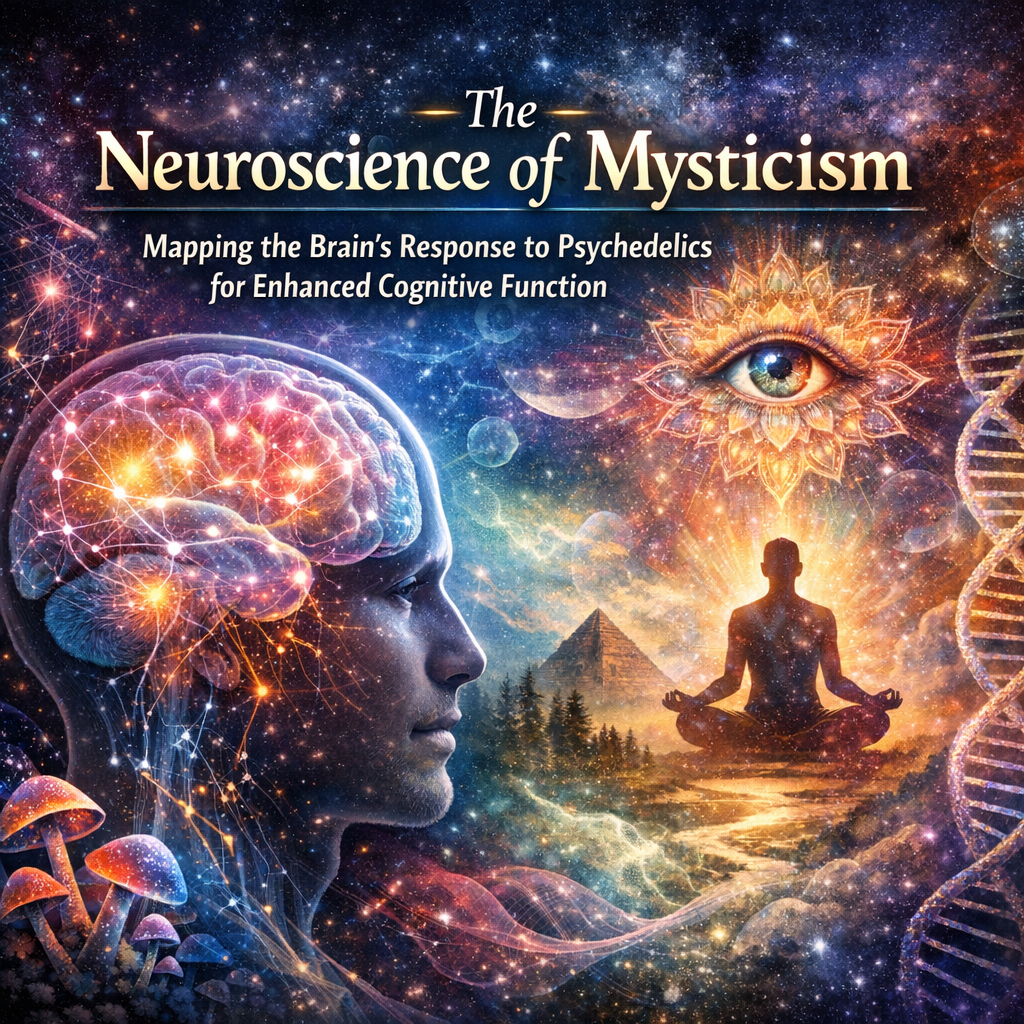
The Neuroscience of Mysticism: Mapping the Brain’s Response to Psychedelics for Enhanced Cognitive Function
The exploration of **psychedelics**, particularly **psilocybin**, has undergone a renaissance in recent years, gaining traction within the fields of **psychology**, **psychiatry**, and **neuroscience**. One compelling aspect of this research is how these substances interact with the human brain, potentially serving as catalysts for enhanced **cognitive function** and mystical experiences. By exploring the neuroscience of mysticism, researchers aim to map out how psychedelics like psilocybin can unlock new pathways in the brain, promote mental well-being, and even alter consciousness to engender profound shifts in perception.
Mystical experiences often accompany the use of **psychedelics** and differ considerably from everyday consciousness. They are characterized by feelings of interconnectedness, transcendence of time and space, and a sense of awe or revelation. Remarkably, these altered states of consciousness mirror descriptions long familiar to mystics, shamans, and spiritual practitioners, suggesting an inherent and deep-seated capacity within the human psyche for such experiences.
The interaction between psychedelics and the brain is a dynamic process involving various neurotransmitter systems. **Psilocybin**, the active component in “magic mushrooms,” primarily operates on the **serotonin 2A receptor system**, leading to a cascade of neural events. This interaction is believed to “reset” or “reboot” certain modes of neural processing, promoting **cognitive flexibility**, enhancing creativity, and potentially uncovering new ways of being and understanding.
Modern **neuroimaging studies** have begun to shed light on these phenomena by providing insight into specific changes in brain connectivity and integrity. Using techniques like **functional magnetic resonance imaging (fMRI)**, researchers can observe the brain networks involved in mystical experiences. These studies suggest that psychedelics alter the **default mode network (DMN)**, a crucial brain network responsible for self-referential thought and ego structure, thereby allowing for innovative cognitive approaches and deeper introspection.
Features:
Significant research has been conducted to probe the effects of psychedelics on the brain. A notable study published in *Cell Reports* in 2020 demonstrated that even a single dose of **psilocybin** can lead to sustained reductions in **depression** and **anxiety**, pointing towards alterations in brain network dynamics [source](https://www.cell.com/cell-reports/home). The researchers observed increased connectivity across brain regions, suggesting that psychedelics may facilitate a “reorganization” of brain circuitry, enhancing communication between them. This reorganization is linked to reduced activity in the **DMN**, which is known for its role in introspection and self-identity. By quieting the DMN, **psychedelics** may diminish the self-referential processing associated with rigidity in thinking and depression.
Another pioneering study published in *The Journal of Psychopharmacology* highlighted the potential of psilocybin-assisted therapy for individuals with treatment-resistant **depression** [source](https://journals.sagepub.com/home/jop). After two sessions of psilocybin treatment, participants reported profound mystical-type experiences, reinforcing the interconnectedness of the brain’s response to psychedelics and enhanced cognitive function. The study also noted increases in emotional processing and empathy, which may open new therapeutic avenues for various psychiatric disorders.
The insights gained from studying **psychedelics** have not only deepened our understanding of human consciousness but also highlighted their potential in enhancing cognitive function through **neuroplasticity**—the brain’s ability to reorganize and form new connections. Psychedelics may promote flexible thinking, creativity, and insight, creating a fertile ground for personal growth and transformation. This emerging body of research predicts a future where **psychedelics** could be integrated into therapeutic practices, fostering improved mental health outcomes.
Conclusion:
The neuroscience of mysticism unveils a promising frontier where **psychedelics** like **psilocybin** serve as tools to explore consciousness and potentially enhance cognitive function. As research progresses, the integration of these agents within clinical and therapeutic realms holds the promise of revolutionizing **mental health treatment** by harnessing the brain’s innate capacity for transformation and healing. Through careful study and pioneering research, the journey into the mysteries of mind and mysticism continues to unfold with remarkable potential.
Concise Summary
The exploration of psychedelics, particularly psilocybin, has seen a resurgence, especially in fields like psychology and neuroscience. These substances interact with the human brain to enhance cognitive function and induce mystical experiences characterized by interconnectedness and awe. Psilocybin primarily affects the serotonin 2A receptor, potentially resetting neural processing and promoting cognitive flexibility. Studies reveal altered brain connectivity and reduced activity in the default mode network, facilitating personal growth and healing. As research advances, psychedelics hold the potential to revolutionize mental health treatment through enhanced neuroplasticity and therapeutic integration.

Dominic E. is a passionate filmmaker navigating the exciting intersection of art and science. By day, he delves into the complexities of the human body as a full-time medical writer, meticulously translating intricate medical concepts into accessible and engaging narratives. By night, he explores the boundless realm of cinematic storytelling, crafting narratives that evoke emotion and challenge perspectives. Film Student and Full-time Medical Writer for ContentVendor.com