**
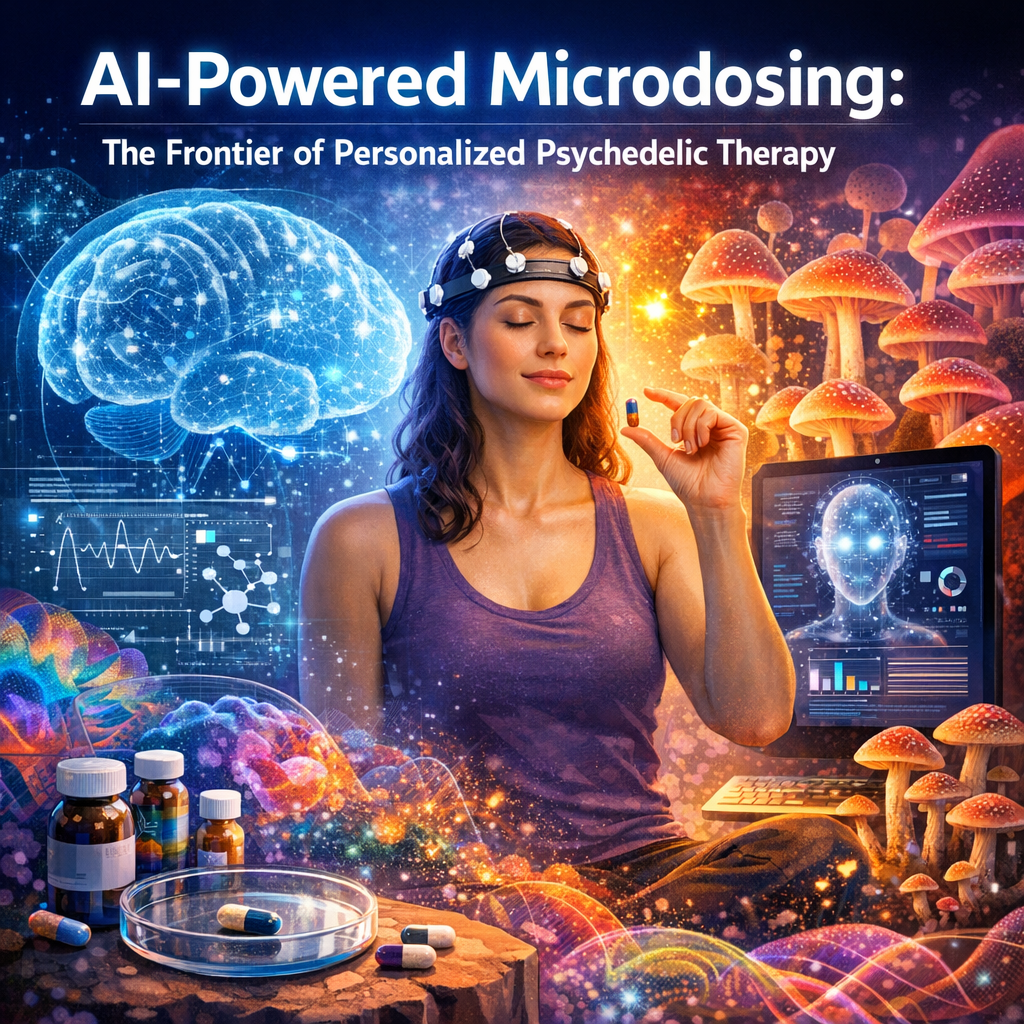
AI-Powered Microdosing: The Frontier of Personalized Psychedelic Therapy
**
**
Introduction
**
In the realm of **mental health and wellness**, innovative solutions are continually being explored to address the complexities of the human mind. At the intersection of technology and traditional medicine, a new frontier is emerging: **AI-powered microdosing** for personalized psychedelic therapy. This intriguing approach combines the ancient wisdom of **psilocybin mushroom** usage with modern **artificial intelligence** capabilities to optimize therapeutic outcomes for individuals seeking **mental health support**.
Microdosing, the practice of consuming sub-perceptual amounts of **psychedelics**, typically involves the use of **psilocybin**, the active compound in **magic mushrooms**. Traditionally, proponents of microdosing have reported benefits such as enhanced creativity, better focus, and mood improvement without the intense trips associated with larger doses. Despite its attractiveness, the efficacy and safety of microdosing remain areas of ongoing research and debate within the **scientific** and **medical** communities.
Enter artificial intelligence. By leveraging the massive data-processing and **pattern-recognition capabilities of AI**, it becomes possible to tailor microdosing regimens to meet individual needs accurately. **AI** can analyze vast amounts of personal data, including genetic information, psychological history, and lifestyle, to determine the optimal microdosing schedule and dosage for each person. This personalized approach aims to maximize therapeutic benefits while minimizing potential risks.
The concept of **personalized medicine** isn’t new, but its application in **psychedelic therapy** represents a cutting-edge advancement. Current research suggests that psychedelic substances interact with the brain’s **serotonin receptors** to produce their effects, and individual responses to psychedelics can vary significantly. AI’s predictive analytics can help navigate this variability, offering individuals a more reliable pathway to mental health improvements.
As researchers and healthcare professionals explore the boundaries of psychedelics in therapy, the integration of **AI technologies** promises to revolutionize how these substances are used. The merger of advanced technology with natural compounds like **psilocybin** could pave the way for a new era in mental health treatment, characterized by precision, personalization, and profound effectiveness.
**
Features
**
The integration of **AI** into microdosing practices is supported by emerging studies and professional insights that suggest a promising future for this innovative approach. Researchers have long known that the effects of **psychedelics** can vary widely from person to person. This variability is due to several factors, including genetics, individual brain chemistry, environment, and subjective experiences. **AI** can assist by processing these complex datasets to tailor microdosing strategies individually.
A study published in [*Frontiers in Psychology*](https://www.frontiersin.org/journals/psychology) highlights the potential of **machine learning algorithms** to predict and enhance the outcomes of psychedelic therapy. By analyzing patterns in large datasets of patient experiences, **AI** can identify predictors of positive therapeutic outcomes. These insights enable healthcare professionals to customize microdosing protocols that better resonate with an individual’s unique psychological and physiological makeup.
Another relevant study conducted by the [Center for Psychedelic Research at Imperial College London](https://www.imperial.ac.uk/psychedelic-research-centre/) explores the therapeutic potential of psychedelics like **psilocybin**. Researchers have used **AI tools** to analyze brain imaging data and better understand how psychedelics impact brain activity. This research underpins the role **AI** can play in personalizing psychedelic therapy to foster greater effectiveness and safety.
Moreover, **AI-driven platforms** can facilitate real-time monitoring of individuals’ mental health parameters during the microdosing process. By continuously collecting data through wearable devices or mobile applications, **AI** can offer dynamic adjustments to dosing schedules and provide warnings in the event of potential negative responses. This adaptability is crucial for maintaining safety while optimizing therapeutic potential.
Despite promising advancements, the field is still in its nascent stages. **Ethical considerations**, data privacy, and the need for widespread clinical validation remain pivotal areas of focus. Nevertheless, the synergy between **AI** and psychedelic therapy embodies a promising transformation in **mental health treatment**, offering the potential to move from generalized therapies to highly targeted interventions.
**
Conclusion
**
**AI-powered microdosing** represents a compelling advancement in personalized psychedelic therapy, promising more tailored and effective treatment options for mental health. As research continues to evolve, the integration of **AI** with **psilocybin therapy** could redefine mental health care, providing new hope for individuals seeking holistic and precise wellness solutions. By combining the power of modern technology with ancient therapeutic practices, this emerging field holds the potential to revolutionize how we approach mental health challenges in the future.
**
Concise Summary
**
AI-powered microdosing merges the ancient practice of using psilocybin mushrooms with modern AI technology to enhance personalized psychedelic therapy. Leveraging AI, which processes complex data like genetics and psychological history, allows tailoring precise microdosing regimens, aiming for optimal therapeutic results while minimizing risks. Ongoing research reveals AI’s potential to predict individual responses to psychedelics, thus fostering better mental health outcomes. Despite ethical and validation challenges, the fusion of AI with psychedelic therapy promises a transformative shift in mental health care, offering more personalized, effective treatments for diverse individuals.
**
References
**
1. [Frontiers in Psychology](https://www.frontiersin.org/journals/psychology). “Frontiers in Psychology”.
2. [Imperial College London](https://www.imperial.ac.uk/psychedelic-research-centre/). “The Psychedelic Research Group”.

Dominic E. is a passionate filmmaker navigating the exciting intersection of art and science. By day, he delves into the complexities of the human body as a full-time medical writer, meticulously translating intricate medical concepts into accessible and engaging narratives. By night, he explores the boundless realm of cinematic storytelling, crafting narratives that evoke emotion and challenge perspectives. Film Student and Full-time Medical Writer for ContentVendor.com