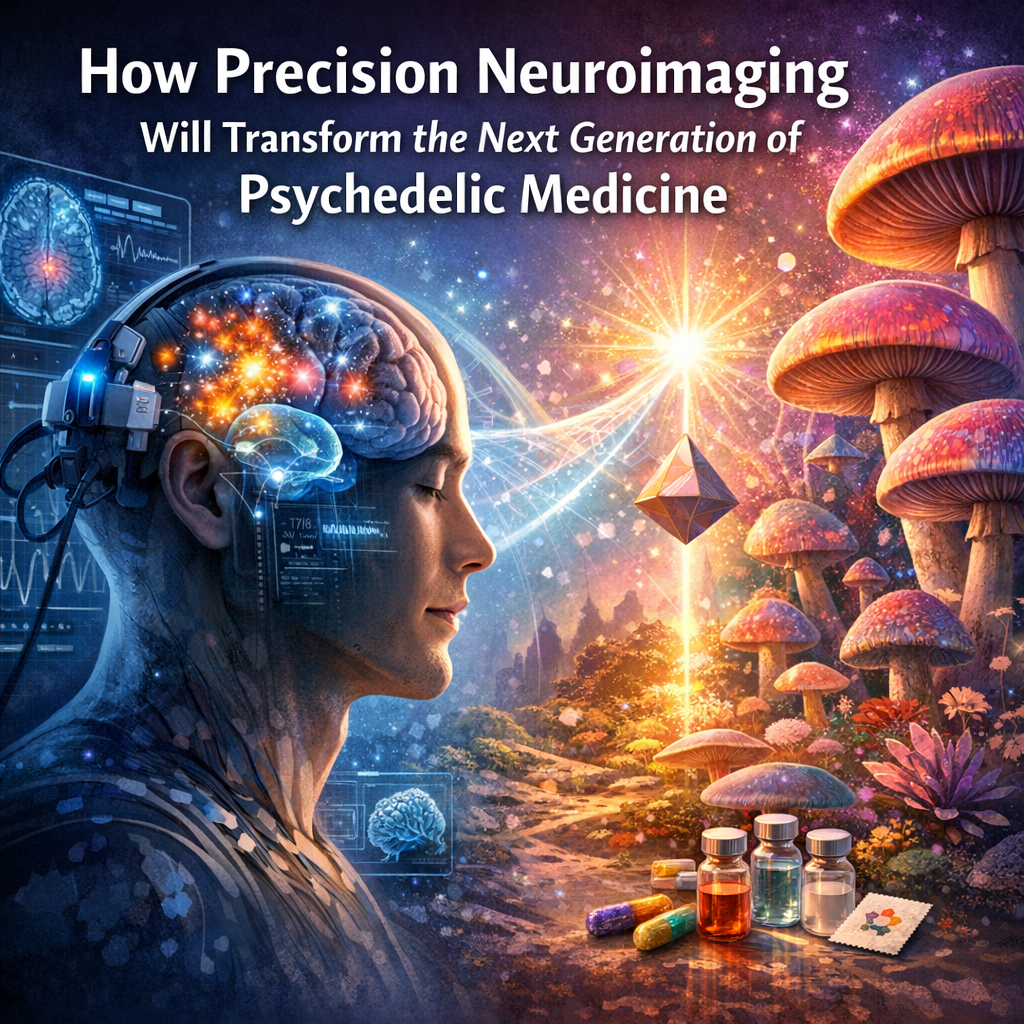
How Precision Neuroimaging Will Transform the Next Generation of Psychedelic Medicine
Introduction
In recent years, the field of **psychedelic medicine** has witnessed unprecedented growth, propelled forward by a confluence of **decriminalization**, **destigmatization**, and **scientific exploration**. Amid this burgeoning interest, one particular discipline is revolutionizing our understanding of how psychedelics affect the human brain: precision neuroimaging. As a key contributor to the ongoing research around **psilocybin** and similar compounds, precision neuroimaging stands at the intersection of neuroscience and mental health, offering unparalleled insights into how these substances interact with the brain. This advanced technology allows scientists and medical professionals to visualize real-time responses in the mind on a granularity previously unimaginable.
**Precision neuroimaging** techniques, such as **functional Magnetic Resonance Imaging (fMRI)** and **Magnetoencephalography (MEG)**, have become indispensable tools in capturing the neural underpinnings of **psychedelic experiences**. They offer a window into the brain’s functional connectivity, modulation of consciousness, and the therapeutic potential of these substances. With **mental health disorders**—ranging from **depression** and **PTSD** to **addiction**—continuing to affect millions globally, the promises of a new, effective line of treatment methods through psychedelics are indeed momentous.
Together with clinical trials, precision neuroimaging is empowering researchers to fine-tune psychedelic experiences for maximum therapeutic efficacy, determining ideal dosages, identifying patient-specific responses, and even paving the way for personalized medicine approaches. This comprehensive view aids in debunking myths while promoting informed discussions, aligning cultural expectations with scientific realities.
The integration of precision neuroimaging into this domain is poised to transform perceptions and treatments, driving innovative approaches to addressing anxiety, depression, trauma, and existential distress. It establishes a crucial link—allowing for the optimization of intervention strategies while mitigating risks—thus reaffirming the importance of evidence-based approaches in mastering the complex symphony orchestrated by psychedelic experiences in the human mind.
Features
Precision neuroimaging has uncovered significant insights that serve as the cornerstone of transformative changes in psychedelic research and application. Notable research by **Imperial College London’s Centre for Psychedelic Research** has leveraged fMRI to illustrate how psilocybin prompts widespread increases in brain network connectivity, essentially “resetting” brain circuits implicated in depression ([source](https://www.imperial.ac.uk/psychedelic-research-centre)). This ‘reset’ effect has been likened to shaking a snow globe, wherein the brain can reorganize and recalibrate, breaking free from rigid patterns of **fear** and **rumination** that typify mental health struggles.
Similarly, a study published in the journal *Nature* employed MEG technology to reveal how **LSD** and similar psychedelics enhance communication between different brain regions, manifesting the profound perceptual changes often reported during **psychedelic experiences** ([source](https://www.nature.com/articles/s41586-018-0278-1)). These findings enhance our understanding of the neurobiological basis for experiences described as profound and life-changing, impacting therapeutic outcomes positively.
Moreover, precision neuroimaging is instrumental in addressing potential safety concerns, a critical aspect often scrutinized by stakeholders and regulatory bodies alike. A 2020 study made strides in elucidating how such detailed brain maps can help predict adverse experiences, identifying patients who may not be suited for traditional psychedelic sessions due to preexisting neural markers ([source](https://jamanetwork.com/journals/jamapsychiatry/article-abstract/2770868)).
As more studies harness the power of precision neuroimaging, the path towards personalized psychedelic medicine becomes clearer. It defies the conventional “one-size-fits-all” approach that mental healthcare has historically employed, suggesting a future where neuroimaging results inform individualized therapeutic regimens. Researchers anticipate that such tailored strategies will optimize therapeutic outcomes and minimize risks, making psychedelic treatments safer and more efficient than ever before.
Conclusion
Precision neuroimaging is proving to be pivotal in unlocking the full potential of **psychedelic medicine**, transforming it from a nascent science into a discipline of tangible, verifiable treatments. As we delve deeper into understanding the neurological footprints left by psychedelics, the integration of advanced imaging technology assures a future where mental health treatments are not only more effective but also personalized. This revolution will significantly enhance contemporary practices, ushering in a new era of mental health therapeutics that is as accurate and personalized as it is profound and transformative.
**Concise Summary:** Precision neuroimaging is reshaping the field of psychedelic medicine by offering deep insights into how substances like psilocybin affect the brain. Techniques like fMRI and MEG provide real-time visualizations of brain activity, aiding in personalized treatment planning for mental health disorders such as depression and PTSD. By fine-tuning psychedelic experiences, researchers aim to optimize therapeutic outcomes, ensuring safety and effectiveness. This technology heralds a paradigm shift towards personalized mental health therapies, promising a future where treatments are more accurate and transformative than traditional approaches.

Dominic E. is a passionate filmmaker navigating the exciting intersection of art and science. By day, he delves into the complexities of the human body as a full-time medical writer, meticulously translating intricate medical concepts into accessible and engaging narratives. By night, he explores the boundless realm of cinematic storytelling, crafting narratives that evoke emotion and challenge perspectives. Film Student and Full-time Medical Writer for ContentVendor.com