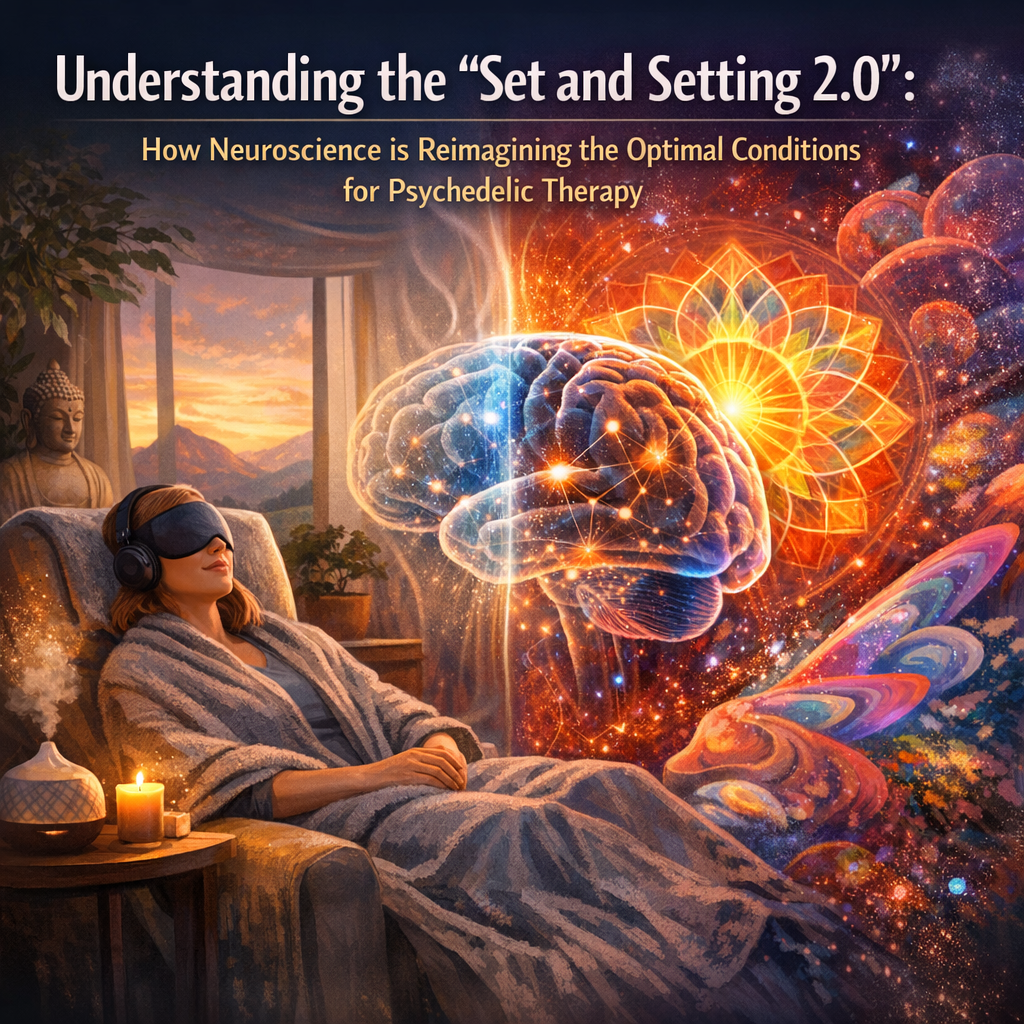
Understanding the “Set and Setting 2.0”: How Neuroscience is Reimagining the Optimal Conditions for Psychedelic Therapy
Introduction
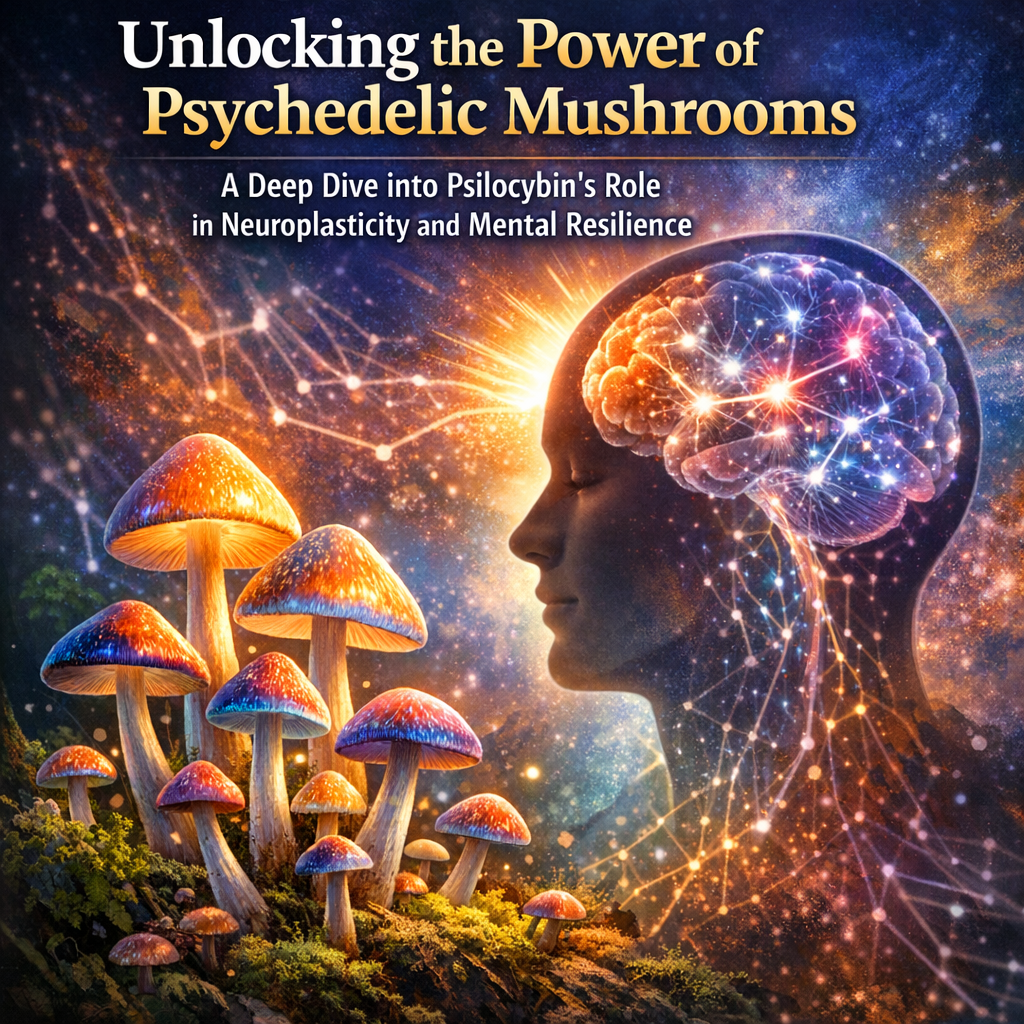
The realm of **psychedelic therapy** is undergoing a **renaissance**, spurred by the promising results of substances like **psilocybin** in treating **mental health** conditions. Historically, the concept of **”set and setting”**, coined by **Timothy Leary** in the 1960s, has been central to these therapies, focusing on the individual’s mindset and the session’s environment. Modern **neuroscience** is deepening this understanding, introducing **”Set and Setting 2.0″**. This advanced framework examines how **brain networks** like the **Default Mode Network (DMN)** interact with external conditions, aiming to refine therapeutic processes by integrating new technologies, enhancing outcomes, and minimizing risks.
As neuroscience advances, it uncovers the complexities of how psychedelics work in the brain, including their ability to disrupt DMN activity, which is linked to **self-referential thoughts** and the ‘ego.’ Such disruptions may lead to breakthroughs in treatment-resistant conditions like **depression**, **PTSD**, and **addiction**. Today, the focus is on personalizing therapies based on genetic, psychological, and environmental factors, incorporating tools like **virtual reality** and **biofeedback** into sessions, while emphasizing the importance of **intention setting** and rapport between therapist and patient.
Features
Recent studies have highlighted the intricacies of set and setting. A **2020 study** in *Neuropsychopharmacology* demonstrated how altering environmental stimuli can influence the effects of psilocybin, emphasizing the customizable nature of settings ([source](https://www.nature.com/articles/s41386-020-00824-x)). Meanwhile, **Johns Hopkins University** research stressed the benefits of robust preparatory sessions in improving openness and mystical experiences ([source](https://hopkinsmedicine.org)).
Further studies explore real-time **monitoring of brain activities** using **fMRI** and **EEG** during sessions, paving the way for **neuromodulated environments** designed to support therapeutic breakthroughs ([source](https://journals.sagepub.com/home/cpx)). Additionally, **virtual reality** is proving to be a groundbreaking tool, creating immersive environments conducive to transformative experiences ([source](https://www.frontiersin.org)). Research in the **Journal of Psychopharmacology** highlights the impact of intention and rapport on the brain’s reward systems, facilitating more effective therapeutic journeys ([source](https://journals.sagepub.com/home/jop)).
Conclusion
Standing on the brink of a new era in psychedelic therapy, understanding the dynamics of **”Set and Setting 2.0″** provides new opportunities for healing. By harnessing insights from contemporary neuroscience, along with personalized and technology-enhanced approaches, the potential for maximizing therapeutic outcomes is vast. Continued research and applications may place psychedelic therapy at the forefront of integrative mental health treatments, paving the way for revolutionary standards in healing and well-being.
Concise Summary
The article discusses the evolution of **psychedelic therapy**, focusing on the **advanced framework** of **”Set and Setting 2.0″**. While traditional treatments emphasized mindset and environment, modern neuroscience offers a deeper understanding of how **brain networks** interact with external conditions. By personalizing therapies and integrating technologies like **virtual reality**, this new approach enhances therapeutic outcomes. Studies have demonstrated the benefits of tailored environments and preparatory sessions. As **neuroscience** evolves, psychedelic therapy could become a major component of mental health treatment, offering innovative solutions for **depression**, **PTSD**, and **addiction**.

Dominic E. is a passionate filmmaker navigating the exciting intersection of art and science. By day, he delves into the complexities of the human body as a full-time medical writer, meticulously translating intricate medical concepts into accessible and engaging narratives. By night, he explores the boundless realm of cinematic storytelling, crafting narratives that evoke emotion and challenge perspectives. Film Student and Full-time Medical Writer for ContentVendor.com