**The Claustrum’s Role: Unlocking Consciousness Through Psychedelic Innovation**
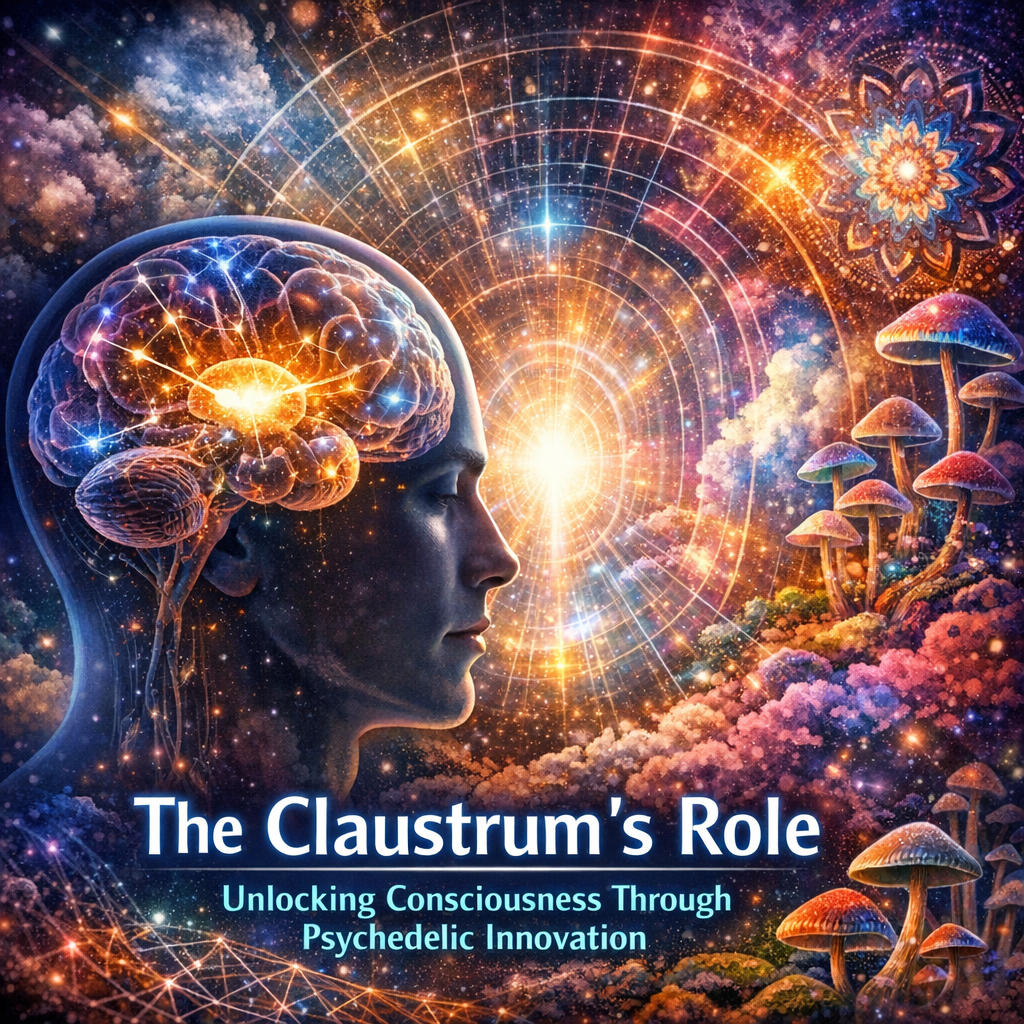
In recent years, the **world of neuroscience** has experienced a surge of interest in understanding **consciousness** and the potential role **psychedelic substances** could play in unlocking its mysteries. Among the brain’s many enigmatic structures, the **claustrum** stands out as a critical focal point for researchers. This thin, irregular sheet of neurons, nestled between the inner surface of the **neocortex** and the outer surface of the **putamen**, has been implicated in coordinating various functions of consciousness, including perception, attention, and decision-making.
The renewed interest in the **claustrum** is in part driven by the promising developments in **psychedelic research**. Psychedelics like **psilocybin**, **LSD**, and **MDMA** are being studied not only for their **therapeutic potentials** but also for the insights they may provide into the workings of the human mind. The possibility that these substances could somehow interact with the **claustrum** is a tantalizing hypothesis that might explain their profound effects on **consciousness**.
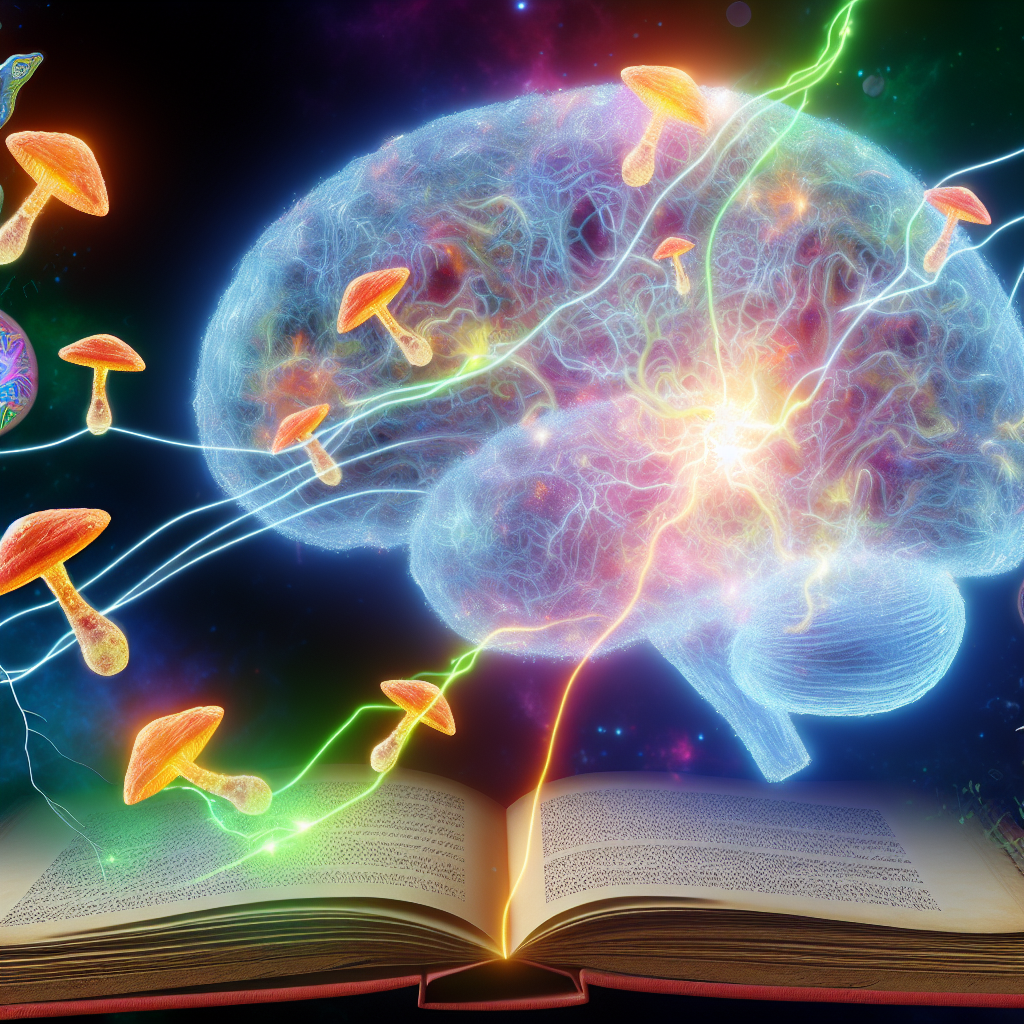
Famed scientist and neuroscientist, **Francis Crick**, famously hypothesized that the **claustrum** could be the “conductor” of the brain’s orchestra, coordinating the myriad of neural activities that produce our unified conscious experience. Research into **psychedelics** has been limited for decades due to regulatory hurdles, but recent changes have allowed for new studies into how these substances affect the brain’s functioning. Notably, burgeoning evidence suggests that **psychedelics** affect **brain connectivity** and alter the balance of neural activity, which could significantly involve the **claustrum**.
Among **psychedelic substances**, **psilocybin**—the psychoactive ingredient in so-called “magic mushrooms”—has emerged as a frontrunner in revealing the **claustrum**’s potential secrets. Researchers hypothesize that **psilocybin** might enhance **cognitive flexibility** and mood in patients by altering activity in this elusive part of the brain. Therefore, understanding the **claustrum**, and its interactions with **psychedelics** could usher in a new era of innovation in **mental health treatments**, particularly for conditions resistant to current therapies.
**Features of Current Studies on the Claustrum and Psychedelics**
The exploration of the **claustrum’s role** in **consciousness** and how it interacts with **psychedelics** is primarily fueled by advancements in **brain imaging technologies** and innovative experimental designs. Modern **functional magnetic resonance imaging (fMRI)** and **diffusion tensor imaging (DTI)** have allowed researchers to peer into the brain’s deep structures and observe changes in real-time during psychedelic experiences.
A study conducted by researchers at **Johns Hopkins University** employed these technologies to examine the effects of **psilocybin** on brain activity. They found that **psilocybin** induced significant changes in brain connectivity, notably reducing activity within the **default mode network**, a critical hub associated with self-referential thoughts and ego. Simultaneously, **psilocybin** increased connectivity between several other brain regions, potentially pointing to the **claustrum’s involvement** in these modifications ([Johnson et al., 2014](https://journals.sagepub.com/doi/10.1177/0269881114548296)).
Additionally, a recent comprehensive study published in the journal **Neuropsychopharmacology** demonstrated that **psychedelics** might induce a state of **”brain entropy”**, enhancing **cognitive flexibility** and altering perception ([Carhart-Harris et al., 2017](https://www.nature.com/articles/npp2016146)). This expanding aperture of conscious experience aligns with the hypothesis that the **claustrum** may facilitate the integration and synchronization of diverse neural processes, thus providing a broader scope of awareness when influenced by **psychedelics**.
The role of the **claustrum** is further underscored by a groundbreaking study from **Imperial College London**, which employed advanced neuroimaging methods to map the effects of **LSD** on the brain. This study provided evidence of desynchronized and highly connected brain activity, which is thought to underpin the profound shifts in consciousness reported by **LSD** users ([Tagliazucchi et al., 2016](https://www.cell.com/current-biology/fulltext/S0960-9822(16)30323-0)). The authors suggested that such desynchronization might reflect the **claustrum’s involvement** in modulating consciousness, although direct evidence remains to be fully established.
These findings underscore the potential for **psychedelics** to serve as tools not only for therapeutic healing but also for understanding the broader mechanisms of **consciousness**. Continuous research and the refinement of experimental approaches could eventually unveil the detailed workings of the **claustrum**, providing insights into its unique role in human cognition and awareness.
**Conclusion**
As research delves deeper into the brain’s intricate networks, the role of the **claustrum** in modulating consciousness remains a focal point of scientific inquiry. Combined with the burgeoning field of **psychedelic study**, the exploration of this hidden **neural luminary** promises to reveal not only potential therapeutic pathways for **mental health conditions** but also a deeper understanding of consciousness itself. With ongoing advancements in medical and **psychedelic sciences**, the **claustrum** may yet prove to be the key to unlocking the profound mysteries of the human mind.
**Concise Summary**
The claustrum, an enigmatic brain structure, is increasingly seen as critical in understanding consciousness, particularly through psychedelic substances. Recent studies suggest that psychedelics like **psilocybin** may interact with the **claustrum**, altering brain connectivity and enhancing cognitive flexibility. As research utilizing advanced imaging techniques expands, the claustrum’s role could pave the way for innovative mental health treatments and deeper insights into consciousness, highlighting the potential of psychedelics as therapeutic and investigative tools.
**References**
1. Johnson, M. W., et al. (2014). [Pilot study of the 5-HT2AR agonist psilocybin in the treatment of tobacco addiction](https://journals.sagepub.com/doi/10.1177/0269881114548296). *Journal of Psychopharmacology*.
2. Carhart-Harris, R. L., et al. (2017). [Psilocybin with psychological support for treatment-resistant depression: An open-label feasibility study](https://www.nature.com/articles/npp2016146). *Neuropsychopharmacology*.
3. Tagliazucchi, E., et al. (2016). [Increased global functional connectivity correlates with LSD-induced ego dissolution](https://www.cell.com/current-biology/fulltext/S0960-9822(16)30323-0). *Current Biology*.

Dominic E. is a passionate filmmaker navigating the exciting intersection of art and science. By day, he delves into the complexities of the human body as a full-time medical writer, meticulously translating intricate medical concepts into accessible and engaging narratives. By night, he explores the boundless realm of cinematic storytelling, crafting narratives that evoke emotion and challenge perspectives. Film Student and Full-time Medical Writer for ContentVendor.com