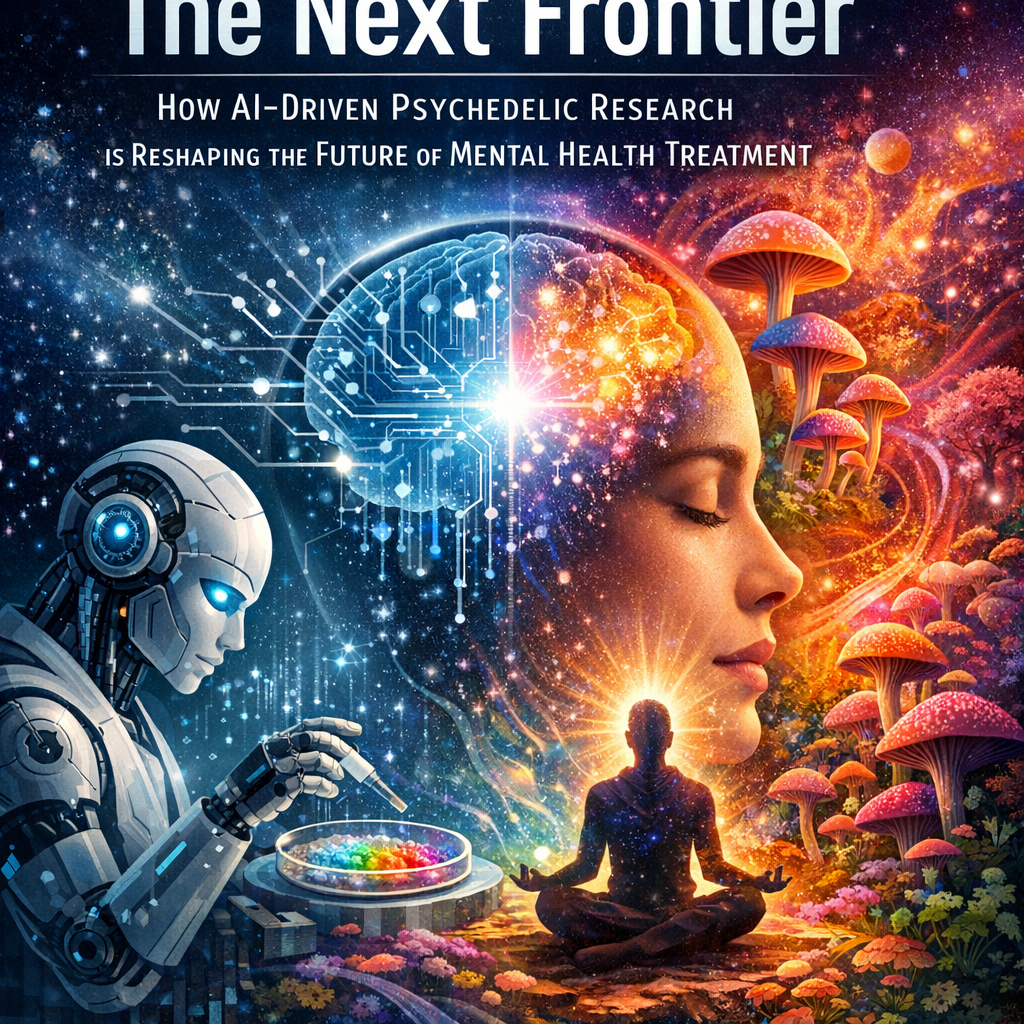
The Next Frontier: How AI-Driven Psychedelic Research is Reshaping the Future of Mental Health Treatment
In recent years, the **mental health** landscape has been revolutionized by the resurgence of research into **psychedelic substances** such as **psilocybin**, the active compound found in **magic mushrooms**. Once burdened by stigma and legal challenges, these natural compounds are now garnering serious attention in the scientific community for their potential to treat a range of **mental health disorders**, including **depression**, **anxiety**, and **PTSD**. As this field of research blossoms, **artificial intelligence (AI)** is playing an instrumental role in driving new discoveries and optimizing treatment protocols.
**Artificial intelligence**, with its ability to analyze vast datasets rapidly, is particularly well-suited to the complex and intricate challenges posed by **psychedelic research**. Traditionally, the discovery of new therapeutic uses and the optimization of dosage regarding psychedelic substances was time-consuming, relying heavily on trials and error experimentation. However, AI models can efficiently process large volumes of **data** from clinical trials and patients’ experiences to identify trends and potential new applications. This capability is transforming the way researchers approach psychedelics, leading to more targeted and personalized treatment options.
Moreover, AI is aiding in decoding how psychedelics bring about their therapeutic effects. These substances’ influence on the human brain is profound and intricate, often leading to altered states of consciousness that promote healing. By employing **machine learning algorithms**, researchers can parse through complex neural data to understand the biological underpinnings of these experiences and how they correlate with improvements in mental health. This understanding enables the development of predictive models that can forecast patient outcomes or highlight who may benefit the most from psychedelic therapy.
With the increasing integration of AI technologies, psychedelic research is not just gaining pace but precision. **Research teams globally** are embracing this synergy between AI and psychedelics, driving novel studies that promise groundbreaking insights into their medical applications. This innovative approach represents a new frontier, one that poses potential to revolutionize how mental health disorders are understood and treated in the future.
Features of AI-Driven Psychedelic Research
AI’s impact on psychedelic research is substantiated by an increasing body of studies and clinical trials. For instance, researchers at [**Johns Hopkins University**](https://www.hopkinsmedicine.org/news/articles/hopkins-researchers-international-partners-to-lead-largest-psilocybin-study-ever) have been at the forefront of exploring psilocybin’s therapeutic effects. In a landmark study, published in the journal [*Psychopharmacology*](https://link.springer.com/journal/213), participants with treatment-resistant depression reported significant improvements in their symptoms after controlled psilocybin therapy. When AI tools were applied to analyze response patterns, distinct **biomarkers** were identified, allowing clinicians to better predict who might benefit from the treatment.
In addition to assessing treatment effectiveness, AI is also streamlining the design of clinical trials. Traditionally, setting up such trials for psychedelic substances is fraught with challenges due to the compounds’ legal status and the subjective nature of psychological changes. AI algorithms can simulate trials that help in refining study parameters before actual clinical research commences, making the process more efficient and ethical. For example, AI can optimize dose ranges by taking into account patient history, genetic markers, and current health status, ensuring safer and more individualized treatment plans.
Furthermore, AI is leveraged in the ongoing quest to map the human brain’s response to psychedelics. Advanced imaging techniques like functional **MRI (fMRI)** coupled with AI-driven data models allow researchers to visualize the dynamic changes that occur during psychedelic experiences. Breakthroughs in understanding how psychedelics modulate brain connectivity in real-time underscore their potential to reset or rewire neural circuits associated with mental health conditions.
These advancements are complemented by anecdotal and subjective data from patient experiences, inputted into AI platforms, further refining the therapeutic models. With the continuous evolution of AI, new layers of data contribute to a deeper understanding of both universal and individualized responses to psychedelics, fostering advancements in treatment protocols.
Incorporating AI in psychedelic research not only enhances our grasp of these substances but also enriches our ability to deploy them more effectively in clinical settings. As AI continues to advance, the potential for its contribution to psychedelic research and mental health treatment is immense.
Conclusion
As **AI-driven research** continues to unlock the mysteries of psychedelics, the future of mental health treatment appears increasingly promising. By harnessing AI’s capacity to analyze complex data, researchers are unearthing new pathways for healing and developing personalized, effective solutions for mental health challenges. This intersection of technology and natural medicine heralds a new era in mental health care, where evidence-based, individualized interventions might one day become the standard. As we move forward, the collaboration between AI and psychedelic research offers a beacon of hope for millions worldwide seeking relief from mental health disorders.
**Concise Summary:** The intersection of artificial intelligence and psychedelic research is revolutionizing mental health treatment, particularly for conditions like depression, anxiety, and PTSD. AI’s capacity to analyze complex datasets is expediting the discovery of new therapeutic uses and personalized treatment plans for psychedelic compounds such as psilocybin. This synergy enhances the understanding of the biological effects of psychedelics on the brain, allowing for more precise and effective mental health interventions. Through AI-driven insights, the potential for tailored and evidence-based treatment solutions in mental health care is vastly expanded.

Dominic E. is a passionate filmmaker navigating the exciting intersection of art and science. By day, he delves into the complexities of the human body as a full-time medical writer, meticulously translating intricate medical concepts into accessible and engaging narratives. By night, he explores the boundless realm of cinematic storytelling, crafting narratives that evoke emotion and challenge perspectives. Film Student and Full-time Medical Writer for ContentVendor.com