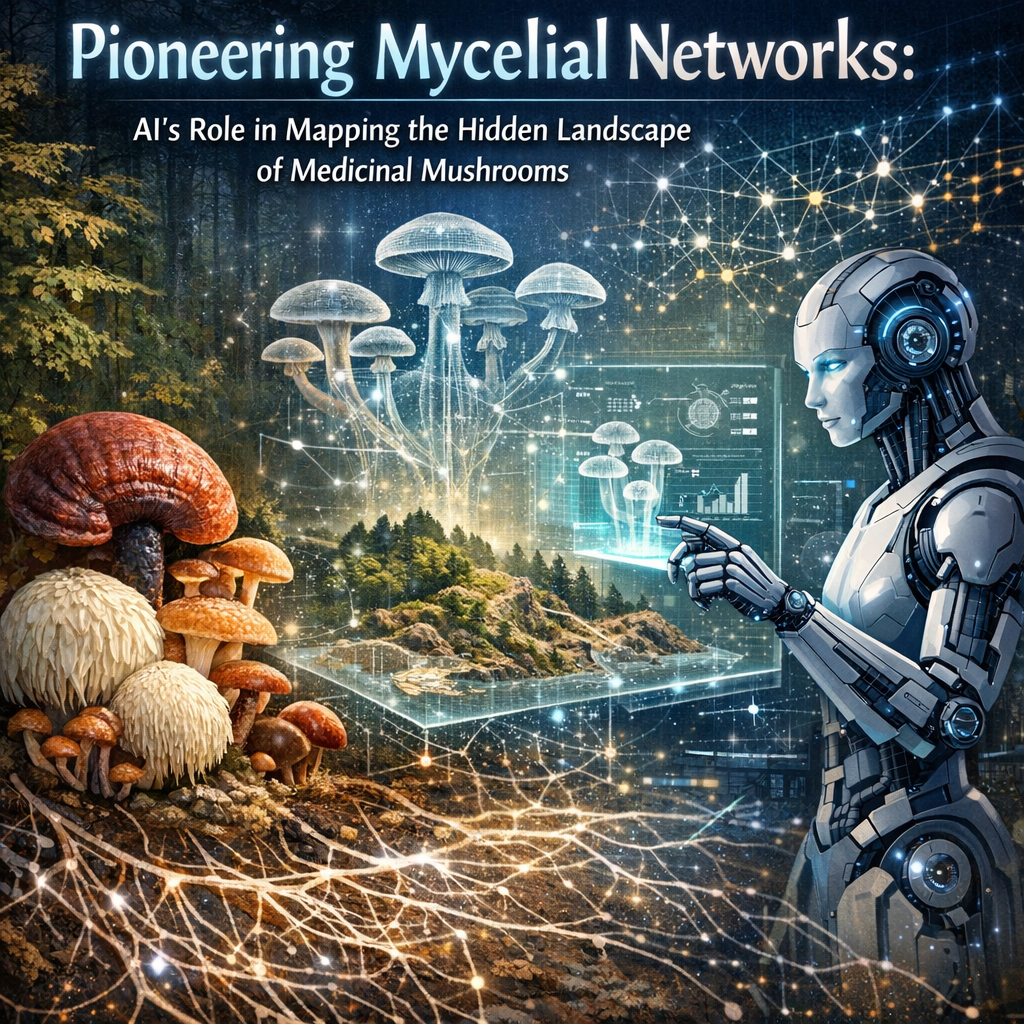
Pioneering Mycelial Networks: AI’s Role in Mapping the Hidden Landscape of Medicinal Mushrooms
The fascinating world of **medicinal mushrooms** has captivated human interest for centuries. From the ancient Chinese pharmacopeias to modern Western medicine, mushrooms have been valued for their **therapeutic properties**, offering potential remedies for an array of health conditions. With advancements in technology, particularly the advent of **Artificial Intelligence (AI)**, we’re entering an era where our understanding of these enigmatic fungi is set to expand exponentially. AI’s capabilities are not just reshaping how we discover and utilize medicinal mushrooms but also revolutionizing the methodologies to harness their full potential.
The **mycelial network**, the underground root system of fungi, is known for its complex interactions with its environment. These networks have the potential to produce compounds with remarkable **medicinal properties**. However, mapping these networks to understand and utilize them has traditionally been a monumental challenge. This is where AI comes into play. **Machine learning algorithms** and AI-driven analytics offer unprecedented opportunities to decode these complex biological systems. By analyzing massive datasets and recognizing patterns that are imperceptible to human researchers, AI can help uncover new **medicinal compounds** more efficiently and accurately.
AI’s role extends beyond just discovery. It can optimize **cultivation processes** by predicting growth patterns and ideal harvesting times based on environmental conditions. This precision in cultivation not only results in higher yields but also enhances the efficacy and potency of the medicinal compounds produced. Furthermore, AI can assist in ensuring the **sustainability** of mushroom resources by assessing and managing the impacts of harvesting on local ecosystems.
The intersection of AI and **mycology** is a promising frontier for the development of next-generation therapeutics. With AI’s ability to map the mycelial network, researchers are well-equipped to delve deeper into the molecular makeup of medicinal mushrooms. As this technology continues to evolve, so too does our capacity to pioneer innovative treatments that leverage the extraordinary healing powers locked within these fungi. This synergy heralds a new chapter in the journey to unlock the full medicinal potential of mushrooms, promising sophisticated integrations between technology and nature.
Features of AI-Driven Research in Medicinal Mushrooms
The intersection of artificial intelligence and medicinal mushroom research is at an exciting crossroads, ripe with potential. Several recent studies exemplify how AI can be utilized to revolutionize this field. A study published in the journal *Nature Communications* highlights how AI algorithms have been utilized to sift through vast genetic data of fungi, identifying novel enzymes with potential pharmaceutical applications [Nature Communications](https://www.nature.com/articles/ncomms15998).
Another landmark study by the **European Bioinformatics Institute** leveraged AI to analyze the genomic data from over a thousand fungal species. This analysis revealed several compounds with strong **antibiotic** properties, paving the way for new natural antibiotics [EMBL-EBI](https://www.ebi.ac.uk/about/news/press-releases/fungal-genomes-antibiotics).
AI’s role extends to enhancing the accuracy of traditional research methods. For instance, AI models have significantly reduced the time required for identifying specific fungi with medicinal properties by training on existing databases of known compounds. A study by researchers at the **University of California** developed a machine learning model that predicts the presence of **bioactive compounds** based on genomic sequencing, slashing months of research into just days [UC Berkeley](https://news.berkeley.edu/2021/01/05/ai-machine-learning-drug-discovery/).
Moreover, AI is revolutionizing the cultivation and harvesting processes of medicinal mushrooms. By utilizing **predictive analytics**, AI models can forecast optimal environmental conditions for mushroom growth. This precision allows for the production of high-quality fungi with consistent medicinal properties, as demonstrated in research conducted by the **Agricultural Robotics Lab** at Carnegie Mellon University [Carnegie Mellon](https://www.cmu.edu/news/stories/archives/2022/june/ai-agriculture.html).
The integration of AI into mushroom research not only expedites the discovery of novel compounds but also enhances the scalability and sustainability of their production. As AI technology continues to advance, we anticipate more sophisticated models that could potentially predict how these compounds interact with human biochemistry, offering **personalized mushroom-based therapeutic solutions**.
Conclusion
The integration of AI in the exploration of medicinal mushrooms represents a paradigm shift in **natural medicine**. By harnessing AI’s analytical prowess, we can delve deeper into the complex landscapes of mycelial networks, unlocking compounds with unprecedented therapeutic potential. As we stand on the brink of this technological and biological synergy, the promise of AI-driven advancements holds transformative potential for both medicine and mycology. This pioneering journey not only augments our understanding but importantly enhances the efficacy and accessibility of natural healing remedies.
**Concise Summary:**
The integration of **Artificial Intelligence** in the study of **medicinal mushrooms** introduces groundbreaking methodologies for decoding the complex biological systems of **mycelial networks**. By leveraging machine learning algorithms, AI enhances the discovery and cultivation of **therapeutic compounds**, offering solutions for personalizing medicine. AI models optimize growth patterns, augment yields, and ensure sustainability in mushroom harvesting, marking a new era in **natural medicine**. Recent studies demonstrate AI’s capacity to expedite research and enhance the accuracy of traditional methods, revealing sophisticated opportunities to develop next-generation treatments by uniting technology with nature.

Dominic E. is a passionate filmmaker navigating the exciting intersection of art and science. By day, he delves into the complexities of the human body as a full-time medical writer, meticulously translating intricate medical concepts into accessible and engaging narratives. By night, he explores the boundless realm of cinematic storytelling, crafting narratives that evoke emotion and challenge perspectives. Film Student and Full-time Medical Writer for ContentVendor.com