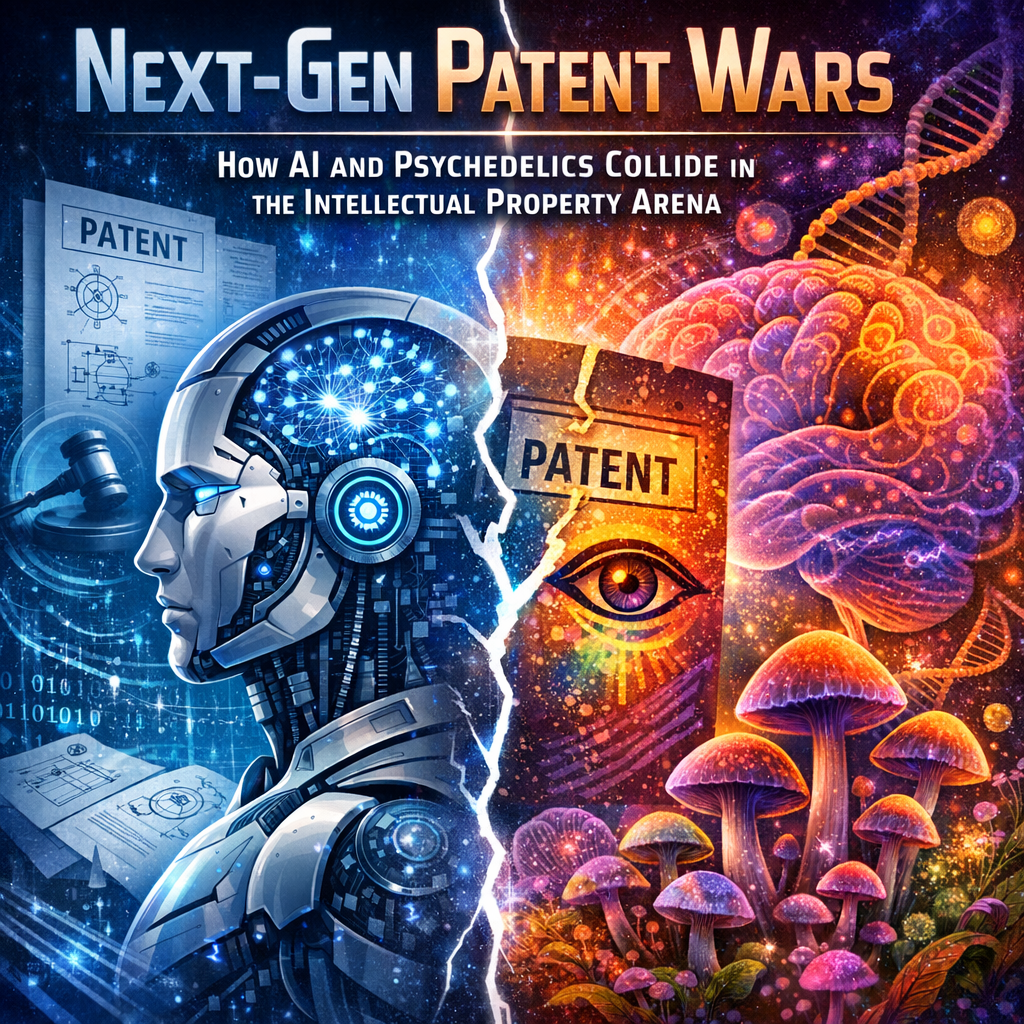
Next-Gen Patent Wars: How AI and Psychedelics Collide in the Intellectual Property Arena
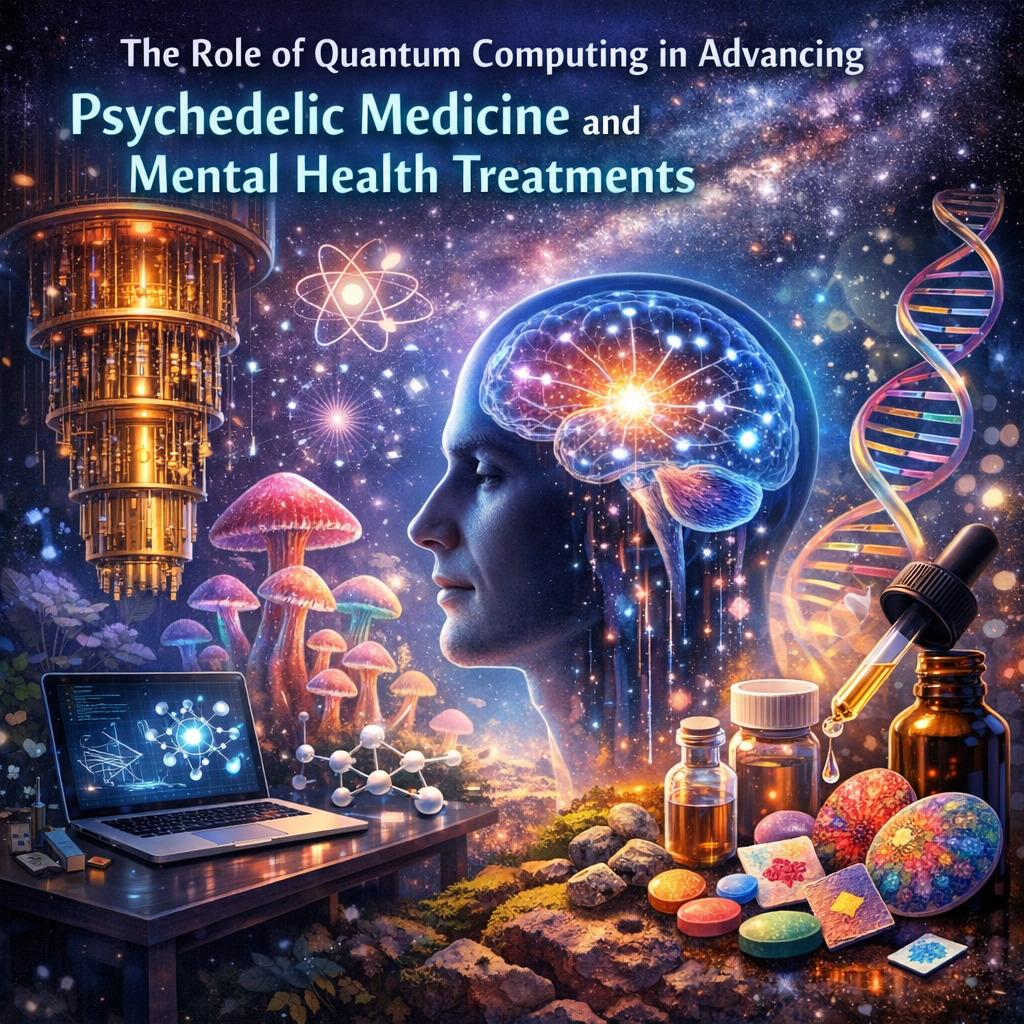
In today’s rapidly evolving technological landscape, the intersection of **artificial intelligence (AI)** and **psychedelics** is emerging as a groundbreaking frontier. This convergence is not only redefining the realm of **medical treatments** but is also igniting debates within the **intellectual property (IP)** sphere. The potential of psychedelics, particularly **psilocybin**, to revolutionize mental health treatment has become increasingly evident. Studies suggest that **psilocybin-assisted therapy** can significantly alleviate conditions such as **depression** and **PTSD** [Read more](https://www.ncbi.nlm.nih.gov/pmc/articles/PMC5367550/). Consequently, there is a burgeoning interest in identifying, patenting, and potentially monopolizing methods for synthesizing and administering these compounds.
Enter **AI**—a technological juggernaut capable of accelerating drug discovery and **clinical research** at an unprecedented pace. AI algorithms can parse through immense datasets to identify novel psychedelic compounds, predict therapeutic effects, and personalize treatment protocols, which traditionally required years of manual research [Read more](https://journals.sagepub.com/doi/10.1177/2058738420962611).
The collision of AI and psychedelics presents new challenges in the IP landscape. Patents provide companies exclusive rights to their innovations, encouraging further research and development. However, when AI contributes significantly to these discoveries, questions arise about who owns the output and how intellectual property laws should evolve. The patent system, designed in an era long before AI was feasible, struggles to accommodate this new technological paradigm.
Moreover, the ethical debate surrounding the patenting of psychedelic therapies intensifies. Many argue that these substances are part of **indigenous traditions** and should remain in the public domain to ensure equal access [Read more](https://www.tandfonline.com/doi/full/10.1080/20544887.2021.1886927). The complexities and inconsistencies within patent laws could lead to monopolistic practices, slowing the broader distribution of these potentially life-saving treatments.
Features: Professional and Medical Studies
Significant strides have been made in understanding the **therapeutic applications** of psychedelics, particularly with the aid of **AI**. Dr. **Robin Carhart-Harris**, a leading figure in psychedelic research, emphasizes the potential of psychedelics like **psilocybin** in treating mental health issues. His studies have shown increased emotional breakthroughs and persistence of positive outcomes months after treatment with psilocybin [Read more](https://www.frontiersin.org/articles/10.3389/fphar.2018.02733/full).
AI’s role in these developments cannot be overstated. Research published in *Nature* highlights AI’s capability to identify new **psychoactive compounds** faster than traditional methods, potentially offering more effective treatment options [Read more](https://www.nature.com/articles/s41586-020-2117-9). **Machine learning** can model complex biological interactions, predict patient responses, and tailor treatments, thereby maximizing therapeutic efficacy while minimizing risk.
Furthermore, AI systems like **IBM’s Watson** have been instrumental in synthesizing existing research and discovering unexplored areas within psychedelic medicine. This provides a framework for researchers to develop new methodologies quickly and efficiently [Read more](https://www.ibm.com/watson/). AI accelerates hypothesis testing, reducing the time needed to bring treatments from the laboratory to the clinical setting.
While these advancements underscore the innovative power unleashed at the intersection of AI and psychedelics, they also trigger discussions on patenting. The potential for AI to autonomously invent poses a key question: Should entities that own AI systems hold patents, or do these creations belong to the machines themselves? There is no legal precedent for AI as an inventor, and future litigation will likely shape how AI-derived patents are legitimized and contested.
Conclusion
The nexus of AI and psychedelics is paving the way for unparalleled medical breakthroughs while simultaneously challenging existing intellectual property frameworks. This collision reveals both vast potential and intricate ethical considerations. Ensuring that patent laws evolve to accommodate these technological advancements is crucial. Equally essential is safeguarding equitable access to psychedelic treatments—balancing innovation with public health imperatives. As the next-gen patent wars unfold, these discussions will play a pivotal role in shaping the therapeutic landscape of the future.
**Concise Summary**
The intersection of AI and psychedelics is transforming medical treatment, particularly for mental health conditions like depression and PTSD. As AI accelerates drug discovery, it raises new intellectual property (IP) challenges, questioning who owns AI-generated inventions. The ethical debate intensifies with considerations of indigenous traditions and equitable access. As AI enables rapid identification of new psychedelic compounds, discussions about legally recognizing AI as inventors become crucial, necessitating evolution in patent laws. Balancing innovation with public health imperatives is essential in shaping the therapeutic future. This convergence could lead to both unparalleled breakthroughs and ethical dilemmas.
### References
1. Researchers map how psychedelics can benefit mental health. *National Library of Medicine*. [Read more](https://www.ncbi.nlm.nih.gov/pmc/articles/PMC5367550/).
2. The role of AI in drug discovery. *SAGE Journals*. [Read more](https://journals.sagepub.com/doi/10.1177/2058738420962611).
3. The ethics of psychedelic patenting. *Taylor & Francis Online*. [Read more](https://www.tandfonline.com/doi/full/10.1080/20544887.2021.1886927).
4. Emotional breakthrough and persistence with psilocybin. *Frontiers in Pharmacology*. [Read more](https://www.frontiersin.org/articles/10.3389/fphar.2018.02733/full).
5. AI and novel psychoactive compounds. *Nature*. [Read more](https://www.nature.com/articles/s41586-020-2117-9).
6. IBM Watson’s role in drug discovery. *IBM*. [Read more](https://www.ibm.com/watson/).

Dominic E. is a passionate filmmaker navigating the exciting intersection of art and science. By day, he delves into the complexities of the human body as a full-time medical writer, meticulously translating intricate medical concepts into accessible and engaging narratives. By night, he explores the boundless realm of cinematic storytelling, crafting narratives that evoke emotion and challenge perspectives. Film Student and Full-time Medical Writer for ContentVendor.com