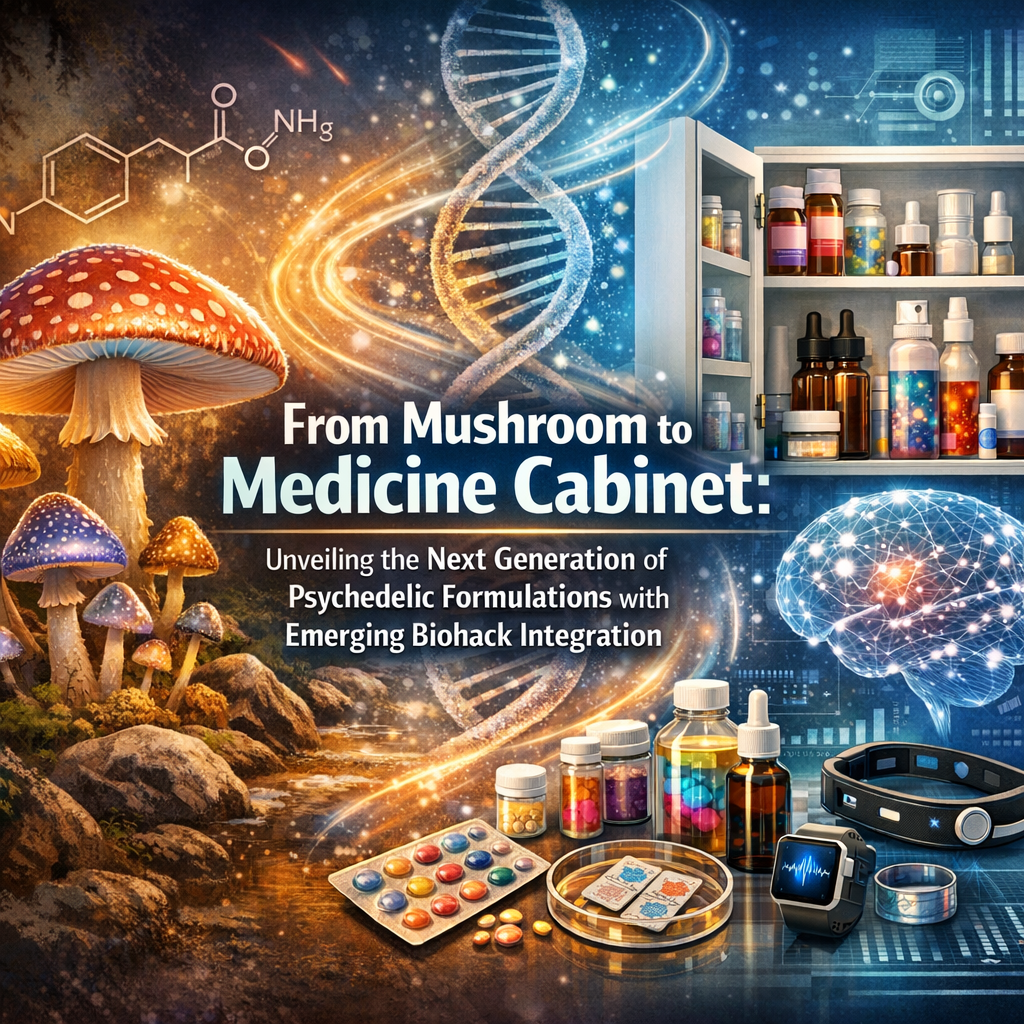
From Mushroom to Medicine Cabinet: Unveiling the Next Generation of Psychedelic Formulations with Emerging Biohack Integration
In recent years, the humble **mushroom** has evolved from a simple culinary ingredient and ancient remedy into a modern icon of alternative medicine and mental health treatment. As our understanding of **mycology** progresses, the stigmatized **psychedelic mushroom** is increasingly recognized for its therapeutic potential. This revelation paves the way for innovative treatments and **biohacking protocols**, where science and nature converge to promote health and well-being.
**Psilocybin**, the psychoactive compound found in specific mushroom species, is at the forefront of this movement. Originally famous for its psychedelic effects, it is emerging as a promising candidate for treating mental health conditions such as **depression**, **anxiety**, **PTSD**, and **addiction**. Research from institutions like [Johns Hopkins University](https://www.hopkinsmedicine.org/news/media/releases/magic_mushrooms_psychedelic_may_ease_depression_anxiety) and [Imperial College London](https://www.imperial.ac.uk/news/195386/psilocybin-treats-depression-resets-brain-activity) indicates that psilocybin can generate profound and enduring positive changes in mood and cognition after only one or two sessions. The therapeutic effects, experts assert, stem from psilocybin’s ability to disrupt negative thought patterns and enhance **neuroplasticity**—the brain’s capacity to reorganize and form new neural connections.
The integration of psilocybin into modern medicine signifies an evolution in psychiatric treatment, offering an alternative to traditional pharmaceuticals known for their often debilitating side effects and limited efficacy. Moreover, the rise of **biohacking**—a movement focused on optimizing personal biology—aligns with the surge in interest surrounding psilocybin and mental health.
**Biohackers** worldwide are exploring the potential of combining psilocybin with other practices like **meditation**, **mindfulness**, and **nutrition** to achieve heightened cognitive performance, emotional balance, and spiritual growth. By embracing biohacking principles, individuals tailor psilocybin experiences to their unique needs, maximizing benefits and minimizing risks.
In this article, we delve into the burgeoning world of psychedelic formulations and biohacking strategies, underscoring how these advancements hold considerable promise for the future of medicine and personal development. Join us as we unveil a new chapter in healthcare that redefines our relationship with nature’s own pharmacy.
Features:
A growing body of scientific evidence supports the therapeutic potential of **psilocybin**. A landmark study conducted by researchers at [Johns Hopkins University](https://www.hopkinsmedicine.org/news/media/releases/magic_mushrooms_psychedelic_may_ease_depression_anxiety) found that participants who received psilocybin-assisted therapy experienced significant reductions in **depression** and **anxiety**, with many maintaining improvements for over a year. This groundbreaking research was pivotal in positioning psilocybin as a potential treatment for mental health disorders, ultimately leading to its designation as a “breakthrough therapy” by the U.S. Food and Drug Administration (FDA).
In another pivotal study, a team from [Imperial College London](https://www.imperial.ac.uk/news/195386/psilocybin-treats-depression-resets-brain-activity) demonstrated that psilocybin can reduce symptoms of treatment-resistant depression by enhancing connections between different brain regions, thereby promoting cognitive flexibility and breaking the cycle of negative thought patterns. Furthermore, functional MRI scans revealed that psilocybin decreased activity in the brain’s **default mode network**—an area linked to self-referential thoughts and rigid thinking patterns often associated with depression.
Beyond individual studies, systematic reviews and meta-analyses increasingly confirm psilocybin’s safety and efficacy, emphasizing its relatively low risk of addiction, especially when compared to conventional antidepressants. Importantly, psilocybin therapy’s success relies largely on **set and setting**—factors such as the mental state of the user and the environment in which the experience occurs. This concept underscores the importance of integration with biohacking practices, which prioritize personalization and environmental optimization.
As the medical community continues to explore psilocybin’s potential, its acceptance is reflected in the gradual shift of regulatory frameworks. Countries like **Canada** and **Australia** have already begun implementing compassionate use programs, allowing psilocybin for therapeutic purposes under controlled conditions ([source: CBC News](https://www.cbc.ca/news/health/magic-mushroom-therapy-1.5758415), [Therapeutic Goods Administration Australia](https://www.tga.gov.au/news/media-release/psilocybin-psychedelic-treatments)). Consequently, these developments signal a growing recognition of psilocybin’s value, prompting further investment in research and the development of novel psychedelic formulations.
Conclusion:
The fusion of psilocybin research and biohacking practices represents a paradigm shift in mental health treatment and personal development strategies. As we continue to explore the intricacies and possibilities of psilocybin therapy, one thing is clear: the integration of these natural compounds into modern medicine offers hope for healing and enhances our ability to adapt and thrive in an ever-evolving world. Embracing this potential could lead to a future where mushrooms hold a prominent place in our medicine cabinets, offering solutions that resonate with our innate biological rhythms.
References:
1. [Johns Hopkins Medicine, ‘Magic Mushrooms’ Psychedelic May Ease Depression, Anxiety](https://www.hopkinsmedicine.org/news/media/releases/magic_mushrooms_psychedelic_may_ease_depression_anxiety)
2. [Imperial College London, Psilocybin for Treatment-Resistant Depression: fMRI Measures](https://www.imperial.ac.uk/news/195386/psilocybin-treats-depression-resets-brain-activity)
3. [CBC News, Canada Implements Magic Mushroom Therapy for Depression](https://www.cbc.ca/news/health/magic-mushroom-therapy-1.5758415)
4. [Therapeutic Goods Administration Australia, Authorization of Psilocybin Use](https://www.tga.gov.au/news/media-release/psilocybin-psychedelic-treatments)
Concise Summary:
The integration of **psilocybin** and **biohacking** represents a transformative shift in mental health treatment. Recognized for its potential to treat conditions like **depression** and **anxiety**, psilocybin offers an alternative to traditional medicines with fewer side effects. With support from studies by [Johns Hopkins](https://www.hopkinsmedicine.org/news/media/releases/magic_mushrooms_psychedelic_may_ease_depression_anxiety) and [Imperial College London](https://www.imperial.ac.uk/news/195386/psilocybin-treats-depression-resets-brain-activity), regulatory acceptance is growing. This promises a future where mushrooms are integral to healthcare, supported by personalized biohacking strategies to optimize their efficacy and safety.

Dominic E. is a passionate filmmaker navigating the exciting intersection of art and science. By day, he delves into the complexities of the human body as a full-time medical writer, meticulously translating intricate medical concepts into accessible and engaging narratives. By night, he explores the boundless realm of cinematic storytelling, crafting narratives that evoke emotion and challenge perspectives. Film Student and Full-time Medical Writer for ContentVendor.com