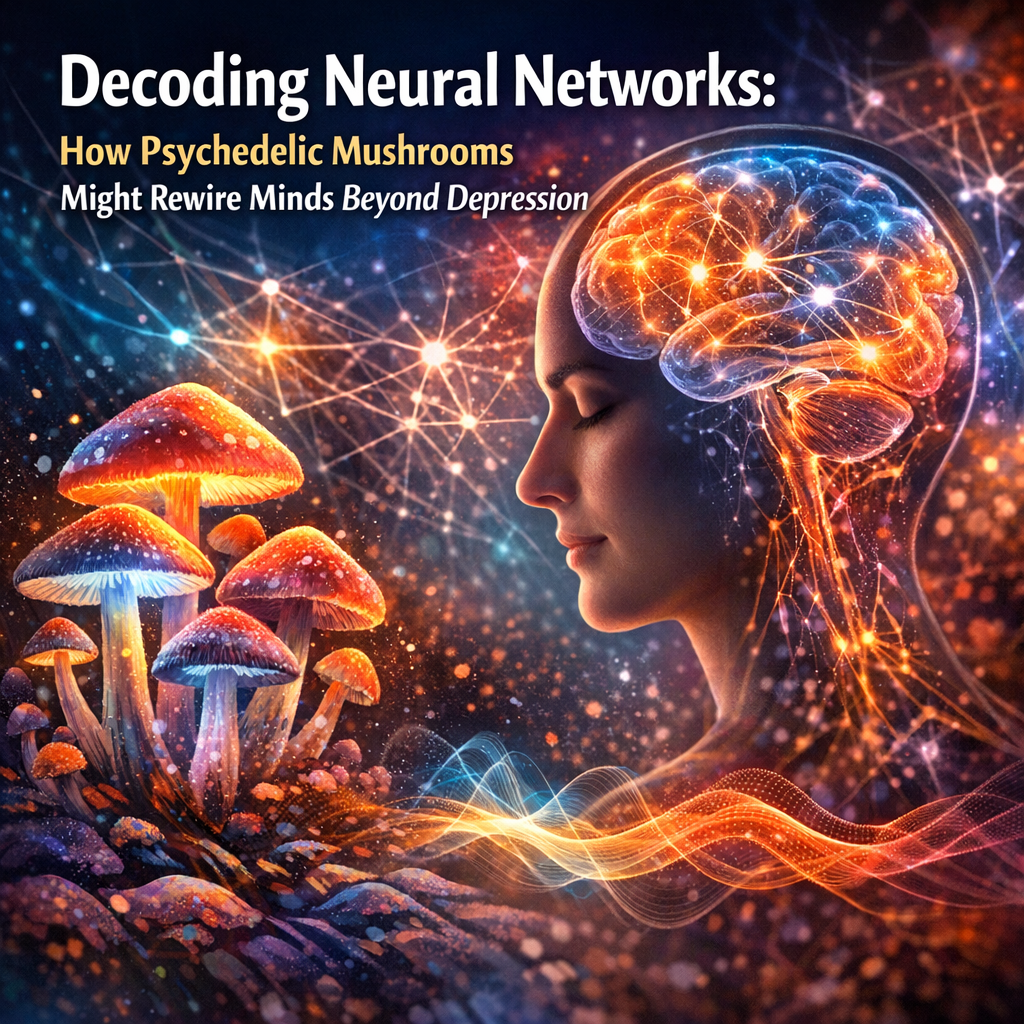
Decoding Neural Networks: How Psychedelic Mushrooms Might Rewire Minds Beyond Depression
Introduction
In recent years, there’s been a growing interest in the potential of **psychedelic substances** to treat various **mental health disorders**. At the forefront of this movement are **psilocybin mushrooms**—often termed “magic mushrooms”—known primarily for their hallucinogenic effects. However, the potential of these fascinating fungi extends far beyond recreational use or the treatment of depression. They might hold the key to a new frontier in **mental health care** by potentially rewiring the brain’s **neural networks** for various other conditions.
The human brain is a labyrinth of neurons communicating through synapses, akin to a vast, intricate network crisscrossing with information highways. Mental health disorders like **anxiety**, **PTSD**, and **addiction** often disrupt normal brain functions and pathways, leading to symptoms that can profoundly affect one’s quality of life. Traditional treatments, such as psychotherapy and pharmacological interventions, often require long-term engagement and may not always be effective. This is where **psilocybin**—a naturally occurring psychedelic compound found in over 200 species of mushrooms—comes in as a promising alternative.
Research suggests that psilocybin can reset and recalibrate the brain’s networked pathways, offering a unique approach to healing. Under its influence, the brain exhibits increased connectivity among regions that usually operate separately, which might help ‘unlock’ ingrained patterns of thought and lead to new ways of thinking and processing emotions. These insights aren’t just speculative; they are backed by a growing body of scientific studies revealing the potential of psychedelics to treat a broader array of mental health conditions beyond depression.
Psilocybin’s ability to induce **neuroplasticity**—the brain’s capacity to form new neuronal connections—suggests a mechanism through which it can catalyze profound psychological growth and cognitive flexibility. As we embark on new avenues of research, it’s becoming increasingly clear that psychedelic mushrooms might play a crucial role in the next generation of mental health treatments, offering hope to those who have found little relief through conventional means.
Features
The potential of psychedelic mushrooms in transforming **mental health care** is supported by several professional and medical studies. One pivotal study conducted by researchers at Imperial College London, published in [*Nature Medicine*](https://www.nature.com/articles/s41591-021-01492-4) in 2021, used detailed brain imaging to observe the effects of psilocybin on patients with **treatment-resistant depression**. The study discovered that psilocybin led to increased connectivity in the brain, alongside reductions in symptoms of depression. Significantly, the compound appeared to reduce activity in the brain’s **default mode network (DMN)**—a region often overactive in patients with depression and anxiety.
Beyond depression, another study published in the [*Journal of Psychopharmacology*](https://journals.sagepub.com/doi/full/10.1177/0269881120959602) explored psilocybin’s effect on **anxiety disorders**. This controlled trial involved patients with chronic anxiety who had demonstrated resistance to conventional therapies. Participants reported significant reductions in anxiety and improvements in emotional processing, which were sustained over weeks following psilocybin sessions. The findings highlight the potential for psilocybin-assisted therapy to offer enduring relief where conventional treatments have failed.
Additionally, research from **Johns Hopkins University** [indicates](https://pubmed.ncbi.nlm.nih.gov/25213996/) that psilocybin may help address **addiction**. A 2014 study published in the *Journal of Psychopharmacology* showed that smokers given psilocybin experienced a significant reduction in nicotine cravings and improved cessation outcomes over a 12-month period. The psychedelic experience facilitated by psilocybin is thought to increase self-awareness and personal insight, potentially aiding in the disruption of habitual behavior patterns associated with addiction.
These studies collectively suggest that psilocybin mushrooms could induce a level of neuroplasticity that allows individuals to break free from entrenched pathways of negative thinking, leading to improvements across various mental health disorders. As ongoing research continues to unfold, the medical community grows ever closer to understanding and harnessing the therapeutic potential of these natural compounds.
Conclusion
The exploration of **psilocybin mushrooms** in mental health treatment is still in its burgeoning stages, yet the discoveries thus far are promising. By potentially rewiring the brain’s neural networks, psilocybin offers hope not only for those suffering from depression but also for individuals grappling with various mental health challenges. As researchers push the boundaries of our understanding, psilocybin might pave the way for a paradigm shift, transforming the landscape of mental health care in the years to come.
References
1. [Nature Medicine: Psychedelic Psilocybin for Treatment-Resistant Depression](https://www.nature.com/articles/s41591-021-01492-4)
2. [Journal of Psychopharmacology: Psilocybin with Psychological Support for Treatment-Resistant Anxiety](https://journals.sagepub.com/doi/full/10.1177/0269881120959602)
3. [Johns Hopkins University: Psilocybin and Smoking Cessation Study](https://pubmed.ncbi.nlm.nih.gov/25213996/)
**Concise Summary:** Recent research highlights the promise of psilocybin mushrooms in mental health care, offering potential breakthroughs in treating various disorders like depression, anxiety, and addiction. Psilocybin’s ability to foster neuroplasticity may help rewire neural networks, increasing connectivity and flexibility. Studies document psilocybin-assisted therapy’s efficacy in reducing symptoms where conventional treatments fall short. As the medical community continues exploring this avenue, psychedelic mushrooms could revolutionize mental health treatments, providing hope for those unresponsive to traditional therapies.

Dominic E. is a passionate filmmaker navigating the exciting intersection of art and science. By day, he delves into the complexities of the human body as a full-time medical writer, meticulously translating intricate medical concepts into accessible and engaging narratives. By night, he explores the boundless realm of cinematic storytelling, crafting narratives that evoke emotion and challenge perspectives. Film Student and Full-time Medical Writer for ContentVendor.com