Compliance Frameworks for Telehealth Psilocybin Integration Therapy
**Introduction**
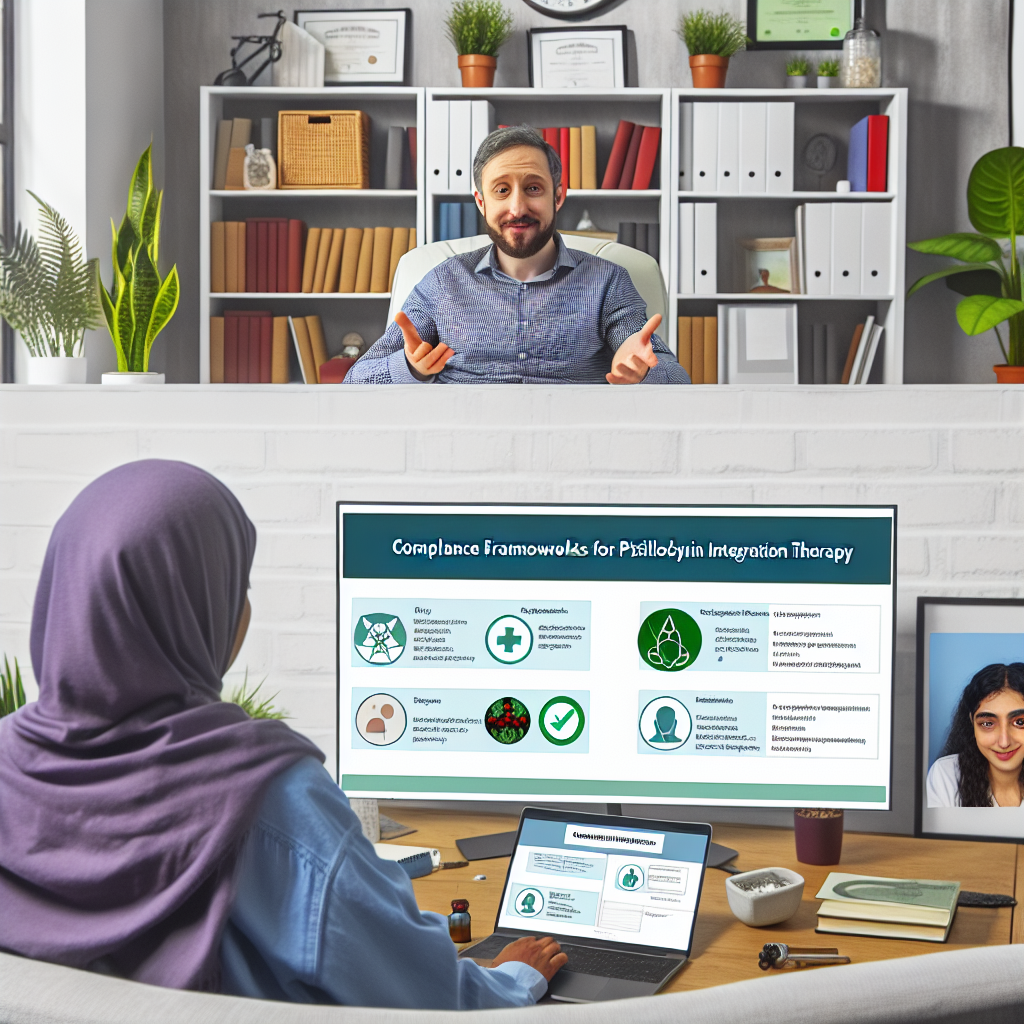
In an era defined by technological innovation and medical progression, **telehealth** is revolutionizing how patients access care, offering remote services that were once unimaginable. This inclusive healthcare model has gained traction, particularly in the field of **psychedelic therapy**, where accessibility to specialized care is often limited. Specifically, telehealth presents a promising platform for **psilocybin integration therapy**, allowing individuals to receive guidance and support from the comfort of their homes. **Psilocybin**, the active compound found in “magic mushrooms,” has emerged as a potential therapeutic agent, showing promise in treating mental health disorders such as **depression**, **PTSD**, and **anxiety**. However, the integration of psilocybin therapy into telehealth practices requires a robust compliance framework to ensure patient safety, legal integrity, and therapeutic efficacy.
***Expand***: The demand for alternative mental health treatments has sparked the interest of many in exploring psilocybin. As this interest grows, it intensifies the need for providers to create secure and effective platforms that can support the increasing number of patients seeking these therapies remotely. This presents both an opportunity and responsibility for telehealth platforms to lead the way in integrating innovative treatment options into mainstream healthcare.
The journey toward telehealth psilocybin integration is fraught with **regulatory challenges**. Despite growing public and scientific interest, psilocybin remains a **Schedule I substance** under federal law in the United States, deeming it illegal for general use. Nevertheless, several states and countries are relaxing these restrictions, recognizing the significant therapeutic potential of psilocybin. The contextual legal landscape necessitates compliance with both federal and state laws, which can vary widely. Healthcare providers must navigate these legal nuances carefully to offer psilocybin teletherapy within legal boundaries.
Furthermore, the **ethical considerations** surrounding the online administration of mind-altering therapies are profound. Ensuring **informed consent**, patient privacy, and data security are paramount in telehealth services. Platforms offering psilocybin integration therapy need to employ rigorous security protocols to protect patient data against breaches. Additionally, therapists must be adequately trained in both **psychedelic therapy** and telehealth technologies to maintain a high standard of care. This includes acquiring licenses in states where they practice and adhering to telehealth regulations.
Altogether, creating a compliant framework for telehealth psilocybin integration therapy demands a multifaceted approach. This involves staying updated with evolving regulations, adhering to ethical standards, and employing cutting-edge technology to provide secure and effective therapy. As legal barriers continue to shift and the body of supporting research grows, telehealth psilocybin therapy has the potential to become an accessible and potent treatment option for many individuals seeking alternative mental health solutions.
Features
Recent studies have underscored the importance of establishing compliance frameworks in telehealth psilocybin therapy. According to a pivotal study published in the **[Journal of Psychopharmacology](https://journals.sagepub.com/home/jop)**, psilocybin-assisted therapy has demonstrated significant efficacy in reducing symptoms of depression and anxiety, particularly in patients with treatment-resistant conditions. This study calls for structured compliance in patient screening, dosage regulation, and follow-up care, ensuring the safety and effectiveness of telehealth applications.
Additionally, research from the **[New England Journal of Medicine](https://www.nejm.org)** highlights the need for strict protocol adherence in psilocybin administration to prevent adverse reactions. The study suggests that compliance frameworks should incorporate detailed patient assessment criteria to identify individuals who could benefit from psilocybin without contraindications. Healthcare providers are encouraged to incorporate standardized screening tools within telehealth platforms to assess patient suitability accurately before administering psilocybin.
A study in **[Lancet Psychiatry](https://www.thelancet.com/journals/lanpsy)** further supports the integration of telehealth into psychedelic therapy, revealing that telemedicine can effectively extend the reach of mental health services, particularly in regions lacking access to specialized care. However, the study emphasizes the need for telehealth platforms to comply with **HIPAA regulations** to safeguard patient privacy during virtual consultations. It advocates for the development of telehealth interfaces that are both user-friendly and secure.
The emerging field of **digital therapeutics** brings an added layer of compliance. The **[Digital Therapeutics Alliance](https://dtxalliance.org)** emphasizes the necessity for telehealth providers to adhere to digital health standards, ensuring that platforms supporting psilocybin therapy are efficient and secure.
Conclusively, while the medical and technological benefits of integrating psilocybin therapy into telehealth are evident, these must rest on a bedrock of comprehensive compliance frameworks. By aligning with cutting-edge research and adhering to evolving regulations, telehealth platforms can expand access to psilocybin therapy, unlocking its therapeutic potential while safeguarding patient wellbeing.
**Conclusion**
In summary, as the legal and scientific landscapes surrounding **psilocybin therapy** continue to evolve, embedding a robust compliance framework within telehealth platforms is crucial. This ensures legal adherence, patient safety, and enhanced therapeutic outcomes. As we move toward broader acceptance and integration of psilocybin therapy, maintaining a balance between innovation and compliance will be key in shaping the future of mental healthcare delivery. For providers, ongoing education and adaptation are essential to remain compliant and effective in this promising frontier of telehealth therapy integration.
**Concise Summary**
Telehealth offers a modern platform for **psilocybin integration therapy**, promising more accessible mental health treatment. Although psilocybin remains legally complex, relaxing regulations in some areas hint at its therapeutic potential. Creating effective compliance frameworks is critical, encompassing legal adherence, ethical considerations, and security protocols while ensuring professionals are trained in both telehealth and psychedelic therapy. Recent studies advocate for stringent compliance and protocol adherence to ensure patient safety and therapy efficacy. As the field evolves, these frameworks will help integrate innovative mental health treatments seamlessly and safely into the telehealth environment.

Dominic E. is a passionate filmmaker navigating the exciting intersection of art and science. By day, he delves into the complexities of the human body as a full-time medical writer, meticulously translating intricate medical concepts into accessible and engaging narratives. By night, he explores the boundless realm of cinematic storytelling, crafting narratives that evoke emotion and challenge perspectives. Film Student and Full-time Medical Writer for ContentVendor.com