Unlocking the Hidden Synergy: Psychedelic Medicine, AI, and the Future of Consciousness Hacking
Introduction
The concept of **consciousness** has intrigued scientists, philosophers, and healers for centuries. With recent advancements in both **psychedelic medicine** and **artificial intelligence** (AI), the potential to unlock new dimensions of human consciousness is becoming more tangible. Around the world, societies are increasingly seeking **alternative** and **natural methods** of healing. The use of psychedelics such as **psilocybin** is gaining recognition for its therapeutic potential. Meanwhile, AI is revolutionizing various fields, including medicine, by offering a deeper understanding of complex data and personalizing patient care. The fusion of **psychedelic therapy** and **AI** could be transformative, offering new pathways to mental wellness and consciousness expansion.
For thousands of years, natural psychedelics like **psilocybin mushrooms** have been used in traditional healing practices. Modern science is only beginning to catch up, with recent studies supporting the efficacy of psilocybin in treating conditions such as **depression**, **anxiety**, and **PTSD**. As we navigate a world with increasing mental health challenges, psychedelics offer a promising alternative to conventional psychiatric medications, which often come with a plethora of side effects and limited efficacy in some populations.
Simultaneously, **AI technology** is advancing rapidly, driving innovation in diverse fields like medicine, engineering, and entertainment. Its ability to analyze vast amounts of data quickly and accurately is unparalleled, providing novel insights into complex biological systems. Already, AI is being used to predict disease outbreaks, streamline medical diagnostics, and tailor personalized treatment plans. When combined with insights from psychedelic therapy, AI holds the potential to further decode the mysteries of the human mind.
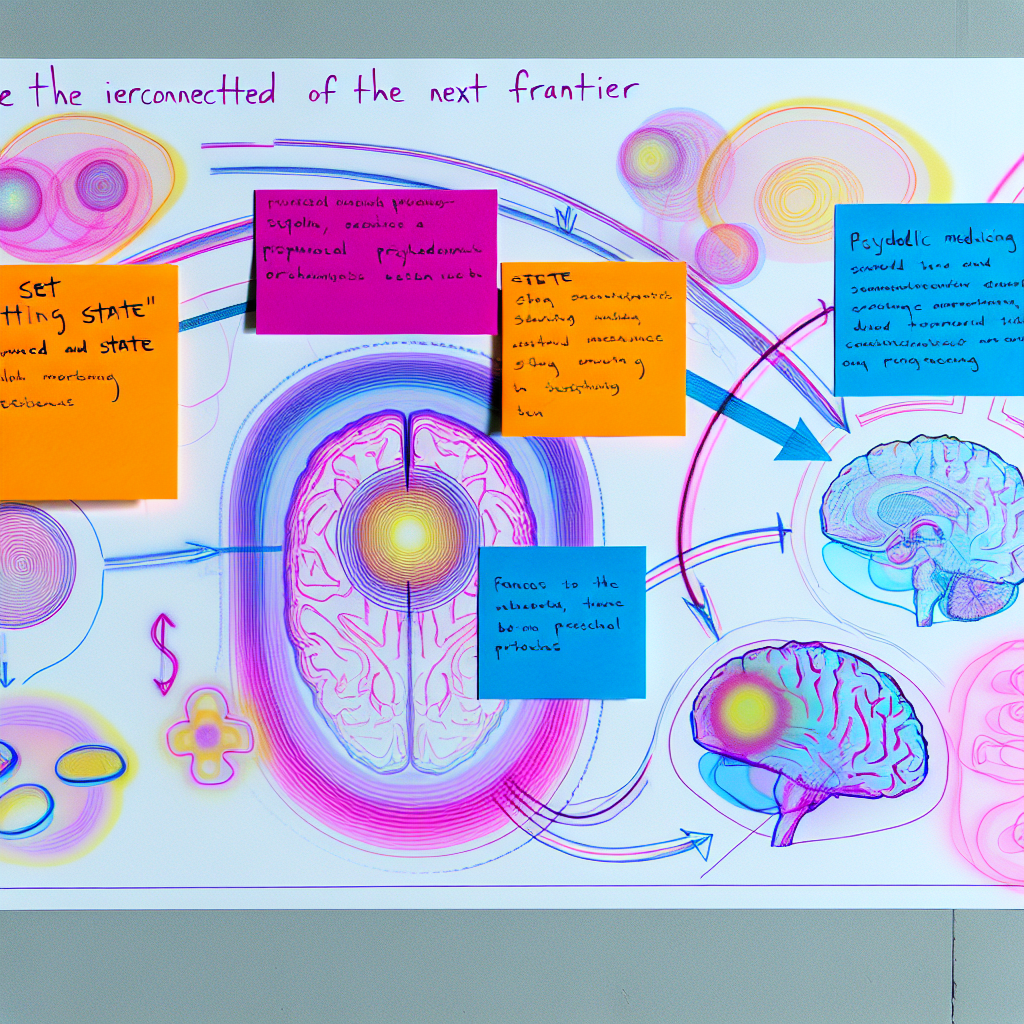
The intersection of these two groundbreaking domains—psychedelic medicine and AI—offers an exciting frontier for **”consciousness hacking.”** By leveraging AI’s analytical prowess alongside psychedelics’ innate potential to alter perception and consciousness, we are poised to redefine mental health treatment, increase well-being, and expand human potential at an unprecedented scale.
Features
Recent professional and medical studies highlight the potential benefits and synergies between psychedelic medicine and artificial intelligence. A pivotal study published in the journal JAMA Psychiatry showed how **psilocybin therapy** led to significant reductions in depressive symptoms for participants, lasting up to several weeks post-treatment [JAMA Psychiatry](https://jamanetwork.com/journals/jamapsychiatry/fullarticle/2772630). This promising data suggests that psilocybin could be a viable alternative to traditional antidepressants. Furthermore, with AI algorithms analyzing psychological responses and optimizing therapeutic protocols, treatments could become even more effective.
**AI’s capacity** to personalize psychedelic treatments is also being explored. Researchers at Imperial College London have utilized **machine learning** to understand how variations in individuals’ neurobiological feedback can influence their response to psilocybin [Imperial College London](https://www.imperial.ac.uk/news/210930/using-machine-learning-understand-how-psychedelic/). By tailoring dosages and therapeutic settings based on AI predictions, practitioners can maximize the therapeutic benefits while minimizing risks, effectively personalizing the healing process.
Integrating AI with psychedelic therapy also opens doors for a deeper scientific understanding of consciousness. For instance, AI has been employed to identify patterns in **brain imaging data**, revealing how psychedelics affect neural networks [Johns Hopkins Medicine](https://www.hopkinsmedicine.org/psychiatry/research/psychedelics-research.html). These insights could inform new therapeutic techniques that enhance the efficacy of psychedelic treatments, providing tailored experiences that align with patients’ unique mental frameworks.
Moreover, the combination of these therapies highlights a fascinating potential for holistic mental health treatment. While psychedelics facilitate the breakdown of entrenched thought patterns and emotional barriers, AI ensures that the subsequent rebuilding process aligns harmoniously with the individual’s cognitive preferences and biological predispositions. This individualized approach heralds a new era of mental health treatment where it’s possible to not just heal, but also enhance psychological well-being and cognitive flexibility.
Conclusion
As we stand on the cusp of a major paradigm shift in mental health treatment, the convergence of psychedelic medicine and artificial intelligence promises a future where consciousness hacking becomes a reality. This synergy allows us not only to treat mental health disorders more effectively but also to explore the profound depths of human consciousness in unprecedented ways. By continuing to embrace these innovations, we open the door to a revolution in mental health and well-being—one that’s personalized, natural, and incredibly powerful.
References
1. [JAMA Psychiatry – Psilocybin for Major Depressive Disorder](https://jamanetwork.com/journals/jamapsychiatry/fullarticle/2772630)
2. [Imperial College London – Psilocybin and Personalized Medicine](https://www.imperial.ac.uk/news/210930/using-machine-learning-understand-how-psychedelic/)
3. [Johns Hopkins Medicine – Brain Imaging and Psychedelics](https://www.hopkinsmedicine.org/psychiatry/research/psychedelics-research.html)
**Concise Summary:** Recent advances in **psychedelic medicine** and **artificial intelligence** (AI) hold transformative potential for mental health treatment and consciousness exploration. **Psilocybin therapy** shows efficacy in treating depression, anxiety, and PTSD, while AI personalizes treatments and analyzes brain data to enhance healing. Combining these fields could redefine mental wellness, offering natural, personalized, and profound methods to treat disorders and expand consciousness.

Dominic E. is a passionate filmmaker navigating the exciting intersection of art and science. By day, he delves into the complexities of the human body as a full-time medical writer, meticulously translating intricate medical concepts into accessible and engaging narratives. By night, he explores the boundless realm of cinematic storytelling, crafting narratives that evoke emotion and challenge perspectives. Film Student and Full-time Medical Writer for ContentVendor.com