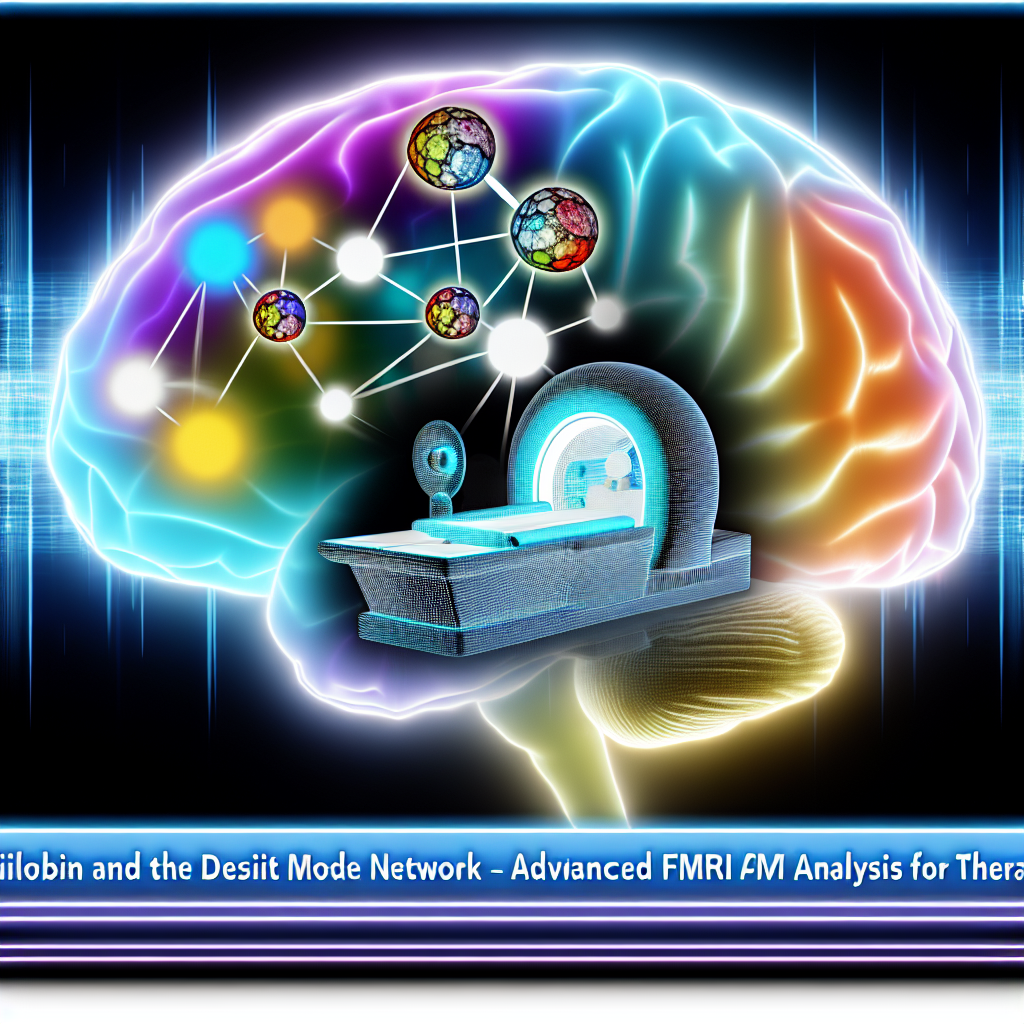
Psilocybin and the Default Mode Network – Advanced fMRI Analysis for Therapy
Introduction
In recent years, the therapeutic potential of psilocybin, the psychoactive compound found in certain mushrooms, has garnered growing interest among neuroscientists and mental health professionals. As research progresses, one of the most compelling findings is psilocybin’s effect on the brain’s Default Mode Network (DMN)—a network of interconnected brain regions that becomes active during rest, introspection, and self-referential thought.
In individuals with conditions like depression, anxiety, or PTSD, the DMN exhibits heightened activity or hyperconnectivity. This is thought to contribute to persistent negative rumination. Interestingly, psilocybin appears to “reset” this network, reducing overactivity, fostering global connectivity, and potentially enabling therapeutic breakthroughs.
Advanced functional magnetic resonance imaging (fMRI) has been instrumental in revealing these effects. During and after psilocybin treatment, fMRI scans show marked changes in neural activity — not just confined to the DMN, but across a range of brain networks — supporting the growing reputation of psychedelics as innovative tools for mental healthcare. This article delves into the intersection of psilocybin, the DMN, and advanced imaging technologies to highlight how these elements fuse to create transformative therapeutic outcomes.
Scientific Studies Behind Psilocybin, Therapy, and the DMN
One of the foundational studies was conducted at Imperial College London under the leadership of Dr. Robin Carhart-Harris and Professor David Nutt. In their 2012 study, participants administered psilocybin were observed via fMRI, revealing a sudden and pronounced decrease in DMN activity and connectivity.
Subjects reported intense experiences of “ego dissolution”—a breakdown in the sense of self—which was mirrored by the reduction in DMN function. These insights contributed to the understanding that hyperactive internal dialogue prevalent in mood disorders could be temporarily quieted, offering psychological relief. Their further studies in 2014 reaffirmed and expanded these findings, laying the foundation for future psychedelic-assisted psychotherapy.
Building on this, a 2017 study published in Scientific Reports investigated psilocybin’s effects in patients with treatment-resistant depression. These patients, after undergoing psilocybin-assisted therapy sessions, were scanned using fMRI before and after the intervention. The results were striking—there was a clear drop in DMN connectivity during psilocybin dosing and an increase in cross-network brain communication afterward.
More importantly, these neural changes corresponded with significant and lasting clinical improvements. Over five weeks, most patients reported reduced depressive symptoms, highlighting the correlation between DMN restructuring and mental health improvement. These fMRI-based observations offer a neurobiological explanation of why some patients report personal breakthroughs and renewed emotional flexibility after treatment.
Further pioneering research by the Johns Hopkins Center for Psychedelic and Consciousness Research investigated the effects of psilocybin on patients with major depressive disorder. The study administered one or two sessions of psilocybin therapy while using fMRI to examine brain changes. These scans confirmed prior observations and further illustrated a normalization of activity within the DMN. Clinically, these changes correlated with rapid-onset antidepressant effects, a remarkable contrast to the weeks or months conventional medications may require.
These findings serve as powerful validation for the notion that psilocybin may act like a “circuit reset” for the brain. This reset isn’t merely theoretical; it has been visualized via fMRI as increased entropy (a measure of complexity and variability) during the peak experience—enabling dormant or suppressed neural pathways to activate. This reordering persists after treatment, potentially enabling patients to adopt new thought patterns and healthier emotional processing.
The 2020 review by David Nutt and colleagues in Neuropharmacology reinforces these insights, proposing that the dismantling of maladaptive DMN structures can provide a neurological foundation for therapeutic change. Moreover, advances in fMRI technology and data analysis offer increasingly nuanced views into how brief psychedelic interventions can prompt long-term neurological remodeling.
Conclusion
The dynamic interplay between psilocybin and the Default Mode Network marks an exciting frontier in neuroscience and psychiatry. Thanks to high-resolution fMRI analysis, researchers can now visualize how this natural psychedelic compound rapidly alters brain function and supports long-lasting mental health recovery.
This capacity to “reset” dysfunctional brain circuits poses a powerful, scientifically supported alternative to traditional psychiatric treatment. As the field evolves, the integration of psychedelic therapy and advanced neuroimaging may usher in a new era of personalized mental healthcare, where clinicians can tailor interventions based on real-time data and brain function, not just symptoms.
References
1. Carhart-Harris, R. L., et al. (2012). “Neural correlates of the psychedelic state as determined by fMRI studies with psilocybin.” Proceedings of the National Academy of Sciences. https://www.pnas.org/content/109/6/2138
2. Carhart-Harris, R. L., et al. (2017). “Psilocybin for treatment-resistant depression: fMRI-measured brain mechanisms.” Scientific Reports. https://www.nature.com/articles/s41598-017-13282-7
3. Davis, A. K., et al. (2020). “Effects of Psilocybin-Assisted Therapy on Major Depressive Disorder: A Randomized Clinical Trial.” JAMA Psychiatry. https://jamanetwork.com/journals/jamapsychiatry/fullarticle/2772630
4. Nutt, D., et al. (2020). “The therapeutic potential of psilocybin.” Neuropharmacology. https://www.sciencedirect.com/science/article/abs/pii/S0028390819305462
Concise Summary
Psilocybin’s therapeutic effectiveness is increasingly linked to its effect on the brain’s Default Mode Network (DMN), a system associated with self-reflection and rumination. In disorders such as depression and anxiety, the DMN is often hyperactive. Studies using advanced fMRI show that psilocybin disrupts this network, enabling more flexible and inclusive brain communication. This “reset” promotes emotional healing and cognitive restructuring. Clinical trials at Imperial College London and Johns Hopkins have confirmed rapid and sustained mental health improvements following psilocybin therapy. As fMRI technology improves, psilocybin’s role in personalized psychiatric therapy continues to show revolutionary promise.

Dominic E. is a passionate filmmaker navigating the exciting intersection of art and science. By day, he delves into the complexities of the human body as a full-time medical writer, meticulously translating intricate medical concepts into accessible and engaging narratives. By night, he explores the boundless realm of cinematic storytelling, crafting narratives that evoke emotion and challenge perspectives. Film Student and Full-time Medical Writer for ContentVendor.com