Strain Hybridization Techniques for Developing Climate-Resilient Psilocybin Varieties
Introduction
As global temperatures rise and climate conditions become less predictable, scientists and cultivators face critical challenges in maintaining the viability of various agricultural crops—including psilocybin mushrooms. Psychedelic fungi, particularly Psilocybe cubensis and its many strains, are sensitive organisms whose development is tightly aligned with environmental variables such as temperature, humidity, and light exposure.
In recent years, the swift and disruptive shift in climate patterns has encouraged psilocybin researchers and fungal innovation labs to explore advanced methods of hybridizing mushroom strains to produce stronger, more adaptive varieties. Hybridization offers a scientific and practical solution by allowing breeders to combine the strong traits of multiple strains to create a single, optimized variety.
Strain hybridization is a selective breeding method that crosses two or more strains of the same species to express desired traits in a new lineage. While traditionally confined to underground cultivation circles, the formalization of psychedelic medicine and growing legal access have moved these techniques into scientific institutions and biotech companies. These efforts focus on scaling production for therapeutic treatments, spurring demand for more resilient and pharmacologically reliable mushrooms.
Some goals of hybridization include creating mushrooms with improved drought tolerance, faster mycelial colonization, and a broader temperature tolerance. Another aspect includes optimizing the therapeutic potential of mushrooms through the amplification of beneficial compounds such as baeocystin, norbaeocystin, and aeruginascin. Together, these attributes form the hybrid’s ability not only to survive in various climates but also to deliver refined therapeutic effects.
The hybridization process, now fueled by genomic research and biotechnology, is an evolving frontier in both sustainable cultivation and clinical psychedelic medicine.
Scientific Studies and Hybridization Innovations
Strain hybridization for psilocybin mushrooms is receiving growing attention from the academic and scientific community. A groundbreaking study from the University of California, Berkeley utilized CRISPR-Cas9 gene editing and genome sequencing to map the biosynthesis of psilocybin and its precursors. Their discoveries allow researchers to isolate and breed for traits like heat tolerance or faster colonization, marking a significant leap toward breeding climate-resilient varieties.
A key method in practical hybridization is spore-to-spore mating. This method allows cultivators to cross strains and combine specific traits. For instance, crossing a hardy and balanced strain like Golden Teacher with the potent but environmentally delicate Penis Envy could lead to mushrooms with high potency and improved environmental adaptability.
In 2022, researchers at the Johns Hopkins Center for Psychedelic and Consciousness Research investigated the therapeutic outcomes of different psilocybin analogs. Their findings suggested that compounds like baeocystin and norbaeocystin significantly influence the subjective psychedelic experience and may enhance treatment for disorders such as depression and anxiety. These minor alkaloids are increasingly becoming traits to preserve or enhance during hybridization due to their contribution to what researchers call the psychedelic entourage effect.
Open-science initiatives like the Fungi Foundation and Shroomery provide repositories of genome data and crowd-sourced cultivation logs, allowing both amateur and professional growers to document and share results of crosses. This approach encourages community-driven evolution of fungi development, paralleling the democratization of cannabis genetics over the past twenty years.
From an environmental perspective, multi-site hybridization trials have shown promising results. Cultivation efforts in Southern Australia and the Southwestern United States have developed mushrooms that can fruit under hotter, drier conditions. For example, a 2023 pilot study by the MycoAdapt Lab in Arizona found a 70% improvement in colonization rates over 85°F in a cross between the A+ and Mazatapec strains.
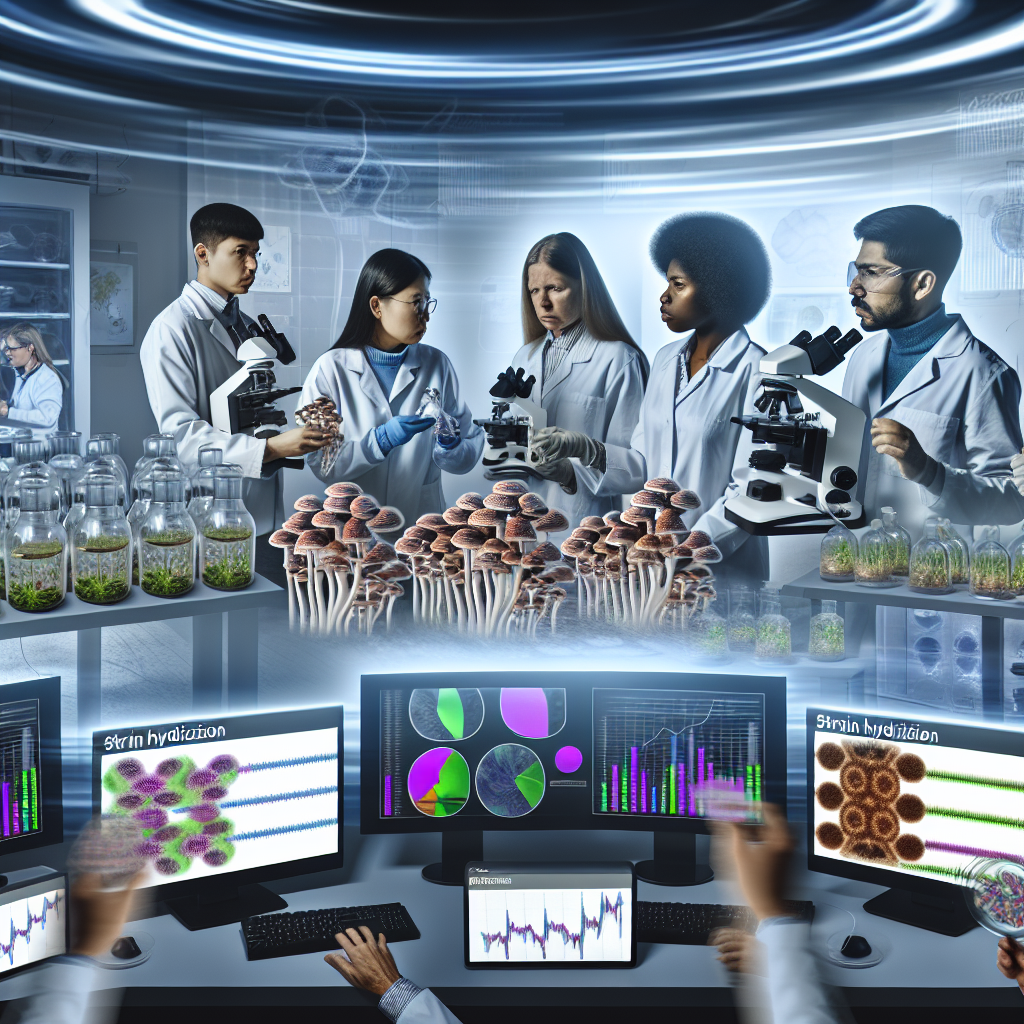
Moreover, first-generation applications of AI and machine learning have emerged, capable of predicting ideal crossings by analyzing historical climate data alongside genetic lineage information. These tools help forecast which combinations will be most resilient under projected environmental conditions—creating a feedback loop between ecological science and mycological innovation.
By integrating these advancements across genetics, data science, and environmental modeling, modern psilocybin hybridization is transitioning from an artisanal craft to a scalable, scientifically optimized practice.
Conclusion
As the global climate continues to shift unpredictably, the importance of cultivating resilient psilocybin mushroom strains becomes not just an agricultural concern but also a public health priority. Strain hybridization emerges as a critical technology to ensure the future supply of therapeutic fungi, enhancing not only environmental adaptability but also the biochemical complexity and effectiveness of psychedelic treatments.
As the intersection between grassroots cultivation, clinical research, and biotechnology strengthens, we are witnessing the evolution of psilocybin fungi into a central component of both sustainable agriculture and breakthrough mental health therapies.
References
– University of California, Berkeley – Psilocybin pathway gene clusters (2019)
– Johns Hopkins Psilocybin Analog Study (2022)
– Reynolds et al., Evolution Letters, Horizontal gene cluster transfer (2018)
– Lenz & Wick, Psilocybin and Depression (2019)
– Fricke et al., Enzymatic Psilocybin Synthesis (2017)
– Shroomery Forums – Hybridization Logs
– Johns Hopkins Psychedelic Research Center
– Fungi Foundation – Open Mycological Library
– MycoAdapt Lab 2023 Pilot Results (Available upon request via research distribution list)
Concise Summary
As the climate crisis challenges mushroom cultivation, hybridization techniques are being used to develop climate-resilient psilocybin varieties. By merging traditional mycology with advances in CRISPR, genomics, AI, and citizen-science data, researchers aim to create strains that tolerate extreme environments while enhancing therapeutic compounds. These hybrids could ensure stable cultivation and improve future psychedelic mental health therapies.

Dominic E. is a passionate filmmaker navigating the exciting intersection of art and science. By day, he delves into the complexities of the human body as a full-time medical writer, meticulously translating intricate medical concepts into accessible and engaging narratives. By night, he explores the boundless realm of cinematic storytelling, crafting narratives that evoke emotion and challenge perspectives. Film Student and Full-time Medical Writer for ContentVendor.com