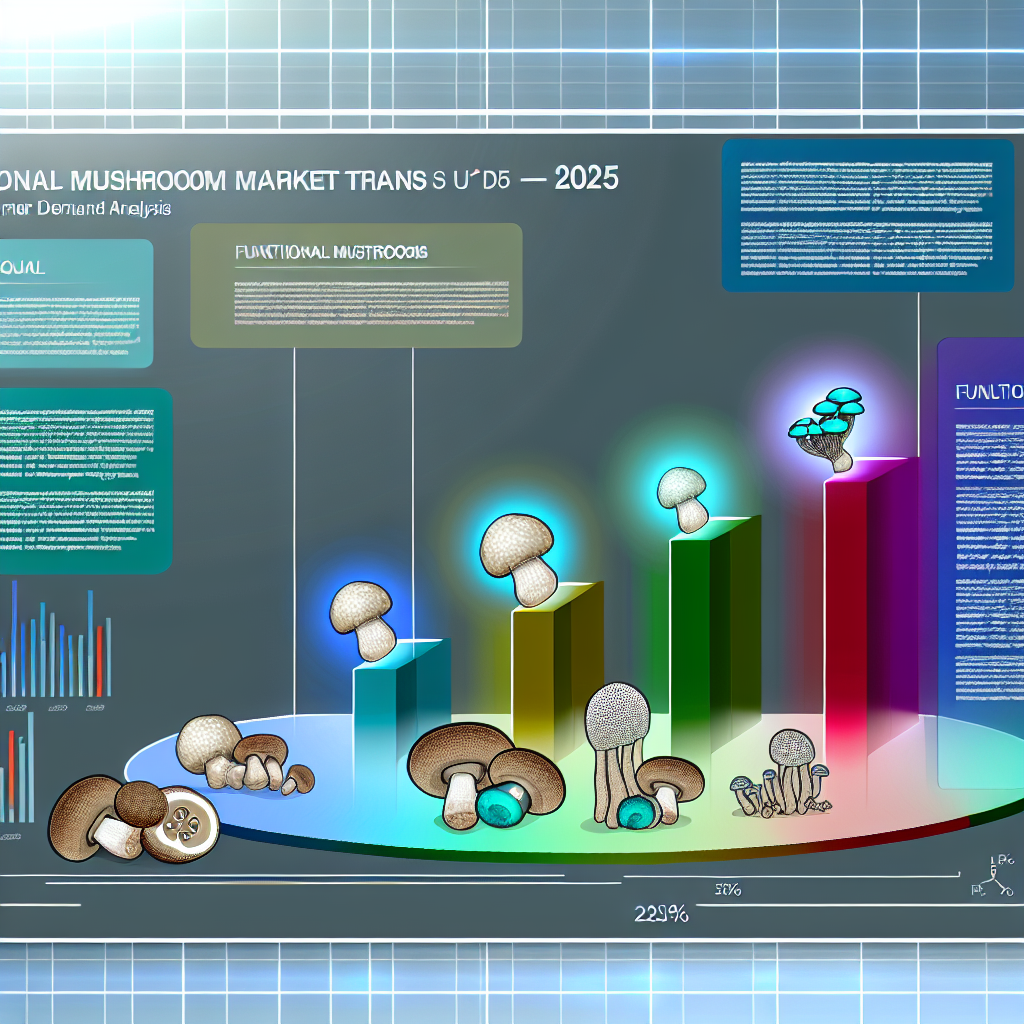
Functional Mushroom Market Trends 2025: Consumer Demand Analysis
Introduction
In the rapidly evolving landscape of health and wellness, functional mushrooms have emerged as a dominant force, attracting attention from both consumers and the medical community. As interest in natural remedies and plant-based alternatives rises, consumers are increasingly adopting these fungi for their preventative and holistic health benefits. Key species such as reishi, lion’s mane, chaga, cordyceps, maitake, and turkey tail are gaining popularity for their bioactive compounds that support cognitive function, immunity, energy levels, and stress reduction.
According to a report by Grand View Research, the global functional mushroom market is projected to reach USD $19.5 billion by 2030, growing at a CAGR of 9.5%. This surge is driven by rising consumer interest in adaptogenic and neurogenic supplements, the desire for plant-based nutrition, and increased awareness concerning chronic disease prevention.
Technological advancements in extraction methods and delivery formats — such as capsules, tinctures, gummies, powders, and functional beverages — have enhanced accessibility and consumer experience. Modern wellness seekers, including biohackers, athletes, and healthcare professionals, are drawn to the proven benefits and convenience offered by these functional ingredients.
Additionally, the integration of Eastern traditional medical knowledge with Western science is fueling research into functional mushrooms. As universities and biotech companies intensify research into fungi (both psychoactive and non-psychoactive), more data supports their potential in promoting holistic health. Heading into 2025, this trend promises continued growth and broader acceptance.
Features: Scientific Insights and Market Innovations
Once confined to niche herbalism, medicinal mushrooms have become central to mainstream wellness culture. Backed by scientific validation, several specific mushrooms have demonstrated clinically relevant effects.
For example, lion’s mane (Hericium erinaceus) has been highlighted for its promising neuroregenerative properties. A 2019 study in the International Journal of Molecular Sciences confirmed that lion’s mane enhances synthesis of Nerve Growth Factor (NGF) — a vital protein for brain function and neuron repair. As rates of Alzheimer’s and Parkinson’s disease rise globally, this mushroom is earning attention as a possible natural intervention integrated into nootropic supplements and brain health protocols.
Reishi (Ganoderma lucidum) is another longstanding star of functional nutrition. A review published in Pharmacological Reports (2021) noted reishi’s 400+ bioactive compounds, some of which provide immunomodulatory, antioxidant, and liver-protective benefits. It’s currently used in supplements promoting immune balance, stress adaptability, and detoxification.
Cordyceps has become increasingly popular among athletes due to its potential to enhance oxygen uptake and athletic endurance. A clinical trial published in the Journal of Dietary Supplements (2020) revealed improved performance metrics when healthy adults supplemented with Cordyceps militaris, making it ideal for use in pre-workout products or energy formulas.
In response to rising demand, companies are increasingly incorporating functional mushrooms into consumer-friendly formats. Innovations include functional beverages, mushroom coffee, snack bars, and even skincare products utilizing bioactive compounds for topical benefits. These offerings meet the preferences of a more informed and health-conscious consumer base.
Ethical concerns are also influencing buying behavior. Consumers now prioritize organic certification, responsible sourcing, and documented supply chains, pushing brands to work directly with mycologists and cultivators.
According to a 2023 study by Allied Market Research, Gen Z and millennials comprise the majority of buyers, with 60% seeking natural products aiding mental clarity and emotional well-being. This generation’s interest in mental health, sustainable living, and preventative care aligns well with the benefits of functional mushrooms.
Furthermore, the widespread recognition of psilocybin as a tool for mental wellness has cast a positive “halo effect” over the mushroom category. Although psilocybin is distinct from non-psychoactive functional mushrooms, the associated media buzz and scientific interest have increased public openness to exploring other species for daily health use.
As research continues to validate these mushrooms’ medicinal claims, functional mushrooms are moving from fringe remedies to respected botanical agents in holistic healthcare.
Conclusion
The functional mushroom market is entering an exciting phase of rapid expansion, driven by a mix of scientific breakthroughs, shifting consumer attitudes, and product innovation. From improved brain performance and immune resilience to enhanced athletic output, the tangible benefits of functional mushrooms are being recognized across demographics.
Looking ahead to 2025, the convergence of health trends and medical research is establishing a new standard for wellness — one that includes mushroom-based solutions as essential tools in preventative health strategies. With no signs of slowing down, the future for functional mushrooms appears not only mainstream, but vital.
Concise Summary
The functional mushroom market is forecasted to reach $19.5 billion by 2030, driven by a growing consumer shift toward natural, plant-based wellness solutions. Key players like reishi, lion’s mane, and cordyceps are gaining traction for their cognitive, immune, and energy-boosting benefits, validated by recent scientific studies. Innovation in product formats — from gummies and powders to beverages and skincare — is expanding accessibility. Millennials and Gen Z are fueling demand, while increased awareness around psilocybin research elevates interest in all fungi. As scientific and mainstream support grows, functional mushrooms are becoming an essential fixture in preventative wellness strategies.
References
– Grand View Research: Functional Foods Market Size & Share Report, 2030
– International Journal of Molecular Sciences – Hericium erinaceus as Natural Medicine, 2019
– Wasser, S.P. – Medicinal Mushroom Science, International Journal of Medicinal Mushrooms, 2020
– Pharmacological Reports – Ganoderma lucidum Research, 2021
– Allied Market Research – Functional Mushroom Market, 2023
– Journal of Dietary Supplements – Cordyceps militaris Study, 2020

Dominic E. is a passionate filmmaker navigating the exciting intersection of art and science. By day, he delves into the complexities of the human body as a full-time medical writer, meticulously translating intricate medical concepts into accessible and engaging narratives. By night, he explores the boundless realm of cinematic storytelling, crafting narratives that evoke emotion and challenge perspectives. Film Student and Full-time Medical Writer for ContentVendor.com