Mushroom Spore Printing Techniques: Preservation and Identification
Introduction
In the growing field of medical mycology and natural therapeutics, **mushroom spore printing** serves as a cornerstone in both research and cultivation. As society turns toward plant-based medicine and holistic health practices, mushrooms—particularly those with therapeutic and psychoactive effects like **psilocybin mushrooms**—are drawing increasing scientific and commercial attention.
A **spore print** is a collection of microscopic **fungal spores** released when a mushroom cap is positioned on a flat surface. The resulting print reveals vital features such as spore color, shape, and structure, which help identify and classify the species. For researchers, physicians, and enthusiasts, understanding spore printing is fundamental to working safely and effectively with any mushroom species.
In therapeutic practices involving mushrooms such as Psilocybe cubensis, Ganoderma lucidum (Reishi), and Hericium erinaceus (Lion’s Mane), misidentification can lead to ineffective or dangerous outcomes. Therefore, spore prints are not just amateur curiosities but an essential tool in medicinal research and clinical application.
Spore preservation has become increasingly important amid renewed interest in **psilocybin therapy**, especially following promising clinical results for treating depression, anxiety, PTSD, and existential distress. As research intensifies, a clear understanding of spore printing techniques ensures both safety and scientific integrity.
This guide explores the powerful role of spore printing in identification, conservation, and clinical use. Whether you’re a home cultivator or a university researcher, mastering this foundational technique opens the door to deeper understanding of **medicinal fungi**.
Features and Scientific Background
Spore printing is a highly practical and evidence-based technique used for accurate **mushroom classification**, especially critical in clinical settings. Each mushroom has unique spore features—such as pigmentation, surface texture, and structural shapes—that can distinguish potentially therapeutic mushrooms from toxic ones.
The most compelling reason to become proficient in spore printing is safety. With the rise of functional mushrooms and naturally derived treatments, accurate species identification is non-negotiable. A 2020 study from Frontiers in Pharmacology emphasized the crucial role of accurate taxonomy in conducting meaningful and safe therapeutic research using fungi.
In clinical studies—such as those conducted by the Johns Hopkins Center for Psychedelic & Consciousness Research—precisely identified fungal strains enabled scientists to isolate and test the effects of specific active compounds like psilocybin. Spore prints ensure researchers can replicate and preserve these effective strains over time.
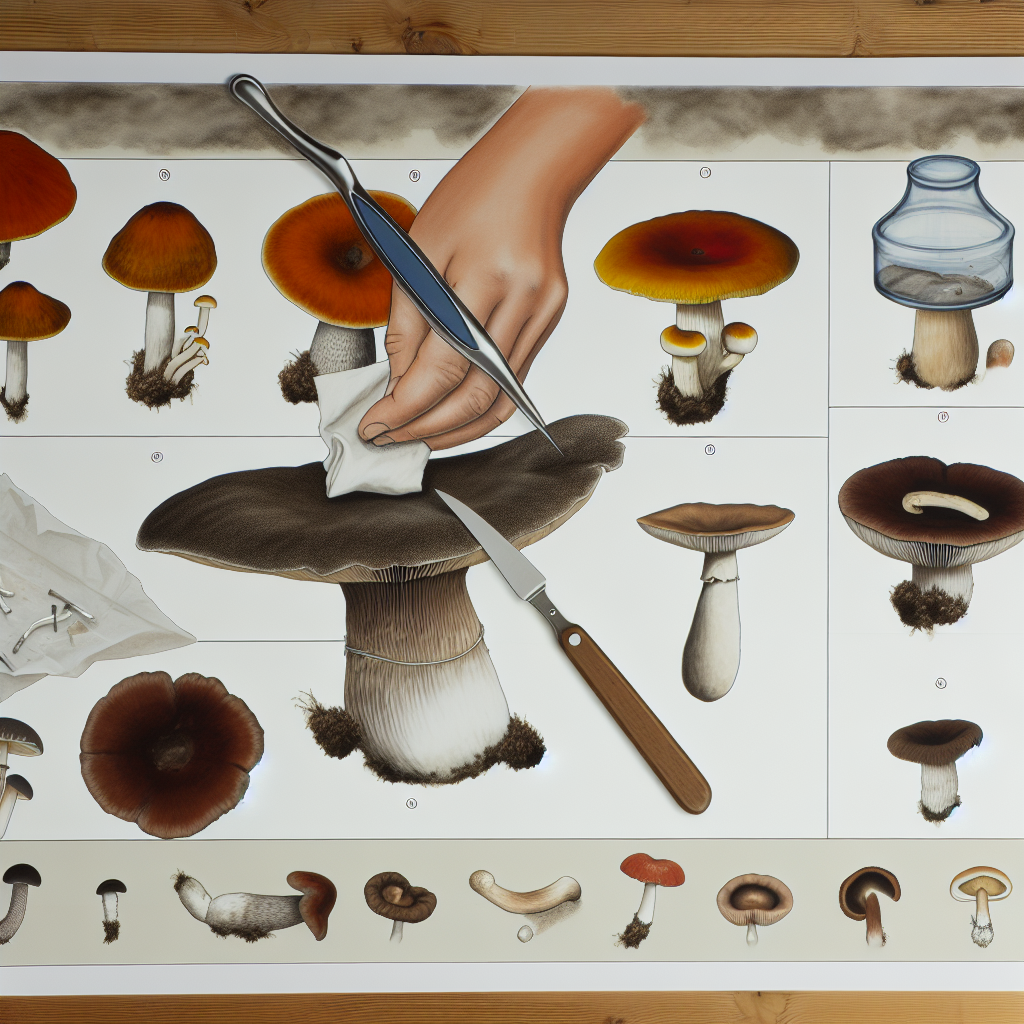
To create a spore print, the following basic procedure is used:
– Sterilize all surfaces and utensils to avoid contamination.
– Remove the mushroom stem and place the cap, gill-side down, often on a non-porous surface like aluminum foil or glass.
– Cover the cap with a sterile container or bowl to maintain humidity and reduce air currents.
– Let the cap sit undisturbed for 12–24 hours. As spores fall, they create a radial design that mirrors the internal gill structure and color.
This process facilitates easy visual comparison between species. Beyond appearance, researchers use microscopes to analyze fine differences in size, shape, ornamentation, and texture. This is pivotal when distinguishing edible or medicinal mushrooms, such as Psilocybe cubensis, from deadly look-alikes like Galerina marginata. A 2021 article in Mycologia outlined the critical role of micromorphology in the separation of toxic and safe fungal types in therapeutic settings.
Home cultivators of legal functional mushrooms can also benefit from DIY spore printing. Commercially available kits now include sterilized foil sheets, collection containers, and even **cryogenic preservation** systems. These tools are especially valuable for maintaining genetic quality and diversity, particularly as laws and climate patterns shift.
Advanced Applications and Preservation Techniques
Beyond simple identification, spore printing is valuable in sophisticated applications like:
– Maintaining genetic biodiversity for long-term *strain conservation*
– Supporting compound-specific research in therapeutic mycology
– Developing commercial strains for controlled cultivation
Elite labs may use cryopreservation—freezing spores at sub-zero temperatures—to create extended libraries of medicinal species. This effectively safeguards clinically valuable strains against regulatory or environmental change.
Also, with more countries decriminalizing or exploring legalization of psilocybin mushrooms, preservation techniques are being used to prepare for future therapeutic and commercial use. Many biotech firms are now building proprietary spore banks not just for research, but for use in drug development and precision farming.
Conclusion
Spore printing bridges traditional knowledge and modern science, offering a simple yet essential technique for any individual working with mushrooms for medicinal, therapeutic, or academic purposes. Whether for safeguarding fungal genetics, differentiating between similar species, or preparing for clinical trials, accurate spore printing helps ensure ethical, legal, and safe mushroom use.
For anyone stepping into the growing field of **psychedelic research**, **functional mushroom cultivation**, or **mycological studies**, spore prints are a vital starting point. As the global interest in **plant medicines** and **mycotherapy** evolves, understanding and preserving mushroom spores will remain central to responsible innovation.
Summary
Spore printing is a fundamental technique in medical mycology, enabling accurate mushroom identification, preservation, and research—especially crucial for therapeutic species like psilocybin mushrooms. By collecting and analyzing spores, scientists and cultivators ensure safety, support clinical trials, and conserve valuable genetic strains. This method reduces risk of misidentification and lays the groundwork for future therapeutic applications. Spore prints are indispensable for home growers, researchers, and professionals investing in the future of medicinal fungi.
References
2. Johns Hopkins Center for Psychedelic & Consciousness Research: Psilocybin Studies
3. Mycologia (2021). Identification of Toxic and Hallucinogenic Fungi Through Spore Microscopy.

Dominic E. is a passionate filmmaker navigating the exciting intersection of art and science. By day, he delves into the complexities of the human body as a full-time medical writer, meticulously translating intricate medical concepts into accessible and engaging narratives. By night, he explores the boundless realm of cinematic storytelling, crafting narratives that evoke emotion and challenge perspectives. Film Student and Full-time Medical Writer for ContentVendor.com