Unlocking the Psychedelic Potential: How AI and Neurofeedback Are Revolutionizing Patient Treatment Plans
In the ever-evolving world of medical treatments, the integration of **artificial intelligence (AI)** and **neurofeedback** is marking a revolutionary shift, particularly in the application of **psychedelic therapies** like **psilocybin**. The dynamic duo of AI and neurofeedback is paving the way toward personalized patient treatment plans, leveraging the psychedelic potential of psilocybin and other medicinal mushrooms.
As we move beyond the traditional frameworks of mental health interventions, **psilocybin mushrooms** are gaining attention for their promising effects in treating conditions like **depression**, **anxiety**, **PTSD**, and **addiction**. Yet, the challenge remains: how do we optimize these psychedelic experiences to ensure maximum therapeutic benefit? This is where AI and neurofeedback come into play.
AI technology is instrumental in analyzing vast datasets to identify patterns and predict outcomes. When it comes to psychedelic treatment plans, AI can process complex neuroimaging data to determine how a patient’s brain might respond to psilocybin. This tailoring allows practitioners to design personalized interventions that align with an individual’s unique neurochemistry. For instance, an AI system can recommend optimal dosages or identify the most suitable therapeutic settings, thus minimizing risks while enhancing benefits.
*Expand Content*: AI’s role in enhancing psychedelic therapy extends beyond dosage recommendations. By analyzing patient histories and existing conditions through machine learning algorithms, AI can predict potential side effects and contraindications. It can also track progress over time, adjusting the treatment regimen dynamically in response to real-time data. Additionally, AI’s predictive modeling can assist in identifying novel psychedelic compounds that might be tailored to treat specific psychiatric conditions, thus broadening the scope of personalized medicine.
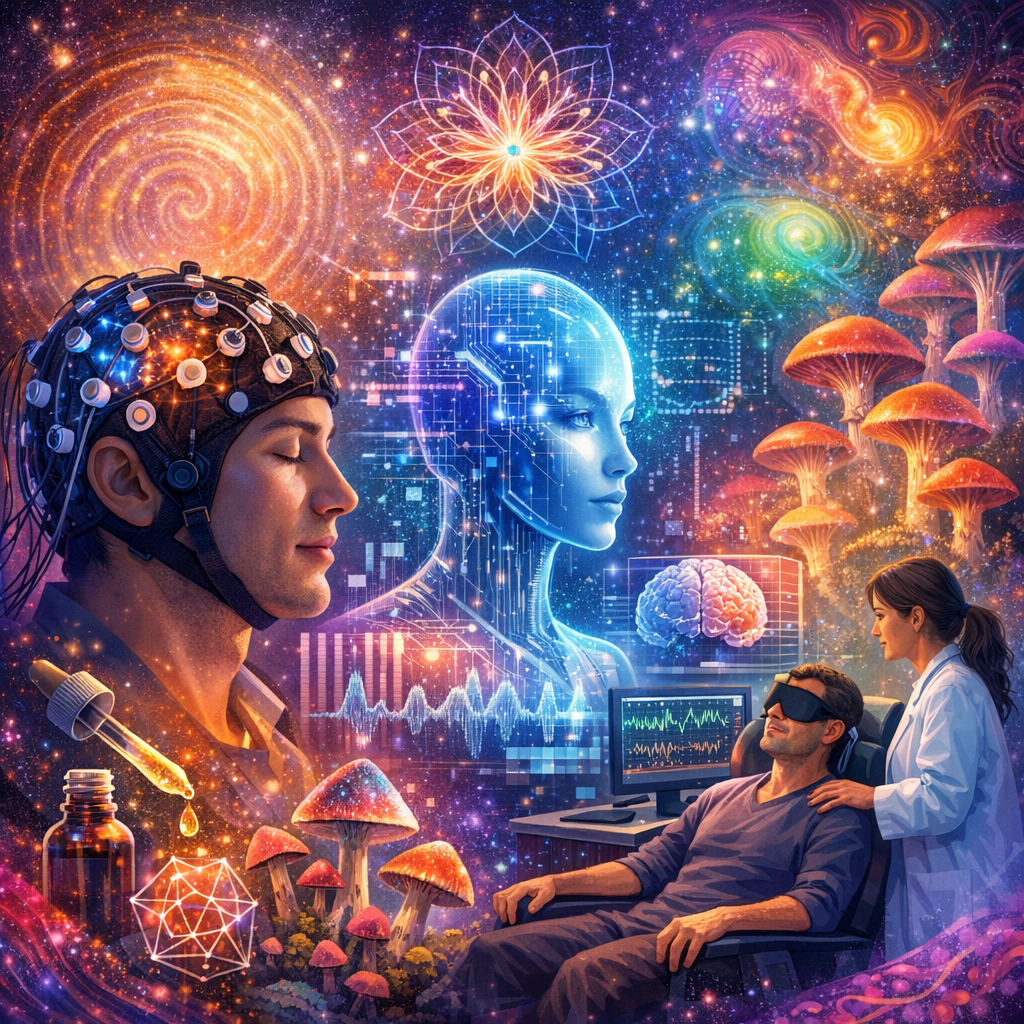
In tandem, neurofeedback offers a non-invasive way to monitor and modulate brain activity. By providing **real-time feedback** about brain wave patterns, neurofeedback can help guide patients through their psychedelic experiences, ensuring they maintain a therapeutic rather than an adverse state. This biofeedback loop empowers patients to gain insight and control over their mental processes. In essence, neurofeedback acts as a co-pilot for patients venturing into altered states of consciousness, offering real-time adjustments that enhance the efficacy of psilocybin treatment.
The fusion of AI and neurofeedback creates a synergistic toolkit that augments psychedelic therapy’s potential. Through personalized recommendations and real-time monitoring, patients can experience psilocybin’s therapeutic effects more safely and effectively. The strategic use of these advanced technologies signifies a profound leap forward in mental healthcare, promising to extend the boundaries of what is possible in the realm of psychedelic therapies.
Features
A number of professional studies have been instrumental in outlining the roles AI and neurofeedback play in optimizing psilocybin and psychedelic therapies. For instance, a pivotal study from the **Imperial College London** explored the use of AI in analyzing fMRI data to predict patient responses to psilocybin. This study found that AI successfully identified brain changes linked to improved emotional processing in individuals treated with psilocybin, suggesting that personalized treatment plans could significantly enhance therapeutic outcomes [source](https://www.imperial.ac.uk/news/189429/psilocybin-study-shows-strong-right-brain/).
Another significant study demonstrated how neurofeedback can be integrated into psychedelic therapy settings. Published by **Frontiers in Human Neuroscience**, this research utilized EEG-based neurofeedback to help participants maintain desired emotional and cognitive states during psychedelic sessions. The data indicated that real-time neurofeedback improved emotional regulation, which is critical when processing intense psychedelic experiences [source](https://www.frontiersin.org/articles/10.3389/fnhum.2021.643675/full).
Moreover, a combination of these technologies has shown promise in clinical trials aimed at treating **major depressive disorder (MDD)**. A study conducted at the **University of Zurich** used AI to personalize dosing protocols, while neurofeedback helped modulate the patient’s brain activity throughout the treatment process. This dual approach led to higher remission rates than traditional treatments, highlighting the potential of integrative technology in psychedelic therapies [source](https://www.news.uzh.ch/en/articles/2021/AI-psilocybin.html).
These scientific explorations underscore the transformative power of AI and neurofeedback within the field of psychedelic medicine. They confirm that these tools not only personalize but also amplify therapeutic outcomes, offering a promising glimpse into the future of mental health care driven by precision and an understanding of the unique complexities of the human mind.
Conclusion
The integration of **AI** and **neurofeedback** into **psilocybin therapy** heralds a new era in mental health treatment strategies. These technologies ensure that psychedelic experiences are both safe and beneficial, optimizing individual responses in real-time. As the landscape of psychedelic medicine advances, the strategic utilization of cutting-edge technologies will undoubtedly mark a milestone in personalized mental healthcare, catering to the unique needs of each patient for holistic well-being.
*Concise Summary*: The integration of AI and neurofeedback in psilocybin therapy represents a significant advancement in personalized mental health treatments. AI aids in tailoring psychedelic experiences by analyzing brain data and predicting responses, while neurofeedback helps guide patients through therapy by monitoring real-time brain activity. Together, these technologies enhance treatment safety and efficacy, offering a more personalized approach for conditions such as depression and PTSD. Studies from institutions like Imperial College London and the University of Zurich underscore these benefits, highlighting improved therapeutic outcomes and higher remission rates compared to traditional methods.

Dominic E. is a passionate filmmaker navigating the exciting intersection of art and science. By day, he delves into the complexities of the human body as a full-time medical writer, meticulously translating intricate medical concepts into accessible and engaging narratives. By night, he explores the boundless realm of cinematic storytelling, crafting narratives that evoke emotion and challenge perspectives. Film Student and Full-time Medical Writer for ContentVendor.com