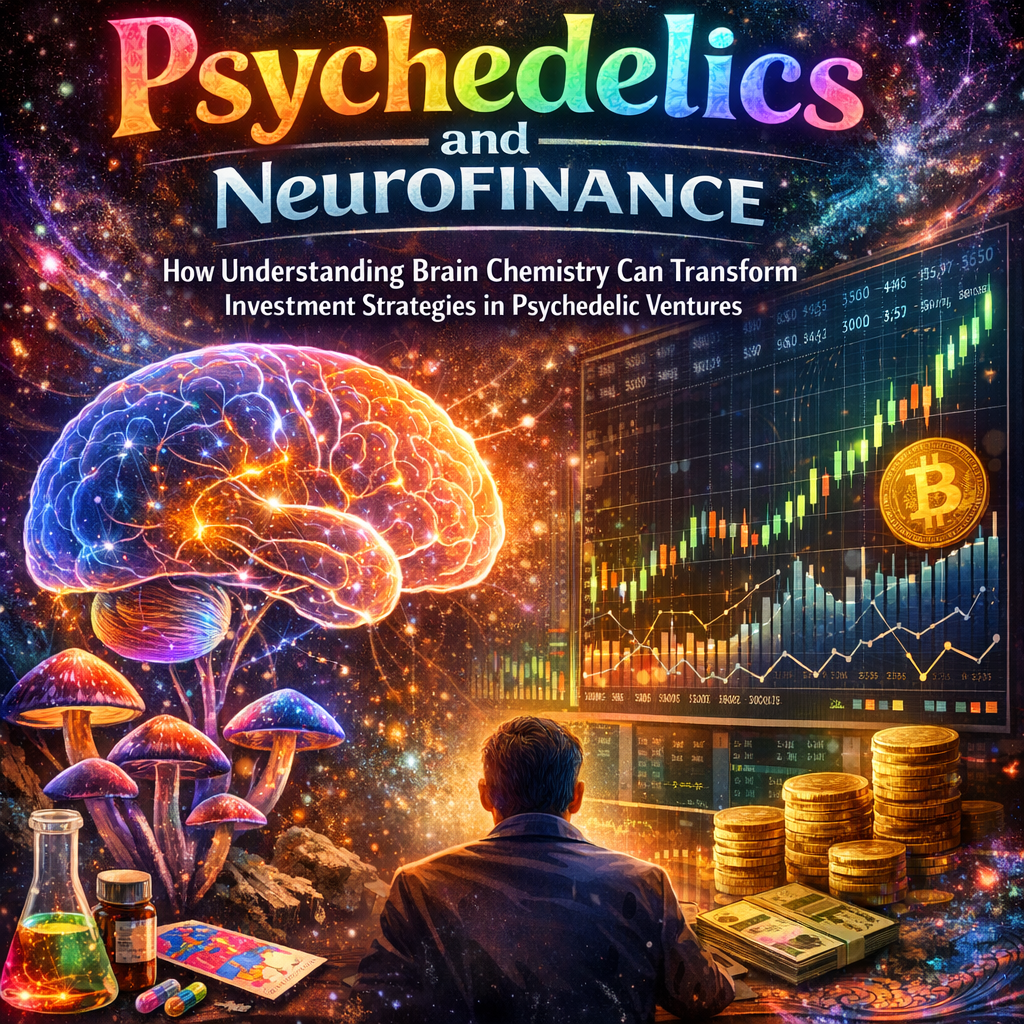
Psychedelics and Neurofinance: How Understanding Brain Chemistry Can Transform Investment Strategies in Psychedelic Ventures
Introduction
The intersection of **psychedelics** and **finance**, particularly in ventures surrounding psychedelic substances like **psilocybin**, is a burgeoning field that marries the world of brain chemistry with innovative investment strategies. For decades, the potential therapeutic benefits of psychedelics have intrigued scientists, but only recently have they begun to attract significant financial interest. This interest is driven by a twin foundation: groundbreaking research into the effects of psychedelics on the brain and an evolving public perception of these compounds as legitimate medical treatments.
In the world of finance, understanding human **brain chemistry**—how we think, decide, and react to risk—is central to evolving investment approaches. Enter “**Neurofinance**,” an emerging discipline at the intersection of **neuroscience**, **psychology**, and **economics**, which seeks to enhance financial decision-making by considering the brain’s chemical processes.
The growing acceptance of psychedelics’ therapeutic potentials has catalyzed the formation of several ventures, with companies diving into development, clinical trials, and therapy frameworks centered on these substances. The dynamic between psychedelics and finance is especially poignant as we witness legislative shifts and growing public acceptance in regions like **North America** and parts of **Europe**, which are gradually decriminalizing and, in some cases, legalizing psychedelic mushrooms and other substances for medical and recreational use.
These advancements open questions: How can understanding brain chemistry transform investment strategies within this volatile yet promising sector? How does the neural impact of psychedelics—especially their capacity to toggle the brain’s **default mode network (DMN)** and promote **neuroplasticity**—translate to strategic financial insights? Exploring these aspects can arm investors with enhanced cognitive tools to navigate the uncertainties and reap potential rewards in psychedelic ventures.
Features
Recent studies have significantly contributed to our understanding of how psychedelics, particularly **psilocybin**, interact with the brain, affecting its chemistry in ways that can impact cognitive functions tied to decision-making and risk assessment—two critical components in investment strategies. Psilocybin and other psychedelics have been shown to disrupt the **DMN**, a network in the brain associated with self-referential thoughts and behaviors, which can instigate exploratory thinking or creativity—attributes highly valued in crafting unique investment approaches.
A pivotal study published in “Nature: Scientific Reports” highlighted how psychedelics foster **neural plasticity**, suggesting that they enhance the brain’s potential to reorganize itself by forming new neural connections. This property is not only therapeutic for mental health disorders but could arguably influence the flexibility with which investors approach complex market scenarios. By enhancing adaptability in thought processes, investors might better innovate and pivot strategies in rapidly evolving market environments often seen in psychedelic start-ups.
Moreover, a review in “Frontiers in Human Neuroscience” dissected the impact of psychedelics on **serotonin**—a neurotransmitter that plays a role in mood, cognition, and perception. Given that investment strategies are deeply rooted in understanding and predicting human behaviors and market reactions, the influence of serotonin manipulation on emotion regulation could offer insights into investor sentiment and market predictions, driving more informed decision-making.
From a professional perspective, the collaboration between neuroscientists and financial strategists is already underway, with biotech companies hiring neuroscientific expertise to guide business strategies. By aligning their goals with scientific insights, companies can drive product development that capitalizes on the unique brain chemistry effects of psychedelics, promising not only returns on investment but also advancing therapeutic breakthroughs.
Conclusion
Understanding the intricate links between **psychedelics**, **brain chemistry**, and financial strategies opens new avenues for innovation in investment. As research continues to unveil the profound effects of psychedelics on **cognition** and **neuroplasticity**, investors armed with these insights can refine strategies that address both the opportunities and challenges within the psychedelic market. By aligning investment approaches with neuroscientific discoveries, stakeholders can leverage the therapeutic potentials of psychedelics while navigating the financial intricacies of this promising domain.
**References**
1. [“On the Complexity of Psilocybin in the Treatment of Mental Health Disorders.” Nature: Scientific Reports.](https://www.nature.com/articles/s41598-020-69285-w)
2. [“Serotonin Modulators and Brain Function: Exploring the Link.” Frontiers in Human Neuroscience.](https://www.frontiersin.org/articles/10.3389/fnhum.2020.00020/full)
**Concise Summary**
The intersection of **psychedelics** and **finance**, particularly in psychedelic ventures, combines brain chemistry with innovative investment strategies. The increasing acceptance of psychedelic therapies and legislative changes drive financial interest. Understanding the effects of psychedelics on the brain, especially on the **default mode network (DMN)** and **neuroplasticity**, can enhance investment strategies. Neurofinance examines how brain chemistry impacts decisions and risk, aiding investment approaches. Collaboration between neuroscientists and financial strategists furthers product development and therapeutic breakthroughs in this rapidly evolving field, presenting promising financial and medical opportunities.

Dominic E. is a passionate filmmaker navigating the exciting intersection of art and science. By day, he delves into the complexities of the human body as a full-time medical writer, meticulously translating intricate medical concepts into accessible and engaging narratives. By night, he explores the boundless realm of cinematic storytelling, crafting narratives that evoke emotion and challenge perspectives. Film Student and Full-time Medical Writer for ContentVendor.com