Rethinking Psychedelics: How AI-Powered Brain Mapping is Revolutionizing Consciousness Science
*Introduction*
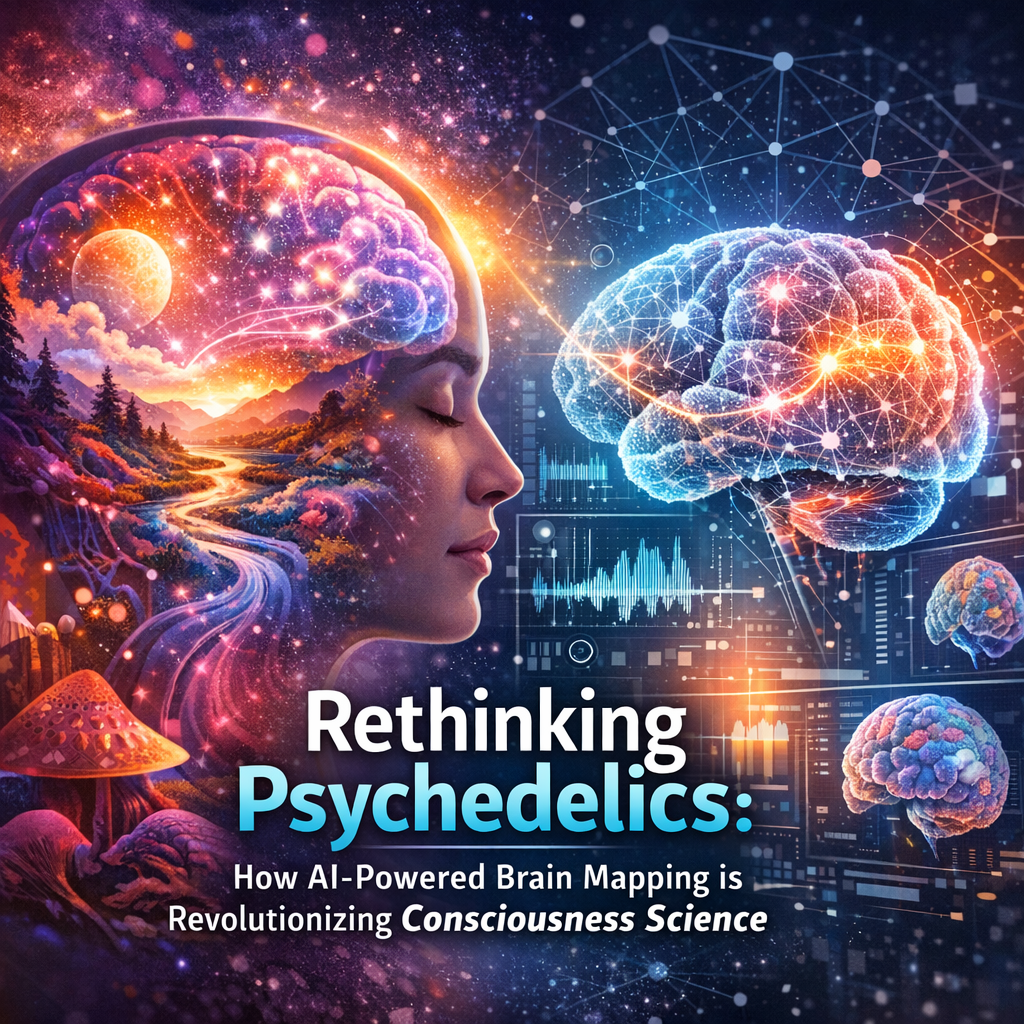
In recent years, the exploration of **psychedelics** has transcended its countercultural beginnings and has emerged as a promising avenue for scientific inquiry, particularly in the realms of consciousness and mental health treatment. At the forefront of this transformative journey is the integration of AI-powered brain mapping technologies, which are redefining our understanding of how psychedelics affect the brain and consciousness itself. These advancements are helping researchers pinpoint the neural underpinnings of psychedelic experiences with unparalleled precision.
This integration comes at a crucial time. **Mental health disorders**, such as **depression**, **PTSD**, and **anxiety**, are pervasive issues that traditional treatments often fail to address adequately. Psychedelics like **psilocybin**, the active compound in **magic mushrooms**, have shown remarkable therapeutic potential but understanding their effects has been a challenging endeavor. By leveraging AI in brain mapping, scientists can unravel the complex dynamics of neural activity during a psychedelic experience. This approach allows for a detailed examination of changes in brain connectivity and neural plasticity, potentially offering new insights into the treatment of mental disorders and the enigmatic nature of consciousness.
AI brain mapping involves the use of advanced algorithms and machine learning to process vast amounts of data from brain imaging techniques such as **fMRI** and **EEG**. These technologies provide a non-invasive window into the brain’s workings, capturing the intricate dance of neural circuits as they are influenced by psychedelics. The analysis of this data can reveal patterns and networks associated with creativity, meditation, and therapeutic breakthroughs, helping to inform more personalized and effective treatment options.
Moreover, as the stigma surrounding psychedelics begins to diminish, there is an increasing impetus for the medical community to explore and validate the efficacy of psychedelic therapies. Governments and institutions worldwide are ramping up funding for research, acknowledging the potential of these substances in addressing some of the most pressing mental health challenges. This growing body of research is fueling a paradigm shift in both the scientific community and society at large, paving the way for psychedelics to be integrated into mainstream medical practice.
Features
The emerging field of **AI-powered brain mapping** in psychedelic research is backed by a growing number of scientific studies and clinical trials. A pivotal study conducted by researchers at [Imperial College London](https://www.imperial.ac.uk/psychedelic-research-centre/) used **fMRI** to monitor the brains of individuals under the influence of psilocybin. The study revealed that the compound significantly altered brain connectivity, resulting in a more synchronized and flexible brain state, which is hypothesized to contribute to the efficacy of psilocybin in treating depression.
Another study, published in the journal [*Nature*](https://www.nature.com/articles/s41591-019-0345-1), employed machine learning algorithms to analyze brain scans of individuals undergoing psychedelic therapy. The research demonstrated that psychedelics facilitate the breakdown of traditional neural networks and the emergence of novel patterns of connectivity. These findings suggest that psychedelics may induce a state of heightened **neuroplasticity**, where the brain becomes more capable of restructuring itself, making it a potent tool for psychological healing.
**AI algorithms** also enable the precise prediction of individual responses to psychedelics, which is a game-changer for personalized medicine. Studies have shown that machine learning models can analyze genetic markers, lifestyle factors, and pre-existing mental health conditions to forecast how a person might respond to a psychedelic substance ([source](https://www.frontiersin.org/articles/10.3389/fnins.2020.00057/full)). This predictive power can help clinicians tailor treatments to optimize safety and efficacy, minimizing potential adverse effects.
Furthermore, collaborations between tech companies and academic institutions are driving the development of innovative brain-computer interface devices. These devices have the potential to offer real-time brain monitoring during psychedelic sessions, providing immediate feedback and enhancing the therapeutic process. Such technologies promise to optimize the timing and dosage of psychedelic substances, ensuring that therapeutic effects are maximized.
Conclusion
AI-powered brain mapping represents a significant leap forward in psychedelic research, offering a more profound understanding of consciousness and novel approaches to mental health treatment. As we continue to unravel the mysteries of the mind with the aid of technology, the potential for psychedelics to revolutionize mental health care becomes increasingly tangible. The ongoing collaboration between neuroscience and AI heralds a new era where the boundaries of human consciousness and healing converge, promising a brighter future for those seeking alternative and effective treatments.
*References*
1. [Imperial College London Psychedelic Research Centre](https://www.imperial.ac.uk/psychedelic-research-centre/)
2. [Nature Article on Psychedelics and Brain Connectivity](https://www.nature.com/articles/s41591-019-0345-1)
3. [Frontiers in Neuroscience on Machine Learning and Psychedelics](https://www.frontiersin.org/articles/10.3389/fnins.2020.00057/full)
**Concise Summary:**
The blend of **AI** and brain mapping is transforming the study of **psychedelics**, offering insights into consciousness and novel mental health treatments. **AI-powered brain mapping** details neural impacts of **psychedelics**, promising innovative therapeutic avenues, particularly for conditions like **depression**. Advances in AI and brain imaging like **fMRI** and **EEG** allow non-invasive study of neural circuits. Collaborative efforts underscore potential of psychedelics in mainstream medicine amidst diminishing stigma. This paradigm shift in methodology is pivotal for leveraging psychedelics’ therapeutic promise and personalized medicine advancements.

Dominic E. is a passionate filmmaker navigating the exciting intersection of art and science. By day, he delves into the complexities of the human body as a full-time medical writer, meticulously translating intricate medical concepts into accessible and engaging narratives. By night, he explores the boundless realm of cinematic storytelling, crafting narratives that evoke emotion and challenge perspectives. Film Student and Full-time Medical Writer for ContentVendor.com