The Quantum Brain: How Psychedelic Compounds Could Revolutionize Neurotechnology and Consciousness Studies
Introduction
In recent years, the fascinating world of **psychedelics** has transitioned from the counterculture fringe to the forefront of scientific research, promising revolutionary new insights into the **brain** and **consciousness**. This transformation, fueled by advancements in **neurotechnology** and our growing understanding of **quantum mechanics**, could redefine how we perceive reality itself. Among these **psychedelic compounds**, **psilocybin**, a psychoactive ingredient in “**magic mushrooms**,” holds particular promise for advancing our comprehension of the human brain.
The **brain**, an incredibly complex organ, operates on mechanisms that, in many ways, parallel the **quantum phenomena** observed in the physical sciences. **Quantum theory**, the modern framework for understanding matter and energy at atomic and subatomic levels, challenges our classical conceptions of certainty and determinism. It posits that particles can exist in multiple states simultaneously, a principle that might be **analogous** to the human brain’s ability to experience varied and intricate **cognitive states**.
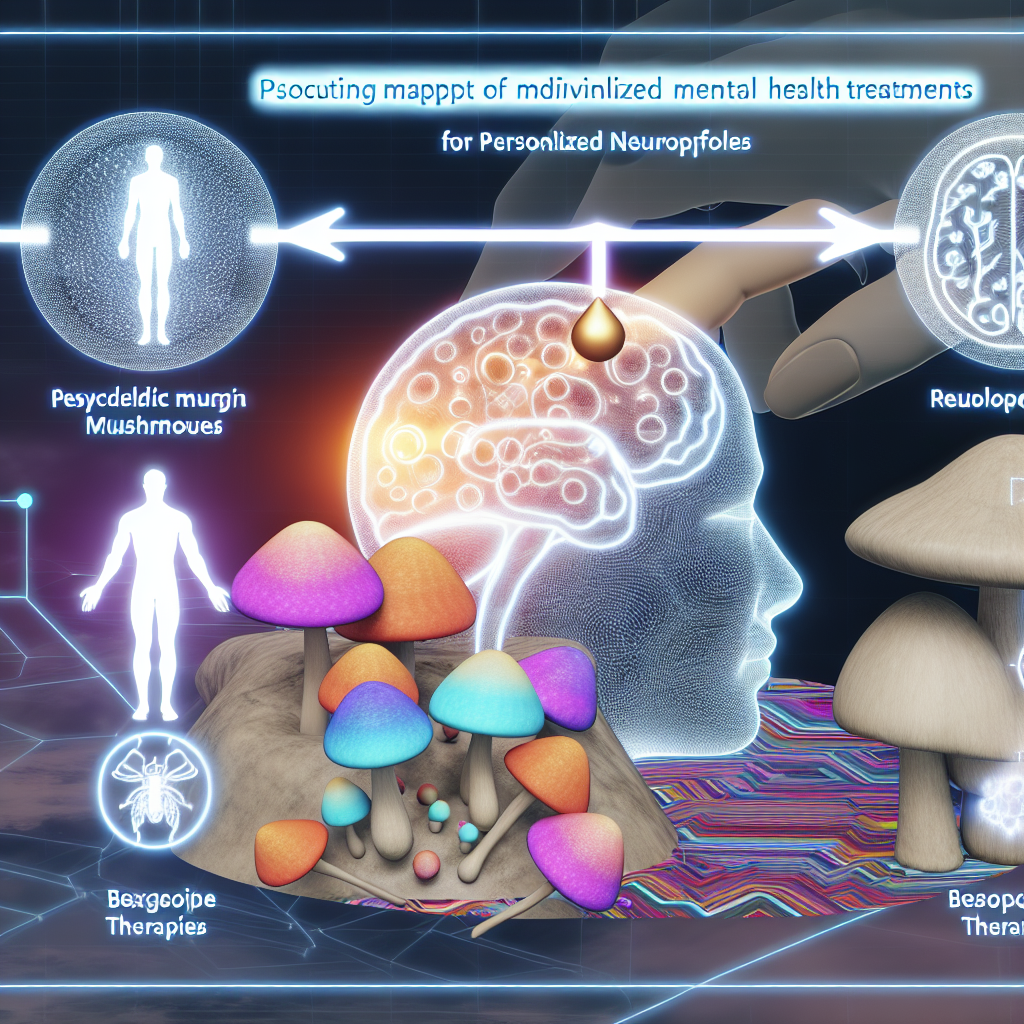
Researchers postulate that psychedelics like **psilocybin** might amplify the brain’s **quantum-like** ability to explore numerous potential realities. This capability could illuminate new ways to treat mental health disorders, generate creativity, and even enhance cognitive and emotional intelligence. Each of these potential applications paves a path toward improving not only individual lives but also society’s broader understanding of **consciousness** itself.
With psychedelic use moving out of the underground and gaining scientific validation, we encounter the possibility that these substances could interfuse with quantum neuroscience and consciousness studies in unprecedented ways. Imagine a future where mental health can be more precisely targeted and treated through tailored psychedelic treatments, or where consciousness is no longer a mystical enigma but a scientifically understood and respected construct.
Features
Scientific exploration of **psychedelics** began mid-20th century, but the field is experiencing a renaissance driven by advanced imaging technology and a shift in regulatory landscapes. **Studies** like those conducted at **Imperial College London** and **Johns Hopkins University** have demonstrated the profound effect of **psilocybin** on neural connectivity and **consciousness**.
One study at **Imperial College London** showed increased brain network integration after **psilocybin** administration. Using functional magnetic resonance imaging (**fMRI**), researchers found that psychedelics dissolve the usual boundaries between different brain networks. This dissolution leads to a ‘hyper-connected’ state, corresponding with the altered levels of consciousness experienced during psychedelic trips. The result is a temporary chaos leading to a new kind of order, potentially allowing for brain rewiring in cases of psychiatric disorders like **depression** and **PTSD** ([Carhart-Harris, et al., 2012](https://www.pnas.org/content/109/6/2138)).
Meanwhile, **Johns Hopkins researchers** discovered that **psilocybin** can significantly reduce depressive symptoms with results lasting for weeks or even months after a single session ([Griffiths, et al., 2016](https://journals.sagepub.com/doi/10.1177/0269881116675513)). The findings suggest that **psilocybin** works not merely by altering serotonin receptors but by rewiring intricate brain circuits associated with mood and behavior, akin to resetting a computer system’s software.
Connecting these findings with **quantum physics**, researchers speculate a framework where **psilocybin** might enhance the brain’s **quantum coherence**, proposing that consciousness could involve **quantum computations** within neurons. These bold hypotheses are pushing the boundaries of contemporary science, demanding interdisciplinary collaboration between neuroscientists, quantum physicists, and consciousness researchers.
Such studies and theoretical advances underscore the potential for psychedelics to inform **neurotechnology** and **biotechnology** sectors. As understanding deepens, neuroscience might harness **psilocybin’s** unique ability to facilitate a holistic brain model, integrating information in ways previously inaccessible by traditional means.
Conclusion
The synergy between **psilocybin** and quantum neuroscience could represent a paradigm shift in understanding the human brain and consciousness. As research develops, psychedelics may transition from a tool for therapeutics to a cornerstone in the science of consciousness. The unfolding relationship between quantum brain theory and psychedelics promises a new frontier where the mysteries of the mind might finally be within reach.
Concise Summary
Recent advancements have placed **psychedelics** at the forefront of scientific research, offering profound insights into the brain and consciousness. **Psilocybin**, found in “magic mushrooms,” parallels **quantum mechanics** by potentially enhancing the brain’s ability to explore multiple cognitive realities. Research from Imperial College London and Johns Hopkins University highlights psilocybin’s effects on **brain connectivity** and its therapeutic potential for disorders like depression. As **psychedelics** gain scientific validation, their integration with **quantum neuroscience** and consciousness studies could revolutionize mental health treatment and offer a deeper understanding of consciousness.
References
– [Carhart-Harris, R. L., et al. (2012). “Neural correlates of the psychedelic state as determined by fMRI studies with psilocybin.” Proceedings of the National Academy of Sciences.](https://www.pnas.org/content/109/6/2138)
– [Griffiths, R. R., et al. (2016). “Psilocybin produces substantial and sustained decreases in depression and anxiety in patients with life-threatening cancer: A randomized double-blind trial.” Journal of Psychopharmacology.](https://journals.sagepub.com/doi/10.1177/0269881116675513)

Dominic E. is a passionate filmmaker navigating the exciting intersection of art and science. By day, he delves into the complexities of the human body as a full-time medical writer, meticulously translating intricate medical concepts into accessible and engaging narratives. By night, he explores the boundless realm of cinematic storytelling, crafting narratives that evoke emotion and challenge perspectives. Film Student and Full-time Medical Writer for ContentVendor.com