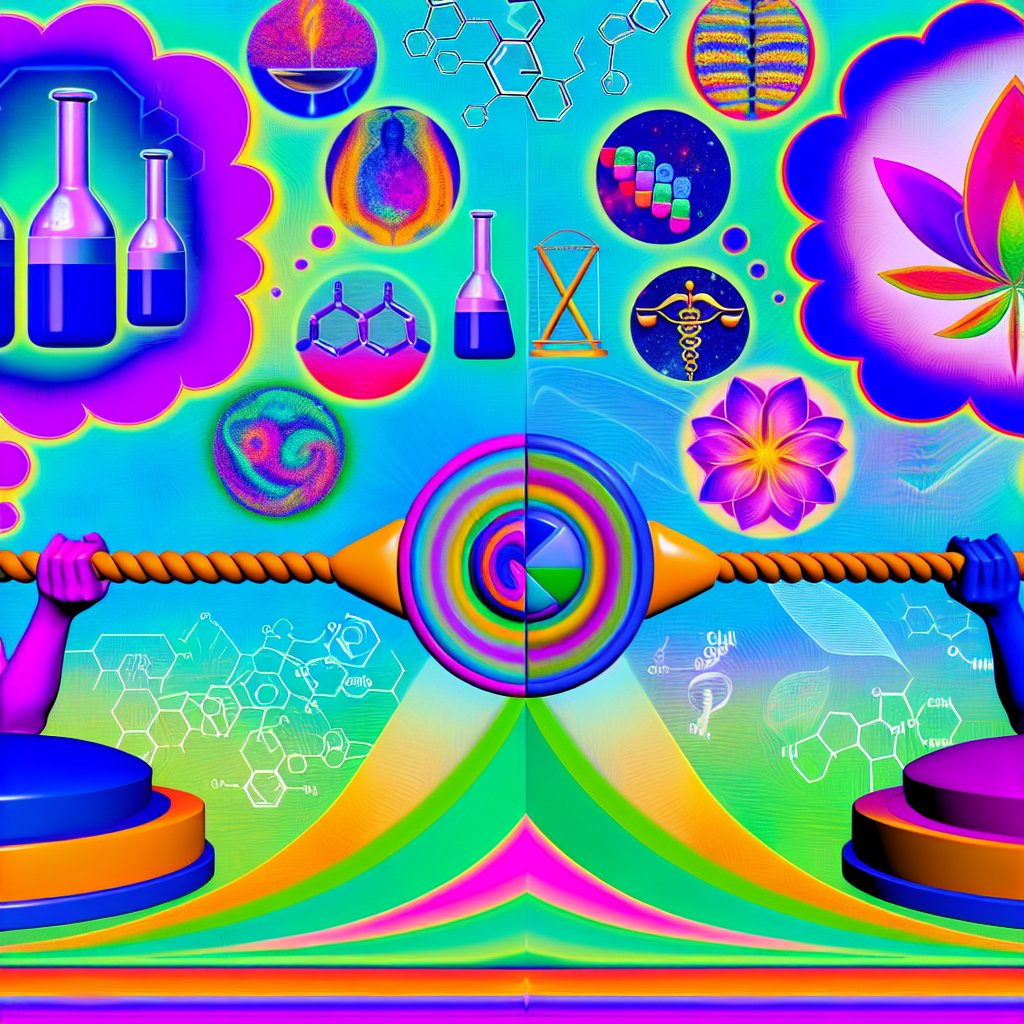
Psychedelic Patent Wars: How Big Pharma is Shaping the Future of Consciousness Medicine
In recent years, there has been a resurgence of interest in the therapeutic potential of **psychedelic substances**, particularly **psilocybin**, the psychoactive compound found in certain mushrooms. As scientific studies corroborate the potential benefits of psychedelics for mental health treatments, major pharmaceutical companies are scrambling to stake their claims in what promises to be a lucrative market. This competition has sparked a series of **psychedelic patent wars** as corporations and start-ups vie for ownership of novel applications, formulations, and delivery mechanisms associated with these compounds.
The landscape of **psychedelic research** was relatively barren throughout the latter half of the 20th century, largely due to strict regulatory classifications and cultural stigma. However, a shift in public perception and groundbreaking research has illuminated psychedelics as potential game-changers in treating conditions like depression, PTSD, and anxiety. The **Multidisciplinary Association for Psychedelic Studies (MAPS)** and other research organizations have published encouraging results from clinical trials, further propelling interest in this field.
**Big Pharma’s** interest in psychedelics has not come without controversy. The patent ecosystem surrounding psychedelics is complex and, for many, morally ambiguous. Critics argue that monopolizing substances traditionally used in **indigenous healing practices** disrupts a communal approach to knowledge and medicine. The tension is palpable as patent battles unfold, citing concerns over commodification and accessibility.
Companies like **Compass Pathways** and **Atai Life Sciences** have been at the forefront of psychedelic patenting efforts, seeking to secure rights that may dictate the future of consciousness medicine. These firms aim to patent specific synthesis processes, delivery systems, and therapeutic regimens that incorporate psychedelic substances. Compass Pathways, for instance, was granted one of the first **psilocybin therapy** patents on an optimized formulation of the compound, sparking debate on the ethical and practical implications of such proprietary claims.
As these corporate titans engage in legal skirmishes, the broader implications for mental health treatments hang in the balance. Will the commodification of psychedelics lead to greater access and innovation, or will it steer the industry towards profit-driven motives, sidelining holistic and traditional methods? The answers to these questions will shape not only the future of psychedelic medicine but also the broader discourse on wellness and consciousness.
Features
Several professional and medical studies have recently put psychedelics under the microscope, revealing compelling evidence for their capacity to catalyze profound therapeutic benefits. A study conducted by **Johns Hopkins University**, for example, showcased the effectiveness of **psilocybin** in reducing depression and anxiety symptoms in patients with life-threatening cancer. Participants reported substantial improvements in mood, quality of life, and even existential well-being after controlled psychedelic experiences ([Source](https://www.hopkinsmedicine.org/psychiatry/research/psychedelics-research.html)).
Moreover, a 2020 study published in **JAMA Psychiatry** evaluated **psilocybin-assisted therapy’s** effects on major depressive disorder (MDD). The investigation revealed that just two treatment sessions occasioned significant and sustained reductions in depressive symptoms, a testament to psilocybin’s potential as an effective treatment alternative ([Source](https://jamanetwork.com/journals/jamapsychiatry/article-abstract/2772630)). These findings highlight a critical shift in mental health treatment, wherein traditional pharmaceuticals may falter.
Professional research has also delved into how psychedelics impact neurological pathways. Functional MRI studies indicate that psilocybin disrupts the **default mode network**, a brain area linked with self-referential thoughts and rumination, which are often implicated in depression ([Source](https://www.nature.com/articles/npp201749)). As psychedelics modulate these pathways, they offer a potentially transformative approach to treating mental health disorders, prompting new therapeutic paradigms.
The surge in research underscores both the potential these substances hold and the necessity for nuanced, ethically minded exploration. As studies proliferate, the burgeoning evidence may pave the way for regulatory changes, heralding an era where psychedelics are integrated into mainstream medical practice. However, the industry’s trajectory remains uncertain amidst ongoing patent disputes, placing medical advances on a precarious precipice.
Conclusion
The psychedelic patent wars encapsulate the tension between innovation and ethics within the realm of **consciousness medicine**. As Big Pharma forges ahead, the unfolding narrative will profoundly impact the accessibility, regulation, and evolution of psychedelic treatments. While the potential for revolutionary mental health therapies looms large, maintaining an ethical compass toward equitable access and respect for traditional practices will be critical to navigating this nascent field responsibly. In this delicate dance, the future of consciousness medicine remains both promising and uncertain.
**Concise Summary**
The resurgence of interest in psychedelic substances like **psilocybin** for mental health treatments has led to a flurry of activity from major pharmaceutical companies, resulting in a series of **psychedelic patent wars**. This competition raises ethical concerns regarding the commodification of substances historically used in **indigenous healing practices**. Recent studies highlight the potential benefits of psychedelics in treating conditions like depression and anxiety, but the implications of corporate involvement in patenting and controlling these substances are still unfolding, impacting the future of health treatments and the potential integration of psychedelics into mainstream medicine.

Dominic E. is a passionate filmmaker navigating the exciting intersection of art and science. By day, he delves into the complexities of the human body as a full-time medical writer, meticulously translating intricate medical concepts into accessible and engaging narratives. By night, he explores the boundless realm of cinematic storytelling, crafting narratives that evoke emotion and challenge perspectives. Film Student and Full-time Medical Writer for ContentVendor.com